Identifying a Ford F-150 Transmission Valve Body
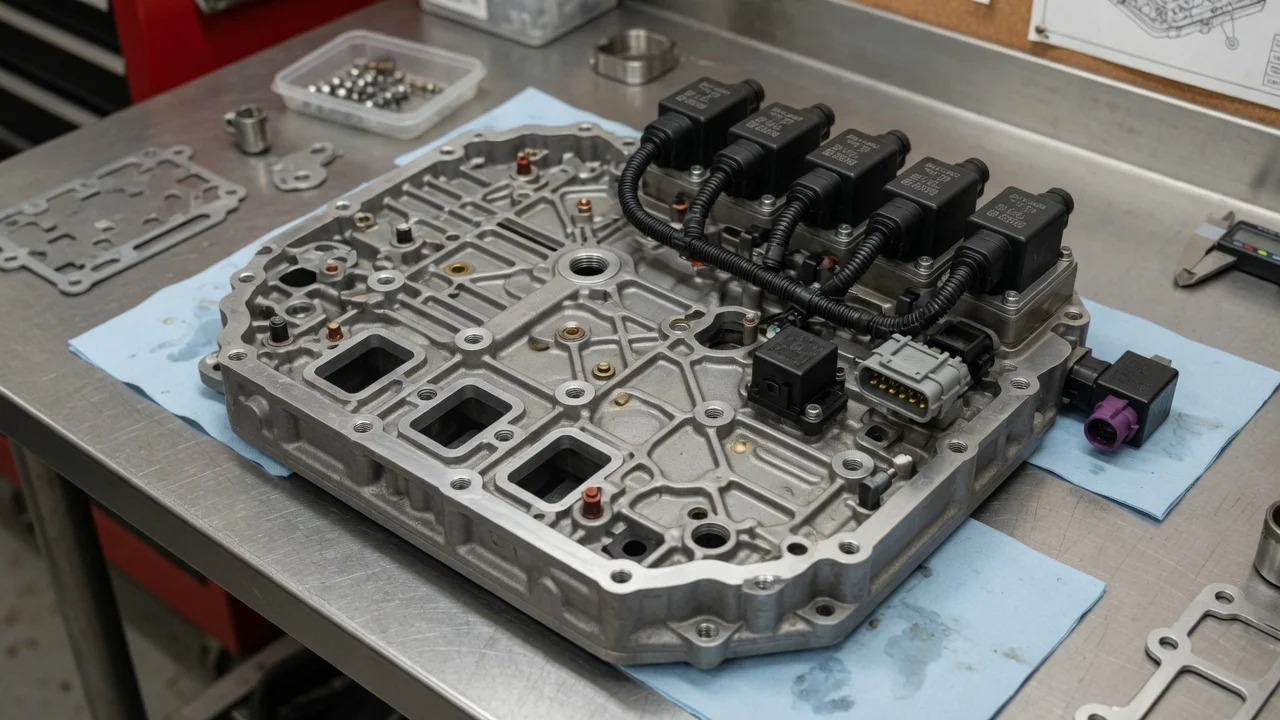
The valve body is the hydraulic control center of an automatic transmission. On a Ford F-150, the right one depends on which transmission the truck carries. Across model years the F-150 has used four-speed, six-speed and ten-speed automatics, and their valve bodies are not interchangeable. This guide explains how to confirm the transmission type, which identifiers matter, and why you should not order a part based on a symptom alone.
Short Answer: Identify the Transmission First
To identify a Ford F-150 transmission valve body, start with the transmission model, not just the truck's year or engine. The most reliable method is a parts lookup by the full VIN. Back it up with the identification tag or stamped code on the transmission case, and with the transmission code on the driver door jamb certification label where one is present. Once you know the unit, you can match the valve body by the Ford service part number on its label or packaging. Main control assemblies commonly use the 7A100 base number, and the valve body halves also carry casting numbers. These numbers confirm fitment within a transmission family. They do not tell you whether the original valve body is actually faulty.
Broadly, older F-150s used electronically controlled four-speed units from the 4R70 and 4R75 family. Many trucks from roughly 2009 through 2017 used the 6R80 six-speed. The 10R80 ten-speed arrived in 2017 and later spread across most of the lineup. Some engine and model combinations kept the older unit in overlap years, so treat the year range only as a starting point.
How the Valve Body Controls Shifting
The valve body is a precision-machined aluminum block containing fluid passages, spool valves, springs and check balls. It bolts to the transmission, usually inside the oil pan. The pump sends pressurized fluid into it, and the valves route that fluid to clutch packs and bands to apply or release them. Which clutches are applied determines the gear. How quickly pressure builds determines how firm or soft each shift feels.
In the electronically controlled F-150 transmissions, solenoids on or in the valve body take commands from a control module. Shift solenoids choose which hydraulic circuits open, and pressure control solenoids adjust line and clutch pressure. The module reads vehicle speed, throttle position, turbine and output shaft speeds, and fluid temperature, then adapts its commands over time. As a result, shift behavior can change for many reasons: contaminated fluid, a worn valve bore that leaks pressure, a sticking solenoid, or a reset of adaptive values. Several different faults can feel the same from the driver's seat.
What Changes the Identification
Transmission generation is the biggest variable. The four-speed units use a separate valve body and solenoid pack, and many components can be serviced individually. The 6R80 and 10R80 use a more integrated design, with the solenoids and, depending on the generation, control electronics packaged with or near the valve body. On these units a replacement assembly may need programming, a matching software strategy, or solenoid calibration data loaded with a scan tool before it shifts correctly. Two valve bodies that look identical can still differ in calibration or revision level.
Engine, drivetrain, model year, mid-year production changes and special models all affect fitment. A truck built early in a model year may use a different revision than one built later, and performance or hybrid variants can differ from standard trucks. Fluid specification also follows the transmission. Older four-speeds generally call for Mercon V, the 6R80 for Mercon LV and the 10R80 for Mercon ULV, but the owner's manual or fill-point marking for your specific truck is the authority. A valve body run with the wrong fluid or an unverified calibration can mimic a failure that is not there.
Service history matters as well. If the transmission was swapped or remanufactured, it may no longer match the original build record, and a VIN lookup can point to the wrong part. In that case, the identification tag on the installed case and the numbers on the valve body are better evidence of what is actually in the truck.
What the Owner Can Do Before Buying Parts
Gather the identifiers first: the full VIN, the transmission code from the door jamb label if your truck has one, the identification tag on the transmission case, and any part numbers from earlier repair invoices. Note the engine, drive type and production date, which is printed on the same certification label. Give all of this to a dealer parts counter or a reputable transmission supplier. Ask them to confirm fitment against the specific valve body revision, not just the model year.
Document the symptoms precisely. Record whether the problem appears cold or warm, on upshifts or downshifts, under light or heavy throttle, and in which gears. Have stored and pending diagnostic codes read with a scan tool that can access transmission data, because generic code readers may miss manufacturer-specific codes. Codes that point to a shift solenoid or pressure control circuit narrow the search, but they do not prove the valve body is bad. Wiring, connectors, low fluid, the control module or internal clutch wear can set similar codes.
Check fluid level and condition using the correct procedure for your transmission. Several newer units have no conventional dipstick and require a fill-plug check at a specific temperature. Dark, burnt-smelling fluid or heavy debris suggests wear beyond the valve body. A software update, an adaptive reset or a corrected fluid level sometimes resolves the complaint, so ask about those options before paying for a valve body replacement.
Limitations and When to Get Professional Help
The model-year ranges, fluid names and design descriptions here are general. They cannot replace Ford service information for a particular VIN. Valve body diagnosis often requires pressure testing, live data review and sometimes pan removal. On the newer transmissions, installation may also require dealer-level software to program the unit or load solenoid data. If that step is skipped, the truck may shift poorly or set codes even though the part itself is correct.
If the truck has persistent harsh shifts, slipping, delayed engagement or limp mode, have a transmission specialist or dealer confirm the cause before you order parts. Check whether a warranty, extended coverage or service bulletin applies, since that can change who pays and which part revision is used. The practical next step is to collect your VIN, transmission tag details and scan data, then have fitment and diagnosis confirmed together.