Ford F-150 Transmission Speed Sensor Problems: Symptoms, Causes and Checks
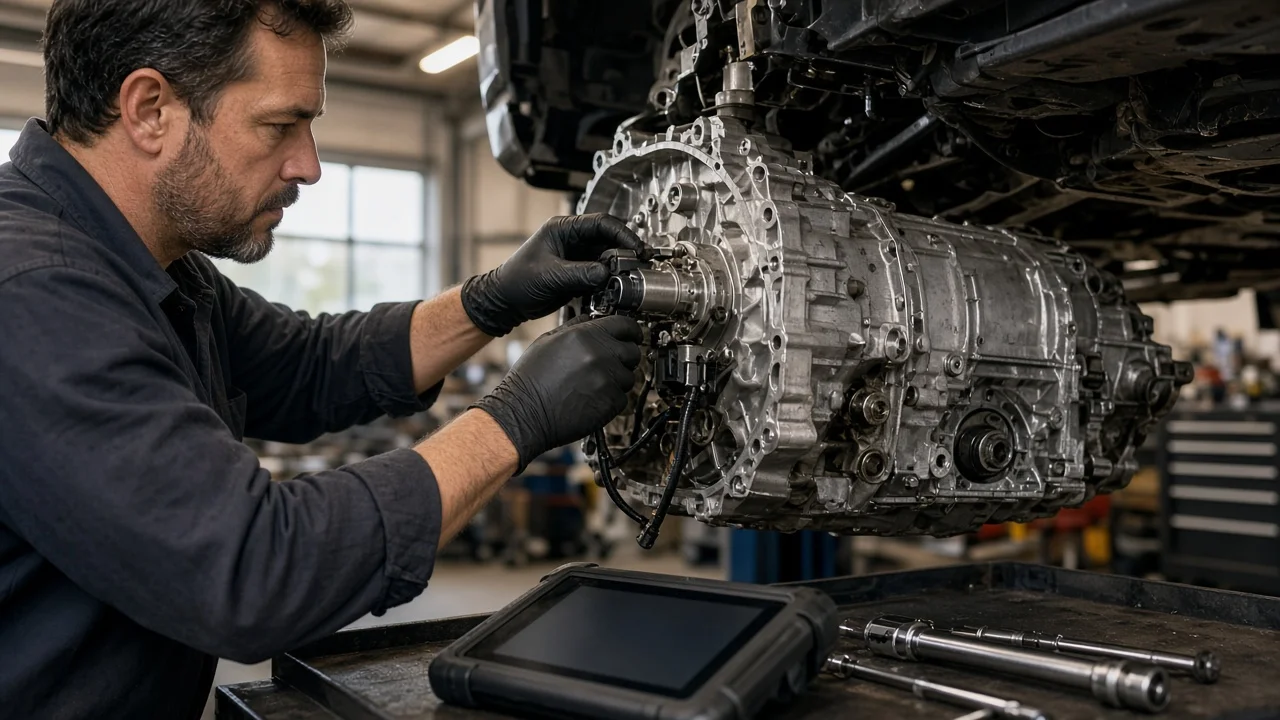
Speed sensor trouble on a Ford F-150 usually shows up as erratic shifting, a jumpy speedometer or a transmission that suddenly holds one gear. Wiring faults, fluid condition, software and internal wear can all cause the same symptoms, so collect evidence before buying parts. Start by confirming the model year, engine and transmission type. The F-150 has used several automatic transmissions, and sensor locations, fluid specifications and test procedures differ between them.
Establish the symptoms
Most electronically controlled automatics use at least two speed signals. An input or turbine shaft speed sensor reports how fast the transmission input is turning. An output shaft speed sensor reports how fast the output is turning. The control module compares these signals to choose shift points, calculate the actual gear ratio and manage the torque converter clutch. Depending on the configuration, the vehicle speed shown on the speedometer may come from the transmission output sensor or from the ABS wheel speed sensors. When a signal drops out or becomes erratic, the module may switch to a failsafe strategy that limits available gears, firms up shifts or disables some functions.
Write down exactly what happens and when. Note whether the problem appears cold or only after the truck is fully warm, at highway speed or in stop-and-go traffic, over bumps, or after rain or a car wash. Describe the shift behavior: harsh or delayed shifts, flares where engine speed rises between gears, harsh downshifts when coming to a stop, or being stuck in one gear. Record any speedometer drop to zero, cruise control dropping out, and which warning lights come on. Also list recent changes, such as fluid service, transmission or exhaust work, a lift or different tire size, aftermarket tuning, off-road use, water crossings or battery replacement. A tire size change can make the speedometer read wrong without any failed sensor.
Distinguish plausible causes
A failing sensor is one possibility. The case for it is strongest when diagnostic codes point to one specific sensor circuit and live data shows that sensor's reading dropping out while the other speed signals stay steady. Faults that appear only when hot can also fit a deteriorating sensor. The case weakens when several sensors report problems at the same moment. Simultaneous faults point more toward a shared connector, a power or ground circuit, an internal harness, or the control module than toward several sensors failing together.
Wiring and connector faults are common on trucks that see weather, salt or off-road use. A harness rubbing against the frame or routed near hot exhaust, a corroded terminal, or a loose or bent pin can produce intermittent signals that change with bumps, moisture or temperature. Recent work near the transmission or exhaust makes this more likely. Many speed sensors are magnetic, so metal particles from wear can collect on the tip and distort the signal. Cleaning such a sensor may restore the reading, but heavy debris suggests wear inside the transmission that a new sensor will not address.
Mechanical and fluid problems can mimic sensor trouble. Low fluid, the wrong fluid or slipping clutches can set gear ratio or performance codes even when every sensor reports accurately, because the sensors are correctly showing a ratio that does not match what was commanded. Software and calibration also matter: aftermarket tuning, incorrect tire size settings or an outdated calibration can change shift behavior and speed readings. If the speedometer problem comes with ABS or stability control warnings, a wheel speed sensor fault becomes a stronger candidate than a transmission sensor.
Checks in a useful order
Start with observations that need no special skill. Note which warning lights are on. Read the stored codes, including pending codes and freeze frame data, and record them before clearing anything. A basic scanner reads generic powertrain codes, but manufacturer-specific codes and transmission live data often need an enhanced scan tool. With the truck parked on level ground, the engine off and components cool, look at the visible harness and connectors for chafing, melted insulation, corrosion or loose plugs. Never work under the truck supported only by a jack.
Next, check the fluid level and condition using the procedure for your transmission. Some later F-150 transmissions have no conventional dipstick, and their level check depends on fluid temperature and a specific method, so a casual check can give a misleading result. Confirm the fluid specification in the owner information or service data. If the fluid was recently changed, find out what was used. A dark color, burnt smell or visible debris points away from a simple sensor fault.
Some tests require tools, published specifications or a qualified technician. These include comparing input, output and vehicle speed readings in live data during a road test with a helper reading the tool, measuring sensor resistance or signal output against the specification for that exact part, checking reference voltage and ground circuits, and viewing the signal on an oscilloscope to catch brief dropouts. Some sensors and harness sections sit inside the transmission, so reaching them means removing the pan or more. A dealer can check whether a calibration update or service bulletin applies to the VIN.
Interpret the findings
Read the results in combination. Suppose a circuit code names one sensor, live data shows that signal cutting out, and the wiring and connector check good. In that case the sensor is a reasonable suspect, but a specification test or signal check should confirm it before replacement. If the codes concern gear ratios or slipping and the speed signals look smooth and plausible, the sensors are probably doing their job and reporting a mechanical problem, so replacing them is unlikely to change anything. A fault that disappears when the harness is moved, or that follows moisture, points to wiring rather than the part itself.
Fluid findings refine the picture. Clean fluid at the correct level and a sensor tip without significant debris support an electrical cause. Burnt fluid or metal fragments suggest internal wear that needs a transmission assessment, whatever the sensor test shows. Speedometer errors with ABS warnings and no transmission codes shift attention to the wheel speed sensors. After any repair, clear the codes, road test under the conditions that caused the original complaint, and confirm that live data stays consistent. Some transmissions use adaptive shift learning that may need a reset or relearn procedure, and shift quality can continue to settle as the module adapts.
Urgency and next action
Stop driving and arrange a tow if you notice any of these: loss of drive, slipping where engine speed rises without matching acceleration, being stuck in a gear unsuitable for traffic, clunking or very harsh engagements, a transmission overheating warning, a burnt fluid smell or an active leak. A speedometer that stops working also deserves caution, because you can no longer judge your speed. If ABS or stability control warnings are on, those systems may not be available. No one can promise a safe remaining distance for a truck with these symptoms. Continued driving can turn a wiring or sensor repair into internal damage.
Give the repair shop the VIN, model year, engine, transmission type and drive configuration, along with every code and its freeze frame data. Include a description of when the problem occurs, the fluid service history and fluid used, recent modifications or tire changes, and any parts already replaced. That information helps the technician choose between repair options such as a wiring or connector repair, sensor replacement, internal harness work, a software update or a fuller transmission repair. If a sensor is replaced, confirm fitment by VIN, because sensors can differ between transmissions and model years.