Identifying a Ford F-150 Transmission Shift Solenoid
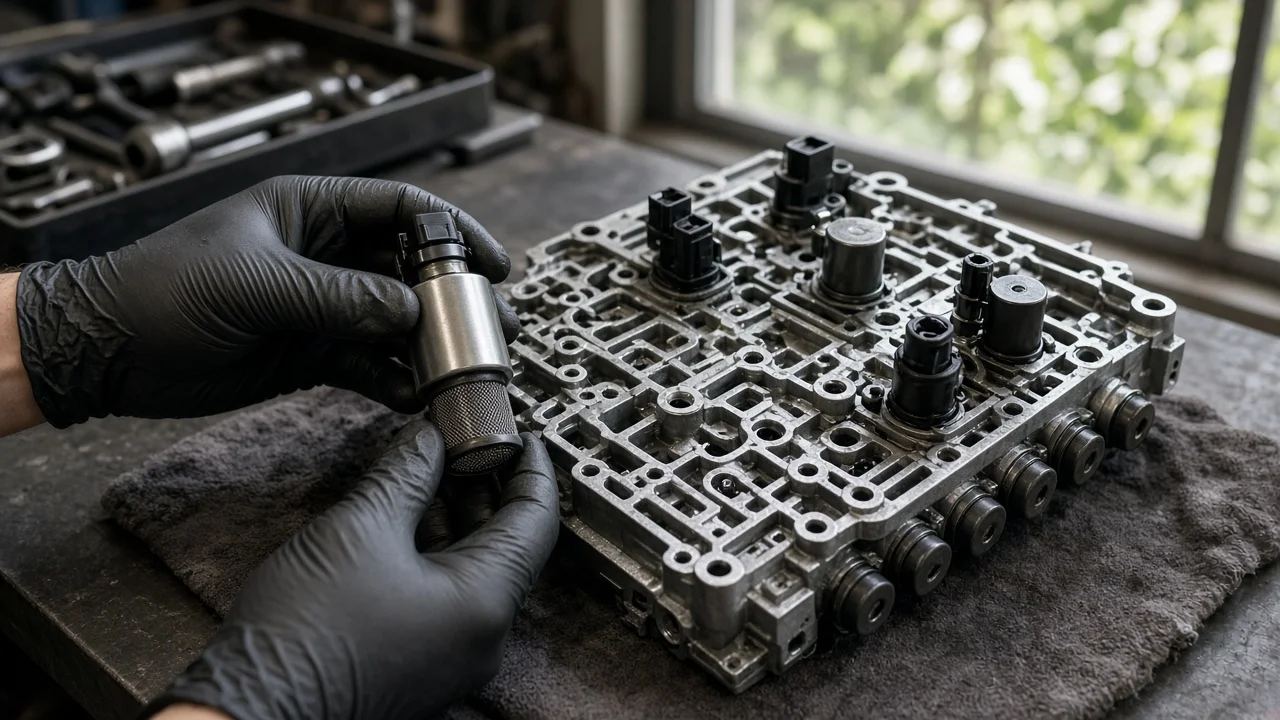
A shift solenoid is an electrically controlled valve that directs fluid pressure inside an automatic transmission so it can change gears. On a Ford F-150, finding the correct solenoid starts with the transmission itself. The truck has used several automatic designs over the years, and each has its own solenoid layout, part numbers and service approach. This guide explains how to narrow down which solenoid you are dealing with and what a symptom does and does not prove.
The short answer
To identify the right shift solenoid for an F-150, confirm the exact transmission first. Next, use the stored diagnostic codes and the service information for that unit to work out which solenoid circuit is involved. Then match the replacement part by VIN or transmission identification rather than by model year alone. Older four-speed trucks typically use a solenoid pack that groups the shift, torque converter clutch and pressure control solenoids together. The six-speed and ten-speed units place their solenoids on or within the valve body inside the pan. Depending on the transmission and the supplier, a replacement may be sold as an individual solenoid, a pack or a larger assembly.
A code that names a solenoid, such as a shift solenoid A circuit fault, tells you where the control module detected a problem. It does not confirm that the solenoid itself has failed. Damaged wiring, a corroded connector, low or degraded fluid, worn internal components or a module fault can all produce similar codes and similar shift behavior.
How a shift solenoid controls gear changes
The transmission is managed by a control module that decides when to shift based on vehicle speed, throttle position, load and fluid temperature. The module commands each solenoid by switching it on and off or by varying the current through it. The solenoid opens, closes or regulates fluid passages in the valve body, and that pressure applies or releases the clutches that create each gear. Some solenoids act as simple on/off switches, while others regulate pressure precisely to control how firmly a clutch engages. The gear the truck ends up in depends on the combination of solenoid states.
The module watches the solenoid circuits electrically and also compares input and output shaft speeds to judge whether a shift happened as commanded. That is why there are two broad kinds of solenoid codes. Circuit codes point to an electrical problem such as an open or short. Performance or ratio codes mean the expected result did not occur, which can have mechanical or hydraulic causes. The letters used in generic codes (A, B, C and so on) do not map to the same physical part on every transmission, so the service information for your unit is needed to translate a code into a specific solenoid.
What changes the answer
The biggest variable is the transmission type. Earlier F-150s used four-speed automatics from the 4R70W and 4R75 family. The 6R80 six-speed appeared around 2009 and served through much of the following decade. The 10R80 ten-speed arrived on some 2017 engines and spread across most of the lineup from 2018, although the six-speed stayed on certain configurations for a while. Hybrid models use a version of the ten-speed with an integrated electric motor, which changes the procedures further. Because generations overlap, the model year alone is not reliable proof of which unit is in your truck.
To confirm the transmission, check the certification label on the driver's door jamb, which carries a transmission code. Also look for the identification tag on the transmission case, or have a parts counter decode the VIN. Engine, drivetrain and mid-year production changes can all affect fitment. The fluid specification differs as well. Older four-speeds generally call for Mercon V, the 6R80 for Mercon LV and the 10R80 for Mercon ULV. Confirm the requirement in your owner's manual rather than mixing fluids. Newer units also rely on adaptive shift learning, so solenoid or valve body work may require an adaptive reset, a relearn drive or module programming with a capable scan tool.
What the owner can do
Start by recording the symptoms precisely. Note which gear change misbehaves, whether it happens cold or hot, and whether the shift is harsh, delayed, flaring or missing entirely. Note whether the truck is stuck in one gear or has entered a reduced-power mode. Read the codes with a scan tool that can access transmission data, since some basic readers show only generic powertrain codes. Write down every code and any freeze-frame data before clearing anything. Check the fluid level and condition using the correct procedure for your transmission, because some units require a specific temperature range and do not use a conventional dipstick. Inspect the transmission connector and visible harness for damage, corrosion or fluid intrusion.
Review the service history: recent fluid changes, previous valve body or solenoid work, software updates, and any recalls or service bulletins a dealer can look up by VIN. If testing points to a solenoid circuit, a technician will typically compare circuit resistance against the specification and watch commanded versus actual values in live data. Repair options range from fixing a connector or wire, to replacing a single solenoid, to replacing a solenoid pack or valve body assembly. If clutches are already damaged, an overhaul may be needed. Avoid hard driving in a reduced-power mode, because continued slipping can turn an electrical fault into internal wear.
Limitations and next step
Without the transmission identified and the codes read, no one can say which solenoid is involved or whether a solenoid is the cause at all. Resistance specifications, connector pin assignments, access steps and fill procedures are specific to each unit and build, so factory-level service information for your exact truck is the reliable reference. Reaching internal solenoids means draining fluid and removing the pan, and refilling correctly afterward often requires temperature monitoring with a scan tool.
Professional help is the sensible route in several cases: multiple transmission codes, burnt-smelling fluid, metal debris in the pan, a required module programming or relearn procedure, or a hybrid powertrain. Before visiting a transmission shop or dealer, gather the VIN, the door-label transmission code, the stored codes and your notes on shift behavior. That information shortens diagnosis and helps make sure any replacement part actually fits your truck.