Ford F-150 Transmission Relearn Procedure: What It Involves
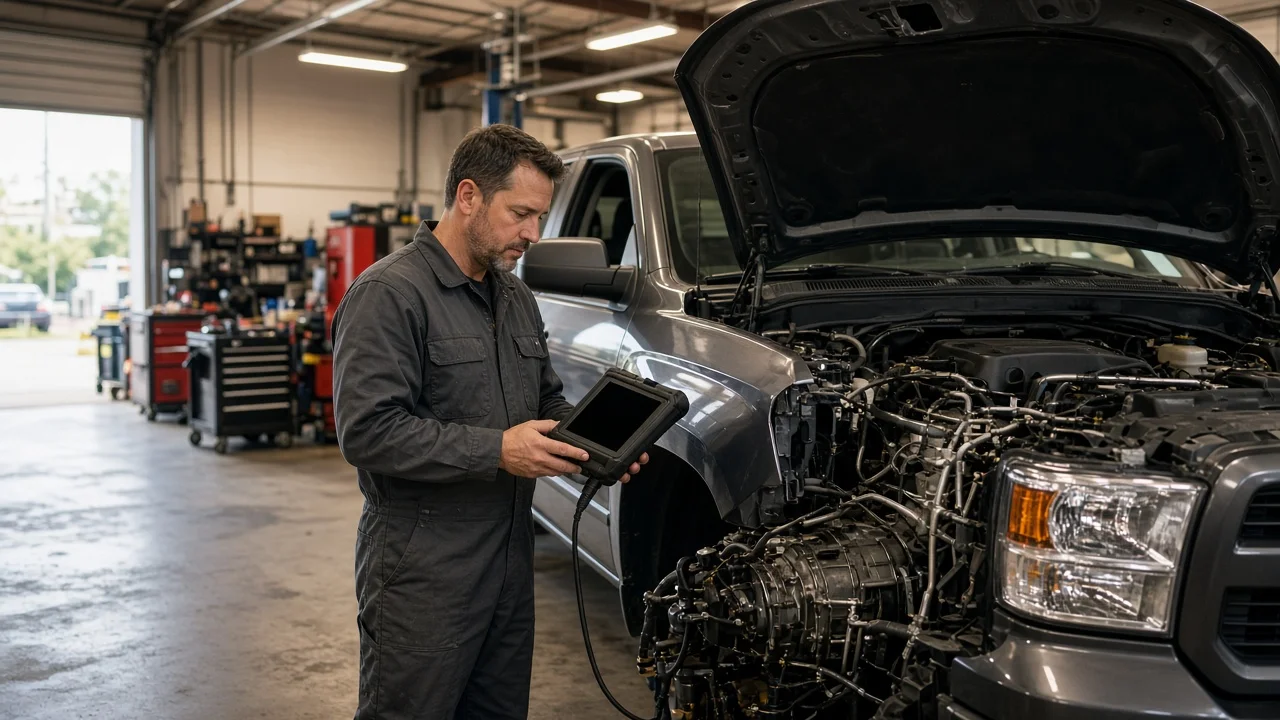
A transmission relearn on a Ford F-150 clears the shift adaptations stored by the control module and lets it build new ones as the truck is driven. Owners usually look for it after fluid service, battery work, module replacement or a change in shift quality. The correct method depends on the transmission in your truck, so confirm which unit you have before attempting any reset.
The short answer
On most modern F-150s, a relearn has two parts. First, a scan tool command clears the stored transmission adaptive values. Second, the truck is driven under normal or structured conditions so the module can relearn clutch fill and shift timing. Ford performs the reset with factory-level diagnostic software, and many professional scan tools offer an equivalent function, often labelled as a transmission adaptive reset or keep-alive memory reset. No single button sequence or pedal routine works on every model year.
A relearn is not a repair. It can smooth out shift behavior that changed after a fluid change, valve body work or a replaced module. It will not correct low fluid, worn clutches, a failing solenoid or a wiring fault. If the truck shifts poorly because something is mechanically or electrically wrong, the module will either learn new values around that problem or set diagnostic codes again.
How adaptive shift learning works
Electronically controlled automatics like those in the F-150 apply clutches using hydraulic pressure commanded through solenoids. Every transmission has small differences in clutch clearances, solenoid response and fluid condition. The control module uses speed sensor data to measure how long each shift actually takes, then adjusts pressure and timing to reach its target. It stores those corrections as adaptive values and keeps refining them slowly as the unit wears.
Clearing the adaptives returns the module to base values, so shifts can feel firmer or less refined at first. Shift quality settles only after the truck has made a range of upshifts and downshifts at different throttle openings with the fluid at normal operating temperature. For that reason, the driving portion matters as much as the reset itself, and a few minutes around the block rarely completes the process.
What changes the procedure on your truck
Transmission type is the biggest variable. Older F-150s used four-speed automatics. Many trucks from roughly 2009 through 2017 use the 6R80 six-speed, and later trucks largely use the 10R80 ten-speed, including the PowerBoost hybrid version, which integrates an electric motor into the transmission. Changeover years overlapped between engines, so model year alone is not enough to identify the unit. Confirm it from the certification label code, VIN build data or service records. Each transmission family has its own reset method, drive cycle guidance and module layout. The all-electric F-150 Lightning has no multi-speed automatic, so this procedure does not apply to it.
The reason for the relearn also matters. After a routine fluid change, a reset is sometimes recommended and sometimes unnecessary. After a transmission control module or valve body replacement, newer units may need more than a simple reset. The module may require its calibration and the solenoid characterization data that matches the installed hardware, and replacement parts must have the correct fitment for the original unit. If that programming is skipped, harsh or erratic shifting will persist no matter how far the truck is driven. Disconnecting the battery may clear adaptives on some older trucks, but on newer ones it is not a substitute for the specified procedure.
Fluid specification and level also affect the result. The 6R80 is specified for Mercon LV and the 10R80 for Mercon ULV, and those fluids are not interchangeable. Many late-model units have no conventional dipstick and must be checked at a specified fluid temperature. An incorrect fluid level after service is a common reason a relearn appears not to work.
What you can do as an owner
Start with the basics. Confirm the transmission and review the service history for recent fluid work, module updates or repairs. Then read stored diagnostic codes with a scan tool that can access the transmission or powertrain module, not just generic engine codes. Record when the shift problem occurs: only when cold, only on certain gear changes, under light throttle, or while towing. Those details help separate a learning issue from a fault.
If your scan tool supports an adaptive reset for your exact model year and transmission, follow the conditions it lists on screen, which commonly include fluid at operating temperature and specific vehicle and engine states. Afterward, drive normally in mixed conditions with gentle and moderate acceleration, and let the transmission complete full upshift and coast-down sequences. Avoid towing or heavy loads until shifts have settled. Some trucks need several drive cycles before shift quality stabilizes.
Also check whether a software update applies to your truck. Ford has released transmission calibration updates for some F-150 model years through service bulletins and recalls, and a dealer can look up open campaigns by VIN. When a dealer installs an update, the associated reset is normally done as part of that work.
Limitations and when to get professional help
General guidance cannot replace the procedure written for your exact truck. Factory service information specifies the reset conditions, the drive cycle and any programming required after parts replacement, and those details change between model years and calibrations. If you do not have a tool that can perform the function correctly, a dealer or transmission specialist with factory-level software is the safer choice.
Get a professional diagnosis if, after a correctly performed relearn and enough driving, the transmission still shifts harshly, slips, flares between gears or bangs into gear, or if codes return. Those symptoms have many possible causes, from fluid level and sensor faults to internal wear. A technician will need test results before recommending repair options such as further programming, valve body service or transmission repair. Stop driving if you see warning lights together with loss of drive, a burning smell or fluid leaks.