Ford F-150 Transfer Case Shift Motor Problems: Diagnosis
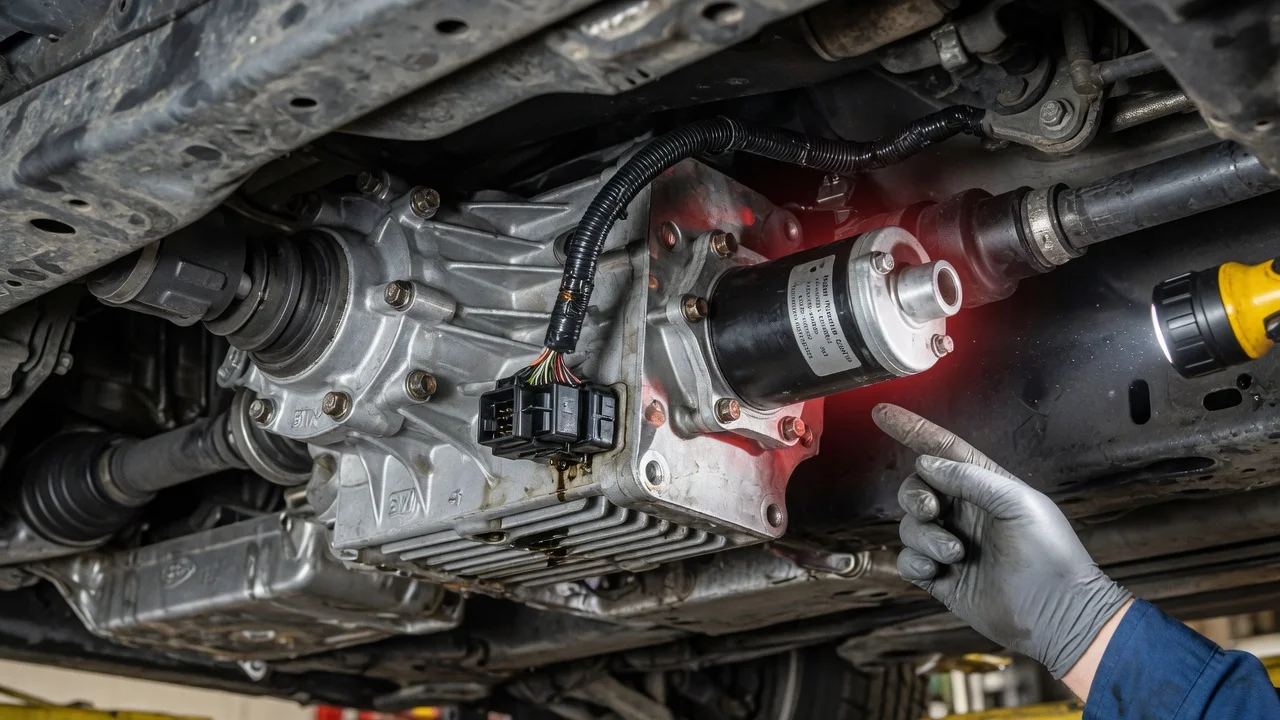
When the four-wheel-drive selector on a Ford F-150 stops responding, owners often suspect the transfer case shift motor first. It can be the cause. The same complaints can also come from wiring, the selector switch, the control module, low voltage or the front-axle engagement hardware. This guide shows how to narrow down F150 transfer case shift motor problems before buying parts, using your truck's exact configuration and service information.
Establish the symptoms
Start by writing down what the truck actually does. Note which mode you selected, which mode the indicator shows, and whether the shift happened at all. Common complaints include a 4x4 indicator that flashes and never settles, a shift that works between 2H and 4H but not into 4L, a truck that will not leave four-wheel drive, a whirring or clicking sound under the truck with no change in drive mode, and no response at all. Also note whether the vehicle was moving, stopped or in neutral. Shifts into and out of low range have specific conditions, which are described in the owner's manual for your truck.
Record operating conditions and recent changes. These include cold or wet weather, a recent car wash, deep water, road salt, off-road use, battery replacement, jump starts, aftermarket lighting or wiring, lift kits, and any other work near the transfer case. Note any warning messages in the instrument cluster and whether the problem comes and goes. Your service history matters as well. A previous motor replacement, a transfer case fluid service or front axle repairs can each point the diagnosis in a particular direction.
Distinguish plausible causes
The shift motor is an electric motor with a built-in position sensor, often called an encoder. The encoder tells the control module where the transfer case is. A failing motor or encoder can produce a flashing indicator, a partial shift or a mismatch between the selected mode and the indicated mode. If the motor never runs even though power, ground and a command from the module are all confirmed, the motor itself is likely at fault. If the motor runs but the mode does not change, the motor is less likely to be the cause. In that case, look at the encoder signal or the transfer case internals.
The motor sits under the truck, where water, salt and heat attack its connector and harness. Faults that follow weather or washing, green corrosion on the pins, or chafed insulation all point to wiring. The selector switch and control module are other possibilities, because the motor will not run if the module never receives a valid request. A scan tool that shows the switch position changing as you turn the selector helps rule the switch in or out. Low system voltage from a weak battery or a charging problem can also make modules behave erratically.
Not every failure to get four-wheel drive comes from the shift motor. If the transfer case shifts and the indicator confirms it, but the front wheels still do not drive, look at front axle engagement. Depending on the model year, that may mean vacuum-operated hubs or another axle disconnect design. Grinding, binding or clunking suggests the case is engaging but something is slipping or worn. That pattern points to mechanical transfer case or driveline damage rather than an electrical fault.
Checks in a useful order
Begin with observations any owner can make safely. Confirm the shift conditions in the owner's manual and repeat the shift exactly as described. Check the battery's condition and whether other electrical items work normally. Find the fuse and relay locations for the four-wheel-drive system in the owner's manual and inspect them. Then park on level ground, turn the engine off, set the parking brake and chock the wheels. You can then look at the shift motor connector and harness for corrosion, damage or an unplugged connector. Never work under a vehicle that is supported only by a jack.
The next checks require tools and data. A scan tool that can read four-wheel-drive or body module codes and live data shows stored trouble codes, the switch position the module sees, and the position the encoder reports. Voltage, ground and circuit tests at the motor require a wiring diagram and the manufacturer specifications for your exact vehicle configuration. Values differ between years and systems, so do not use numbers from another truck. A technician may also remove the motor to check whether the transfer case shift shaft moves freely. That test separates a motor fault from a seized internal shift mechanism.
Some checks are best left to a qualified technician with model-specific procedures. These include vacuum testing of the front hubs, inspecting transfer case fluid for metal or a burnt smell, and any module programming or calibration needed after a part is replaced.
Interpret the findings
A blown fuse proves there is a circuit fault, but it does not show the cause. If a new fuse also fails, look for a short in the harness or a seized motor drawing too much current, and find it before replacing parts. Corroded pins are likely a contributor. After cleaning or repairing the connector, retest the shift to confirm the problem is fully gone. Trouble codes point to a circuit or component area, but they do not prove the motor has failed. A wiring fault can set similar codes.
Several results point to a specific part. If the module commands the shift, power and ground reach the motor within specification, and the motor still does not move, the motor is the leading suspect. If the motor turns but the encoder reading does not match its position, the encoder or its circuit needs further testing. If the motor works when removed but the shift shaft will not turn using the method in the service procedure, the problem is inside the transfer case. If the case shifts correctly but the front wheels do not drive, turn to front axle engagement. Replace a component only when a test isolates it.
Urgency and next action
Stop driving and have the truck inspected if you notice any of these signs. One is grinding or loud clunking from the transfer case. Another is the truck binding, hopping or scrubbing its tires while turning on dry pavement, which can mean it is stuck in four-wheel drive. A third is the vehicle rolling while the transmission shows Park. A transfer case stuck in neutral can disconnect the wheels from the transmission, so the parking pawl may not hold the truck. In that case, set the parking brake and have the truck towed rather than driven. Driving with driveline binding can damage the transfer case, axles and tires, and there is no reliable way to predict how long those parts will last.
If the truck drives normally in two-wheel drive and only four-wheel-drive engagement is affected, the problem is less urgent. Until it is repaired, avoid situations where you would need four-wheel drive. When you book the repair, give the shop the model year, engine, cab and drivetrain configuration, and the type of four-wheel-drive selector. Also provide the symptoms and conditions you recorded, any trouble codes, and the service history for the transfer case and front axle. With that information, the shop can follow the correct inspection procedure and maintenance schedule rather than replacing parts by guesswork.