Ford F-150 Rear Axle Shafts: Choosing a Compatible Replacement
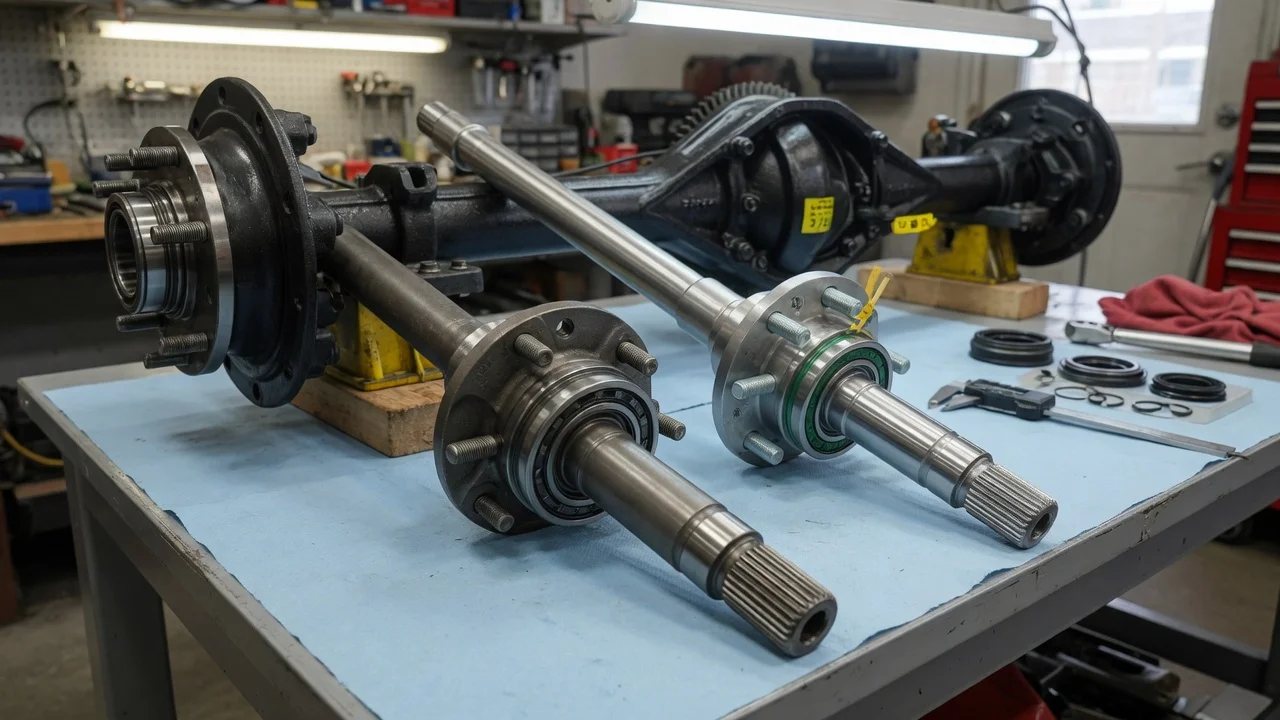
A rear axle shaft on a Ford F-150 is usually replaced for a concrete reason: a growling or leaking wheel bearing, a worn bearing surface on the shaft, damaged splines or a shaft bent by an impact. A new part only works if it matches the exact axle under your truck, and F-150 rear axles have changed across generations and options. This guide shows how to narrow down a compatible F150 rear axle shaft using your vehicle configuration, the axle code and the part you are removing.
Define the job the product must do
Start with the failure, not the catalog. If a wheel bearing has been noisy for a while, the rollers often wear a groove into the shaft where the bearing rides, and a new bearing on that worn surface will not last. A gear oil leak at the wheel usually points to the axle seal, which shares the same sealing surface. A shaft that wobbles when spun or shows twisted or chipped splines needs replacement regardless of the bearing. Knowing which of these you are dealing with tells you whether you need a shaft alone, a shaft with bearing and seal, or a closer look at the differential as well.
Then consider how the truck is used. Operating conditions such as regular towing, heavy payloads, off-road use or oversized tires put more load on the rear axle than daily commuting, and they may justify a stronger replacement than a basic like-for-like part. Also decide whether you will do the work yourself or have a shop do it, whether you are replacing one side or both, and how long the truck can be off the road. These constraints shape which options are realistic before compatibility even comes into play.
Check compatibility
The most reliable starting point is the axle code on the truck's certification label in the driver door jamb, together with any identification tag attached to the differential cover. Over the years the F-150 has used more than one rear axle family, including axles with 8.8-inch and 9.75-inch ring gears, and shafts are not interchangeable between them. Model year alone is not enough, because the axle can differ by drivetrain, towing package, gear ratio or locking differential option within the same year. A VIN-based parts lookup helps, but treat it as a starting point and confirm against the axle code and the physical part.
Several interfaces have to match. The spline count and spline length must fit the differential side gear. Overall length must match your housing, and on many axles the left and right shafts differ in length because the differential is offset, so the side matters. At the wheel end, check the lug count, bolt pattern, stud size and pilot diameter so the brake rotor or drum and wheel seat correctly. The bearing journal and seal surface must suit the bearing and seal you plan to install, and on C-clip axles the inner end needs the correct clip groove. Where the truck uses wheel speed sensing at the rear, confirm that nothing on the replacement interferes with it.
Once the old shaft is out, measure it before ordering or before installing the new one: overall length, spline count, flange diameter and stud layout. Lay the two shafts side by side. Any difference is a reason to stop and recheck the axle code rather than force the fit.
Features that affect the choice
Replacement shafts generally fall into original-equipment parts, direct aftermarket replacements and upgraded shafts sold for towing or performance use. A direct replacement is the logical choice for a stock truck with a worn bearing surface. An upgraded shaft makes sense only when your use genuinely exceeds what the factory part handled, and it still has to match the same axle code and dimensions. Be cautious with labels such as heavy duty or severe service on their own. Useful evidence is specific: the stated material, how the shaft is heat treated, the spline count, the exact fitment list and the warranty terms. A label without those details tells you little.
Check what comes in the box. Some shafts arrive with wheel studs installed and others require you to transfer or buy studs. Some kits include a bearing and seal, which saves sourcing them separately and helps ensure they suit the new journal. If your truck has a locking or limited-slip differential, confirm the listing covers that configuration. Where the only problem is a grooved bearing surface, some owners use a repair bearing designed to ride on a different spot of the original shaft; it can be a reasonable option when the splines and flange are sound, but it does not fix a bent or damaged shaft.
Limitations and ownership costs
The shaft price is only part of the job. On C-clip axles the work typically means removing the wheel and brake components, draining the gear oil, pulling the differential cover, removing the cross pin bolt and cross pin, pushing the shaft inward to release the clip, and then sliding the shaft out. Plan for a new bearing and seal, a cover gasket or the sealant the manufacturer specifies, fresh gear oil and, on limited-slip units that require it, the specified friction modifier. A slide hammer or bearing puller is often needed for the old bearing, and torque values for the cross pin bolt, cover and wheel fasteners should come from the manufacturer specifications for your truck.
A new shaft cannot solve problems elsewhere in the axle. It will not quiet worn ring and pinion gears, repair a damaged bearing bore in the axle tube, straighten a bent housing or stop a leaking pinion seal. If a bearing ran dry or broke apart, inspect the housing, side gears and gear oil for damage and debris before reassembly. Gear oil service intervals depend on the truck and its use, so follow the Ford maintenance schedule for your configuration and record the work in the service history.
Build a practical shortlist
Narrow the options with a short checklist. First, confirm the axle code from the door label and the differential tag. Second, match spline count, overall length and side. Third, verify lug count, bolt pattern, stud size and pilot diameter at the flange. Fourth, confirm the bearing journal and seal surface suit the bearing and seal you will use, and whether they are included. Fifth, check compatibility with your differential type. Sixth, compare stated materials and warranty instead of marketing labels. Finally, total up the supporting parts, fluids and labor so you compare complete job costs, not just shaft prices.
Keep the old shaft until the new one is confirmed as an exact match, and do not discard it on the assumption that a return will be simple. If one side failed through ordinary wear, include an inspection of the opposite bearing and seal while the differential is open, since the extra work at that point is small. A careful match to your vehicle configuration avoids a second teardown and keeps the rear axle working as Ford intended.