Ford F-150 Electronic Parking Brake Service Mode Explained
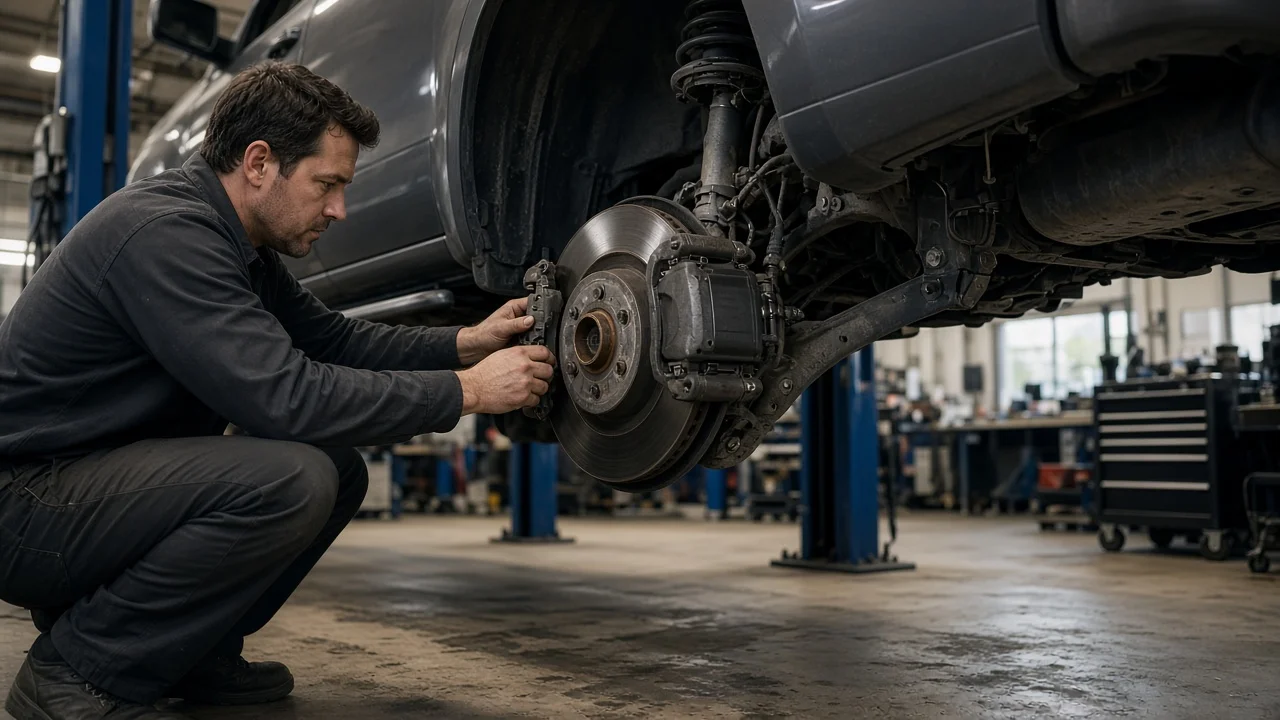
If your F-150 has an electronic parking brake, you cannot service the rear calipers the way you would on older trucks. Before the rear brake pads come out, the parking brake actuators must be retracted and the system told not to apply. Ford calls this a maintenance or service mode. This guide explains what the mode does, how it is usually entered, and where the owner's job ends and a shop's begins.
The short answer
Service mode, often called maintenance mode in Ford documentation, puts the electronic parking brake into a state where the rear caliper actuators are fully retracted and held released. That lets you push the pistons back and replace pads or rotors. On an F-150 with this system, you need it for any rear brake job that removes the caliper or pads. Depending on model year and equipment, you enter it either with a set sequence using the ignition, parking brake switch and pedals, or with a diagnostic scan tool that supports Ford electronic parking brake functions. The exact steps are not the same on every truck. Take them from the owner's manual or service information for your F-150, not from a procedure written for another Ford model.
Front brake work does not need service mode, because the parking brake acts only on the rear axle. When the rear work is finished, you must exit the mode so the parking brake works normally and can hold the truck again.
How the electronic parking brake works at the rear
On F-150 trucks with an electronic parking brake, the parking function is built into the rear calipers rather than a separate cable-operated drum. An electric motor on each rear caliper drives a gearbox and a threaded spindle behind the piston. When you apply the parking brake, the spindle moves out and clamps the brake pads against the brake rotors mechanically, without relying on brake fluid pressure. Releasing the brake runs the spindle back.
Because of this design, you cannot just compress a rear piston with a clamp. If the spindle is not fully retracted, it blocks the piston, and forcing it can damage the spindle, the motor gearing or the piston seal. Service mode drives the spindle fully back and then blocks the parking brake from applying, whether automatically or from the switch. That keeps the system from clamping the caliper while it is off the rotor or while your hands are near it. When you exit the mode, the system adjusts its applied and released positions to the new, thicker friction material.
What changes the procedure on your truck
Model year and equipment matter most. Not every F-150 has an electronic parking brake. Earlier generations used a pedal-operated cable system, and those trucks need no service mode. Among trucks that do have one, the details can differ: the entry sequence, the instrument cluster message that confirms the mode, and whether a manual sequence works at all. Check the documentation that matches your truck's build rather than assuming one procedure fits all.
Operating conditions also affect the result. The system generally needs enough battery voltage, the correct ignition state and no active parking brake faults before it will enter or leave the mode. A weak 12-volt battery or a stored fault can stop the sequence from working. In that case you need a scan tool to read codes and command retraction. Vehicle fitment of replacement parts is the other variable. F-150 brake hardware differs between configurations, so pads, rotors and calipers must match the truck's actual rear brake package. Also confirm whether your caliper piston is pressed straight back or turned with a tool once retracted, before you apply force.
What the owner can do before and during the job
Park on level ground, chock the front wheels and leave the transmission in Park, because the parking brake will not hold the truck while service mode is active. If the ignition will be on for a while, check the battery or connect a maintainer. Enter service mode using the procedure for your truck, and confirm the cluster message or released state before loosening any caliper bolts. Do not unplug the caliper motor connectors as a shortcut unless the service information calls for it, since this can set fault codes.
Once the actuators are retracted, inspect everything before buying parts. Measure the pad friction material and rotor thickness against the wear limits in the service information. Look for uneven pad wear, which can point to sticking slide pins, and check the caliper boots and piston seals for damage. Pushing the pistons back raises the brake fluid level, so watch the reservoir and remove fluid if it gets close to overflowing. Old or contaminated brake fluid should be handled as a separate maintenance item.
After reassembly, exit service mode, then pump the brake pedal until it is firm before moving the truck. Apply and release the parking brake a few times with the switch and confirm that no warning lights or messages appear. Check that the parking brake holds on a gentle incline and that the service brakes feel normal at low speed before regular driving. Follow any bedding guidance supplied with the new pads.
Limits and when to hand it to a shop
This article explains the system in general terms. It does not replace the entry sequence, torque values and wear limits published for your F-150. If the truck will not enter or exit service mode, a parking brake warning stays on, or a caliper will not release, stop and diagnose the problem rather than forcing parts. These symptoms can point to a battery problem, a failed actuator, damaged wiring or a module fault that needs a capable scan tool.
If a braking fault affects stopping, such as a low or soft pedal, pulling, grinding or a red brake warning, do not drive the truck until it has been inspected. If you are unsure of the procedure or lack the tools to measure and torque components correctly, have a brake shop or dealer finish the job and confirm the parking brake works properly.