Ford F-150 4WD Actuator Vacuum Lines: How They Work and What to Check
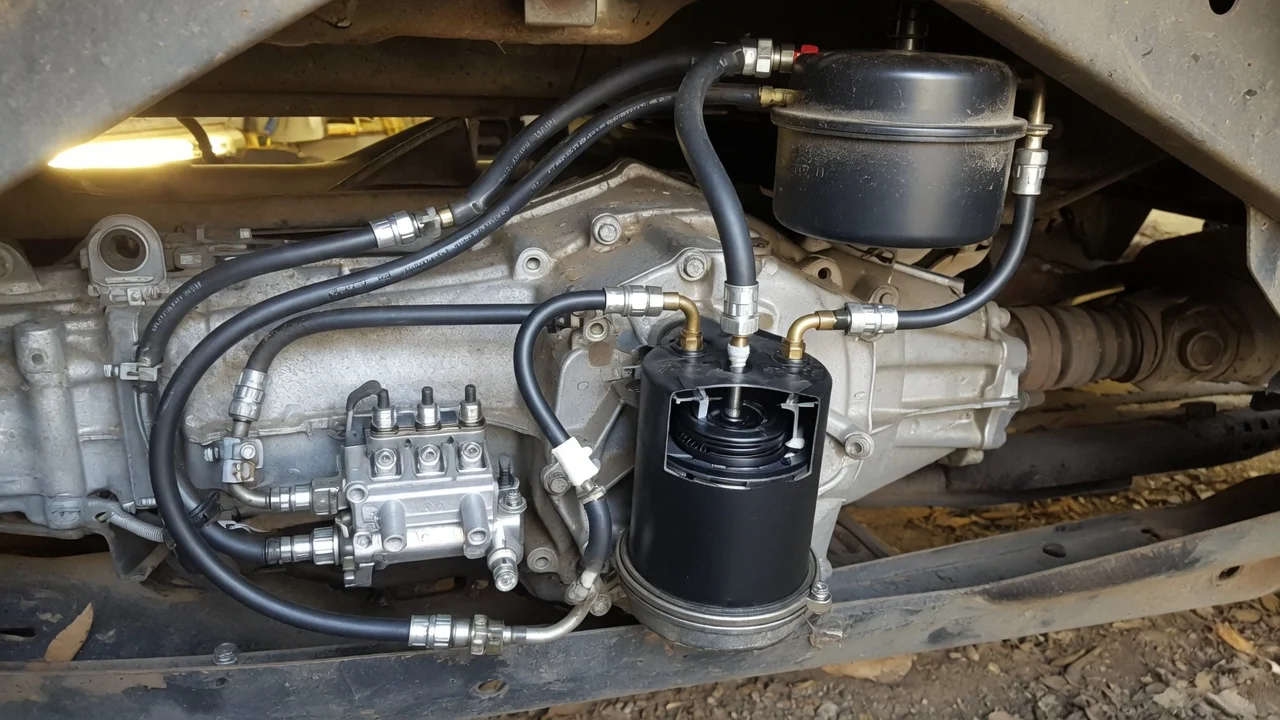
On many later Ford F-150 4x4 trucks, vacuum engages and releases the front wheel hubs. There is no lever or motor at the wheel. A cracked hose, loose fitting or leaking seal in the 4WD actuator vacuum lines can therefore cause grinding, clicking or unpredictable hub engagement. This article explains how the system works, what differs between trucks, and how an owner can approach an inspection before replacing parts.
Short answer: what the vacuum lines do
Some F-150s have vacuum-actuated integrated wheel ends, usually called IWEs. On these trucks, the vacuum lines carry vacuum from a supply source to an actuator at each front wheel end. The vacuum passes through a check valve and an electrically controlled solenoid on the way. In this design, vacuum holds the wheel ends disengaged while the truck is in 2WD. When 4WD is selected, the solenoid stops supplying vacuum and the wheel ends engage. Because of this, a leak usually does not prevent 4WD from working. More often, it lets the front wheel ends drag or partly engage while you drive in 2WD. Owners typically hear this as grinding, ratcheting or clicking from the front of the truck.
Not every F-150 uses this layout. Other generations and configurations use manual or automatic locking hubs or different front-axle arrangements. Line routing, connector styles and component locations also vary by model year. Confirm which system your truck has before buying vacuum lines, solenoids or wheel-end parts.
How the vacuum-actuated wheel ends work
Vacuum comes from an engine-related source, and that source differs by engine. A check valve in the supply line lets vacuum flow toward the wheel ends but not back. This keeps the system holding vacuum when engine vacuum drops, such as under hard acceleration. The 4WD control system operates the solenoid. In 2WD, the solenoid passes vacuum to the lines that run along the frame to each front wheel. When 4WD is requested, the solenoid cuts that vacuum, and spring force inside each wheel end engages it with the axle shaft. The transfer case is shifted by a separate mechanism, so the vacuum circuit only controls the wheel ends.
Each wheel-end actuator relies on a seal and a spring. If vacuum leaks anywhere downstream of the solenoid, the force holding the wheel end apart weakens. The spring can then push the internal engagement parts partway together while the wheel and axle shaft turn at different speeds. That partial contact makes the characteristic noise, and over time it can wear the wheel-end components.
What changes the answer
Several factors change both the parts list and the diagnosis: • Configuration: model year, engine, cab and bed choice, and whether the truck has an automatic 4WD mode. These determine where the solenoid sits, how the lines are routed, and which connectors and service parts fit. • Aftermarket changes: lifted trucks or trucks with suspension modifications can stretch or chafe lines that were routed for factory ride height. • Prior repairs: check the service history for replaced wheel ends, spliced hoses or substituted fittings, which can bring new leak points.
Operating conditions matter too. Rubber connectors at the line ends can harden and crack with age, heat and cold. Road salt, mud and off-road debris also take a toll, and wheel-end seals can leak after water exposure. When the noise happens can help narrow down the cause. Noise mostly under acceleration, when engine vacuum falls, can point toward the supply side or the check valve. Noise that is present more steadily in 2WD can point toward a leak nearer the wheel ends. These are clues for further testing, not conclusions.
What the owner can do
Start by noting exactly when the symptom occurs: speed, acceleration or cruising, turning, temperature, and whether it changes after switching between 2WD and 4WD. Then do a visual inspection with the truck parked on level ground, the engine off and the wheels chocked. Follow the vacuum lines from the solenoid area to each front wheel end. Look for cracked or split rubber connectors, lines that have popped off their fittings, kinks, melted sections near exhaust parts, and chafing against the frame or suspension. Look closely at the short connections at the wheel ends, which take the most movement and debris. If you need to work under the truck, support it on proper stands, never on a jack alone.
A hand-held vacuum pump with a gauge is the most useful tool here. Disconnect the line feeding the wheel ends at the solenoid side and apply vacuum toward the wheels. A sound circuit should hold vacuum. If it bleeds down, test each branch and each wheel end separately to find the leak. Check that the check valve is installed facing the right direction and that it holds vacuum in one direction only. Consult the service information for the acceptable hold value and test procedure for your truck rather than relying on a general figure.
Repairs may involve replacing rubber connectors or line sections, or replacing a check valve, solenoid or wheel-end seal. After a repair, confirm that the noise is gone in 2WD and that the front wheels still engage when 4WD is selected.
Limitations and next step
A vacuum leak is a common explanation for front grinding on IWE-equipped trucks, but it is not the only one. Internal wheel-end wear, wheel bearings, CV joints, brake parts and electrical faults in the 4WD control or solenoid circuit can produce similar or overlapping symptoms. A vacuum system that tests tight does not clear these other components. Driving for long periods with partly engaged wheel ends can also add wear, so do not leave a confirmed symptom unaddressed.
As a next step, identify your truck's exact model year, engine and drivetrain. Then get the matching routing diagram and test procedure from factory service information. Use the manufacturer specifications and the truck's maintenance schedule rather than generic intervals. If the lines are hard to reach, the leak cannot be isolated with a hand pump, or the noise continues after the vacuum circuit passes testing, have a qualified technician diagnose the wheel ends and 4WD electrical system.