Ford F-150 Catalytic Converter: Count, Location and Replacement
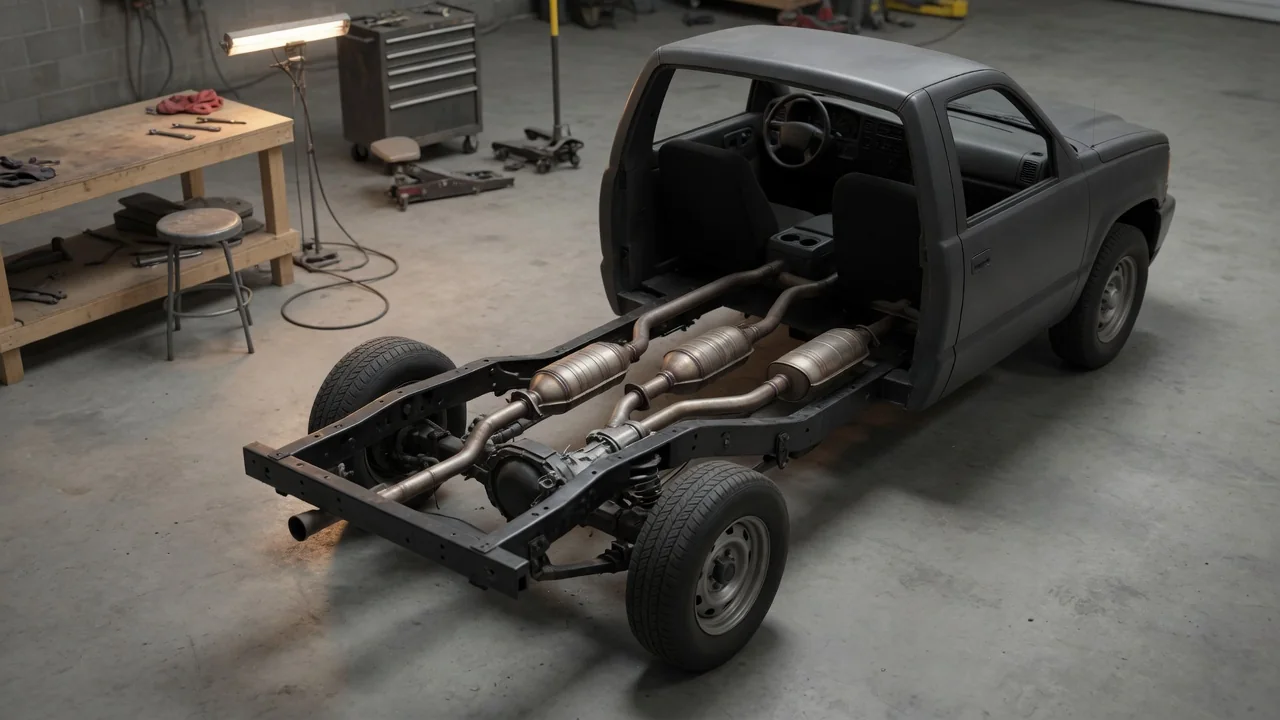
A catalytic converter for a Ford F-150 is part of that truck's exhaust system, not a universal pickup part. The right Ford F150 catalytic converter still depends on year, engine, fuel type, and emissions setup. Those details decide how many converters sit on an F-150, where the converter on a Ford F150 is located, and which replacement assembly belongs on that truck.
Identify the F-150 Configuration Before Choosing a Converter
The catalytic converter on a Ford F-150 treats exhaust gases after they leave the engine, using catalyst material inside a metal housing to reduce regulated emissions before the flow continues toward the muffler and tailpipe. On this pickup, that job is tied to the original exhaust layout, engine configuration, and emissions certification, not to a generic truck category. A Ford F150 catalytic converter that works on one engine family can be the wrong housing, pipe shape, or certification part on another F-150.
Before choosing a catalytic converter for F150 service, collect the model year, engine family, fuel type, VIN, and the emissions label information that records the original certification. VIN-based fitment is the practical way to match a converter assembly to that truck, because the F-150 name alone does not set converter count, location, or pipe routing. Also compare the installed exhaust with those records. Previous cat-back work, welded substitutes, or deleted sections can leave a system that no longer matches the factory layout, which changes both diagnosis and replacement planning.
Confirm How Many Catalytic Converters the Truck Has
Converter count on an F-150 catalytic converter setup is configuration-specific. Engine layout, emissions certification, and the original exhaust design determine whether one housing, several housings, or a combined assembly was installed. There is no single count that applies to every Ford F-150. A V-configured engine may use more than one catalyst path, while other powertrains use a simpler routing. Treat published parts lists and labeled exhaust diagrams for that VIN and engine as the authority, not another truck's exhaust or a generic F150 catalog entry.
Counting can also depend on what is being numbered. A shop may count visible converter housings, internal catalyst bricks inside a single shell, or a complete replacement assembly that includes pipe, flanges, and more than one catalyst. Those numbers will not always match, which is why a parts inquiry should specify the assembly rather than a single converter. If the owner is unsure, a properly equipped shop can confirm the count from VIN-based parts data, exhaust diagrams, and a lift inspection. That process does not require the owner to crawl under a hot or poorly supported truck.
Locate the Converters Along the Exhaust System
Exhaust on a Ford F-150 leaves the engine, passes through manifolds or downpipes, then continues through the converter assembly and remaining pipework toward the tailpipe. Exact placement of each catalytic converter for Ford F150 applications still depends on that truck's diagram. Close-coupled housings sit nearer the engine; others sit farther downstream. Oxygen sensors typically occupy bungs before and after catalyst sections so the control module can compare upstream and downstream readings. On a labeled diagram, those sensors and housing outlines mark the path more reliably than guessing from a bulge in the pipe.
Bank and component labels on the diagram identify which converter assembly is in question, but bank orientation must be verified for that engine rather than assumed from another F-150. Left and right, or bank 1 and bank 2, follow the engine's firing layout, not the driver's side of the cab. Owners can look from a safe distance at cool, visible sections of the exhaust, such as what can be seen from the wheel well or with the hood open. Any underbody inspection that requires lifting the truck belongs in a shop with proper support equipment.
Recognize Symptoms That Need Exhaust Diagnosis
A check-engine light, reduced power, a rattling sound from the exhaust, or an unusual exhaust odor can all appear when a catalytic converter on an F-150 needs attention, but none of those clues proves the catalyst has failed. Exhaust leaks ahead of a sensor, misfires, fuel-control problems, and oxygen-sensor faults can produce overlapping drivability and odor complaints. The same light that flags catalyst efficiency may also appear for a wiring issue or an upstream engine fault that the converter did not cause. Treat the symptoms as a reason to diagnose, not as a parts verdict.
Diagnosis should also separate an efficiency concern from suspected exhaust restriction, a damaged housing, or a missing converter. A truck that lacks power under load may have a blocked catalyst, but it may also have an ignition, fuel, or intake problem that never reached the converter. Physical damage or a stolen assembly is a different finding from a stored efficiency code. Stop driving and seek assistance if power loss is severe, the check-engine light flashes, smoke appears, or exhaust fumes enter the cabin. Those conditions can signal a misfire, leak, or heat-related risk that needs immediate professional attention.
Understand What Testing Should Establish Before Replacement
A stored diagnostic code is evidence to interpret, not proof that a catalytic converter for Ford F-150 replacement is required. The code must be read with the exact definition and bank designation for that vehicle, especially when the definition is manufacturer-dependent and cannot be assumed from a generic list. Bank 1 versus bank 2, upstream versus downstream, and efficiency versus circuit faults describe different tests. Replacing a converter because a light is on, without confirming those details, can leave the original engine or sensor problem in place and a new assembly at risk.
Professional testing should look for exhaust leaks that skew sensor readings, misfires that overheat a catalyst, fuel-control problems that keep the mixture off target, and oxygen-sensor operation that no longer tracks as expected. Catalyst-efficiency testing and exhaust-restriction checks belong in that sequence when symptoms or codes point at the converter rather than at an upstream fault. If an engine problem is still present, a new converter will not restore catalyst efficiency for long. Address the cause first, then retest. Only after those results support a failed or damaged catalyst should replacement be planned.
Plan a Correctly Matched, Compliant Replacement
A correctly matched catalytic converter for f150 replacement depends on the truck's configuration, emissions certification, the affected bank, and the assembly's position in the exhaust layout. Direct-fit replacement is the usual goal because pipe length, flange pattern, sensor bung placement, and heat-shield geometry are not interchangeable across every Ford F-150. Confirm that the part meets the emissions requirements that apply where the truck is registered. A converter that fits the pipes but does not satisfy local certification rules is not a complete repair, even if it bolts in place.
When reviewing an estimate, clarify the assembly scope, whether oxygen sensors are included only if testing supports replacing them, plus gaskets, hardware, labor, and warranty terms. Cost often tracks converter assembly design, how much of the exhaust must be unbolted or cut, and corrosion at flanges and hangers rather than a single catalog number. After installation, leak checks and diagnostic verification matter more than simply clearing codes. A dark check-engine lamp after a reset does not confirm restored catalyst efficiency. Drive-cycle monitoring and a confirmed repair of any remaining engine faults complete the job.