Ford F-150 Cabin Air Filter: Location and Replacement (2013–2023)
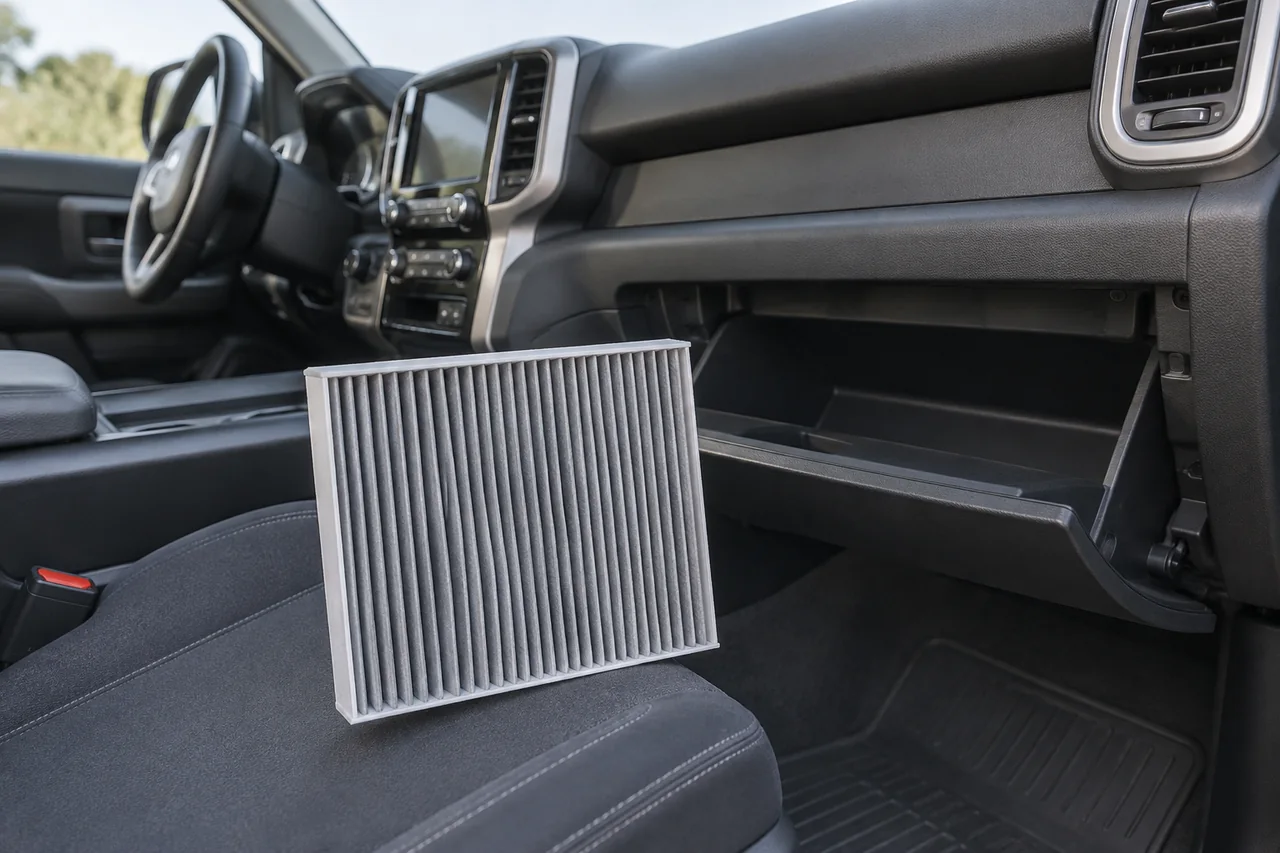
A cabin air filter for a Ford F-150 traps dust and pollen in the HVAC path before that air reaches the cabin. Fitment of an in-cabin air filter is not the same from 2013 through 2023, so model year and factory equipment come first. Some trucks have a serviceable filter housing; others do not. Confirm whether yours has a cabin filter, where it sits, and how replacement should proceed.
Identify Your F-150’s Model Year and Factory Filter Equipment
A pleated cabin air filter sits in the F-150 ventilation path so airborne particles are captured before they ride HVAC airflow into the cabin. That function does not tell you which element fits; the truck's year and factory equipment do. Across 2013-2023, some builds include a serviceable housing and some do not. Establish those details first, then look up a cabin air filter for the Ford F150 you actually own.
The owner's manual, certification label, and a parts catalog keyed to the vehicle identification number confirm whether a serviceable filter is fitted. A listing for a 2017 F150 cabin air filter or a 2021 F150 cabin air filter does not prove that housing was factory equipment. A loaded filter can reduce HVAC airflow, yet it does not explain every odor, weak cooling, or blower complaint. Treat the filter as one inspection item, not a complete diagnosis.
2013–2014 F-150: Confirm Fitment Before Searching for a Filter
Year-specific documentation should come before any hunt for a 2013 F150 cabin air filter location. A replaceable cabin filter was not automatic factory equipment on a 2013 Ford F150 or a 2014 F-150, so the owner's manual and a vehicle-specific parts listing matter more than a catalog photo. An online listing for a 2014 F150 cabin air filter shows a marketed part, not proof that a factory housing exists.
If documentation shows no serviceable factory filter, there is no routine cabin-filter replacement procedure for that configuration. A previous owner may have added an aftermarket housing, but confirm that by inspecting the HVAC case as it sits rather than assuming a kit is present. Do not cut or modify the HVAC case to create a filter slot. If an unfamiliar housing is already there, identify it from markings and the truck's details before buying a filter.
2015–2016 F-150: Locate the Filter and Confirm Access
On a 2015 F-150 and a 2016 Ford F150, the documented cabin air filter sits in a housing reached through the glove box. After the glove box is opened and lowered as the year-specific procedure describes, an access cover on the filter housing is the next point of contact. Retainers or trim around that cover should match that model year. If the layout does not match the documented housing, stop rather than prying into adjacent ductwork.
Confirm fitment from the truck's year, build details, and the filter's stated dimensions rather than a generic 2016 F150 listing. A cabin air filter for 2015 F150 and one sold for a 2016 truck can look similar as pleated panels, yet the housing still has to match. Brittle clips, unexpected screws, or a cover that will not release as documented are reasons to stop. Forcing those parts can break the glove box or unseal the housing.
2018–2020 F-150: Find the Housing and Check Filter Fitment
The verified cabin air filter location for 2018, 2019, and 2020 F-150 trucks is the passenger-side HVAC housing. Access is typically through the glove box after it is opened and lowered as that year's procedure describes. Closure points can include an access cover plus glove-box stops or dampers released to reach it. Hardware is not identical across a 2018 Ford F-150, a 2019 Ford F-150, and a 2020 F150, so use the retainers listed for your year.
Once the cover is off, inspect the pleated media for packed dust, crushed pleats, torn edges, and gaps at the housing walls. Deformation or a missing seal can let air bypass the media even if the filter looks new. Buy a replacement only after the parts listing confirms fitment, including notes that exclude certain cabs or option packages. Ignoring those notes on a Ford F150 cabin air filter replacement can leave a panel that will not seat.
2023 F-150: Verify the Filter Location for Your Configuration
A 2023 F150 cabin air filter is a serviceable HVAC part, but location and access belong to the truck's configuration, not to every 2023 Ford F150 as a group. Cab style, climate-control layout, and the parts listing decide which housing to expect and how the glove box or adjacent trim is released. Gather year, cab, and HVAC option details from the door label and owner's materials before ordering. Those details keep you on the procedure written for your configuration.
The housing cover and its retention points should match the information for your 2023 configuration. If the documented cover uses clips, a latch, or screws, release those points and avoid levering on the plastic case. After the new filter is in, confirm it sits fully in the track so the cover closes without crushing pleats, then secure the opened retention points. Restore the glove box so it latches; a loose cover can whistle or let unfiltered air around the element.
Replace a Confirmed Serviceable Cabin Filter Safely
Cabin air filter replacement on a Ford F150 starts with the truck parked securely and the ignition and blower off so HVAC doors and the fan are not moving. Use the procedure written for that model year rather than mixed steps from 2013 through 2023. Release only the documented glove-box stops, dampers, or trim, then lift the housing cover without prying clips or tugging wiring. If a connector or restraint-related trim appears in the way, stop.
Slide the old filter out slowly and catch loose dust so it does not fall into the blower. Do not push debris deeper into the case. An airflow arrow on the element usually shows intended HVAC airflow through the pleats, while a housing orientation mark may only show which edge faces up. Seat the correct filter, secure the cover, restore the glove box, then run the fan and listen for a whistle.
Choose Replacement Timing and Recognize When Testing Is Needed
Replacement timing for an F-150 cabin air filter belongs on the maintenance schedule published for that truck, not on a single mileage figure applied to every 2013-2023 model. If the schedule lists a cabin-filter inspection or replacement, follow that interval and any notes on duty cycle. Dusty roads, wildfire smoke, and heavy pollen can load a pleated filter faster than highway commuting, so checking condition sooner is reasonable. That earlier look is an inspection, not a shorter universal interval.
Dark dust, collapsed pleats, torn media, and a damp filter are useful observations, but appearance cannot measure restriction of HVAC airflow. A dirty-looking filter may still pass air, and a clean-looking one can sit crooked and leak. After a correctly seated replacement, persistent weak airflow, odor, moisture at the vents, or poor cooling point past the filter to the blower, blend doors, evaporator, or drain. Repeating an F 150 cabin air filter change will not fix those faults.