Ford F-150 2010–2014 steering angle sensor: location and replacement
A steering angle sensor issue on a 2010–2014 Ford F-150 can surface as warning lights, traction control behavior changes, or odd stability control reactions. Drivers researching the 2013 f150 steering angle sensor and nearby model years usually want to know whether the component is separate, where it lives in the steering column, and what replacement actually involves. Because Ford used different electronic architectures across trims and option packages, the practical repair path depends on how the truck is equipped. Understanding the sensor’s role in the stability control network is the first useful step before reaching into the column.
Essential answer
The steering angle sensor, sometimes called a steering wheel angle sensor, tells the F-150’s electronic stability and traction control systems how far and how quickly the driver has turned the wheel. The control module compares that signal with yaw rate and wheel speed data to decide whether the truck is following the intended path. When the signal drifts, drops out, or disagrees with other chassis inputs, the system may disable stability assistance and display a service message or warning lamp.
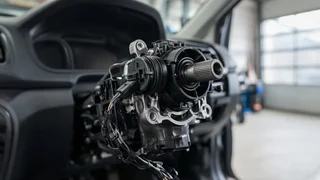
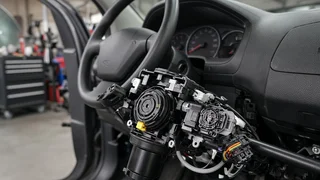
On these trucks, the sensor can be a separate ring or module mounted around the steering column between the wheel and the intermediate shaft, or its function may be integrated into the clockspring assembly depending on trim and equipment. A fault code is diagnostic evidence, not automatic proof that the sensor itself has failed. Wiring, power supply, column installation, steering wheel position after alignment, control module state, or a communication problem can all produce a similar symptom before the sensor should be replaced.
Identification and location
The steering angle sensor is typically found inside the cab, behind the steering wheel and near the upper steering column area, not under the hood or at the steering rack. It may appear as a plastic ring with an electrical connector centered on the column shaft or as part of the clockspring behind the wheel. Because the 2010–2014 generation includes several wheel and column configurations, exact placement can vary, and a sensor sold for a similar-era Ford car such as a Focus is not automatically correct for the F-150.
Identifying the right part in a parts catalog requires the model year, body configuration, and sometimes the VIN or option code for stability control. The replacement process generally involves gaining safe access to the column, removing the driver airbag and steering wheel according to the vehicle-specific service information, and then replacing or integrating the sensor before performing a calibration or steering angle reset procedure. Vehicle-specific confirmation matters because a manufacturer-dependent setup may need a scan tool routine rather than a simple mechanical swap.