Ford Explorer TCC Solenoid Identification and Location
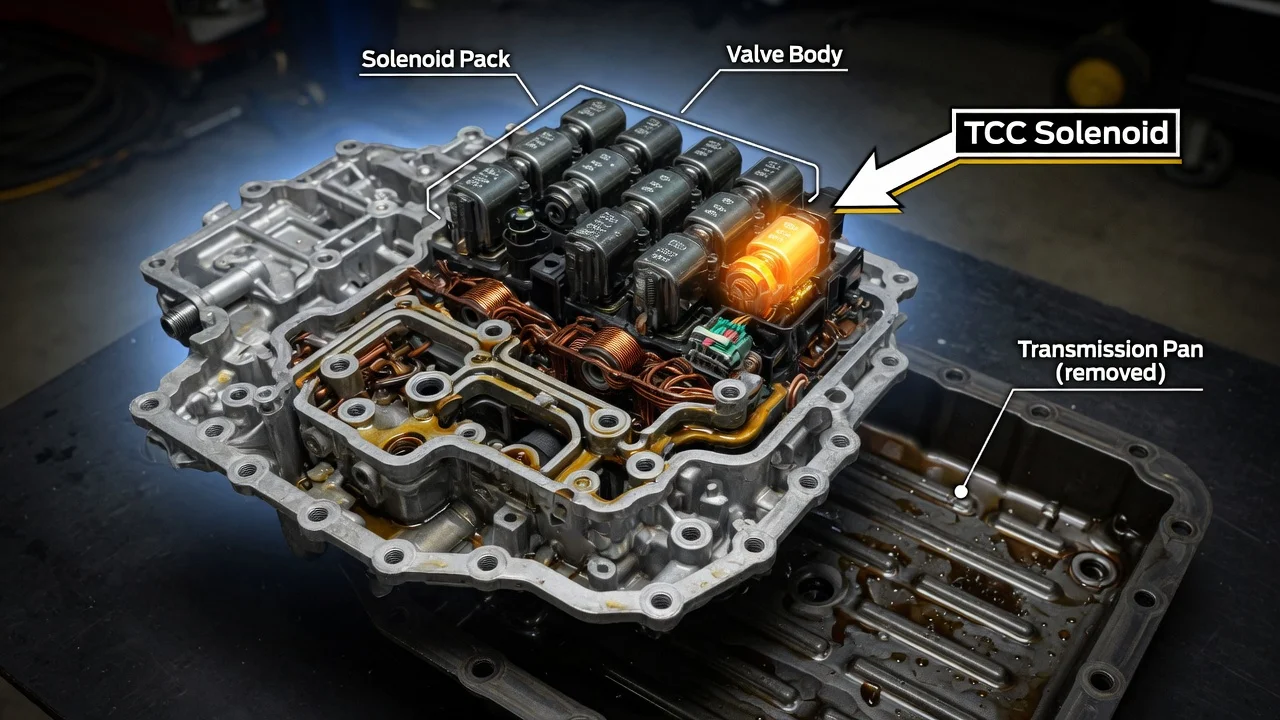
If your Explorer shudders at highway speed, holds high RPM when cruising, or has stored a torque converter clutch code, the TCC solenoid is usually one of the first parts mentioned. Before you buy anything, you need to know which transmission your Explorer actually has, because the solenoid location, how it is serviced and the correct fluid all depend on that. This guide explains where the solenoid is, how to identify it, and how to keep diagnosis grounded in evidence.
Where the TCC Solenoid Is on an Explorer
On every Explorer automatic transmission, the torque converter clutch solenoid is inside the transmission, not bolted to the outside where you can see it. It is mounted on or integrated with the valve body, either as an individual solenoid or as part of a solenoid pack. On the rear-wheel-drive based transmissions used in many Explorer generations, you reach it by draining the fluid and removing the transmission pan. On the later front-wheel-drive based six-speed units, the valve body sits behind a cover on the side of the transmission rather than under a bottom pan.
The external electrical connector on the transmission case carries the circuit for the TCC solenoid along with the other shift solenoids and sensors. That connector is something you can inspect without opening the transmission, but the solenoid itself is not. Whether it can be replaced on its own or only as part of a solenoid body or valve body assembly depends on the specific transmission.
How the Torque Converter Clutch Works
A torque converter normally transfers power through fluid, which allows some slip between engine and transmission. At steady cruising speeds, the powertrain control module commands the converter clutch to apply, mechanically locking the engine to the transmission input. This cuts slip, lowers engine RPM, reduces heat and improves fuel economy. When you slow down or accelerate hard, the clutch releases again.
The TCC solenoid is the electrical valve that makes this happen. The computer controls it, and the solenoid in turn directs hydraulic pressure that applies or releases the clutch inside the converter. On many later transmissions the control is modulated rather than simply on or off, so the clutch can slip in a controlled way during apply. That means the system depends on a working solenoid, correct wiring, clean fluid of the right specification, a healthy valve body and a sound converter. A fault anywhere in that chain can look like a solenoid problem.
Identify Your Transmission Type First
The Explorer has used several automatic transmissions over its production run. Early models used four-speed units such as the A4LD and later the 4R55E, and V8 versions of the second generation used the 4R70W. Five-speed 5R55-series transmissions appeared from the late 1990s through the 2000s, and some V8 models of the mid to late 2000s used a six-speed 6R60. The 2011 to 2019 Explorer moved to a front-wheel-drive based platform with the 6F-series six-speed, and the 2020 and later Explorer uses a ten-speed automatic.
Model year alone is not a reliable guide, because engine choice, drivetrain and running changes affected which unit was installed. Check the transmission code on the vehicle certification label in the driver door jamb, decode the VIN through a dealer or parts system, or read the identification tag on the transmission case. Confirming the exact unit settles fitment for parts, the right fluid specification and which service procedure applies.
What Changes the Answer
On the older four-speed and five-speed rear-drive units, the solenoids are usually reachable after the pan and filter are removed, and the TCC solenoid is part of the valve body area. On some of these, it is serviced individually; on others, Ford supplies the solenoids as a single body. On the six-speed and ten-speed transmissions, the solenoids are typically integrated into the control valve body, and replacement may involve an assembly that needs programming or calibration data loaded with a scan tool. Skipping that step can cause harsh shifts or new codes even when the hardware is correct.
Fluid matters as well. Older Explorer transmissions generally call for Mercon or Mercon V, while later units use a different low-viscosity specification such as Mercon LV. Using the wrong fluid can affect converter clutch apply and cause shudder by itself. Always confirm the fluid specification for your exact transmission in the owner's manual or on the dipstick or fill area, and do not mix types.
Symptoms and Codes Are Clues, Not Proof
Common signs of a converter clutch problem include a shudder that feels like driving over rumble strips at roughly 35 to 55 mph, engine RPM that stays higher than normal at highway speed, worse fuel economy, overheated fluid, or stalling when coming to a stop if the clutch stays applied. Diagnostic codes in the P0740 to P0744 range relate to the TCC circuit or its performance, and Ford also uses manufacturer-specific codes for converter clutch performance.
None of these confirm that the solenoid has failed. An electrical code can come from a damaged harness, a corroded connector or a problem in the internal wiring. A performance or slip code can come from degraded fluid, low fluid level, valve body wear, a worn converter clutch or even engine misfires that feel like shudder. Replacing the solenoid without testing is one of the most common ways to spend money on a converter clutch complaint without fixing it.
What the Owner Can Do
Start by reading and recording all stored and pending codes, not just the first one, and note whether they are electrical or performance related. Check fluid level and condition according to the procedure for your transmission, since some later units have no conventional dipstick and require a specific temperature and fill-plug check. Dark, burnt-smelling fluid or debris points toward broader wear rather than a single solenoid.
Inspect the external transmission connector and nearby wiring for damage, fluid intrusion or corrosion. If you have a scan tool that shows live data, watch the commanded TCC state against engine and turbine speed during a steady cruise; a commanded apply with continued slip tells a different story than no command at all. Review the service history for prior fluid changes, valve body work or software updates, because some converter clutch complaints have been addressed by recalibration.
Once the cause is narrower, repair options range from fixing wiring, to a fluid service, to solenoid or solenoid body replacement, to valve body or converter work. Match any part to your confirmed transmission and follow the correct fill and relearn steps afterward.
Limitations and Next Step
This overview cannot replace the service information for your specific Explorer. Resistance specifications, connector pin assignments, torque values, fluid fill procedures and programming requirements differ between transmissions and sometimes between model years of the same unit. If your transmission requires solenoid body or valve body programming, or if pinpoint testing calls for factory-level scan tool functions, a dealer or transmission specialist is the practical choice.
Seek professional diagnosis promptly if the Explorer stalls when stopping, if fluid is burnt or contaminated, or if shifting problems accompany the converter clutch symptoms. Continuing to drive with a slipping converter clutch generates heat that can damage the rest of the transmission. Bring your transmission code, the full list of stored codes and your observations about when the symptom occurs, which helps a shop reach a confirmed diagnosis faster.