Ford Explorer Spark Plug Replacement Guide
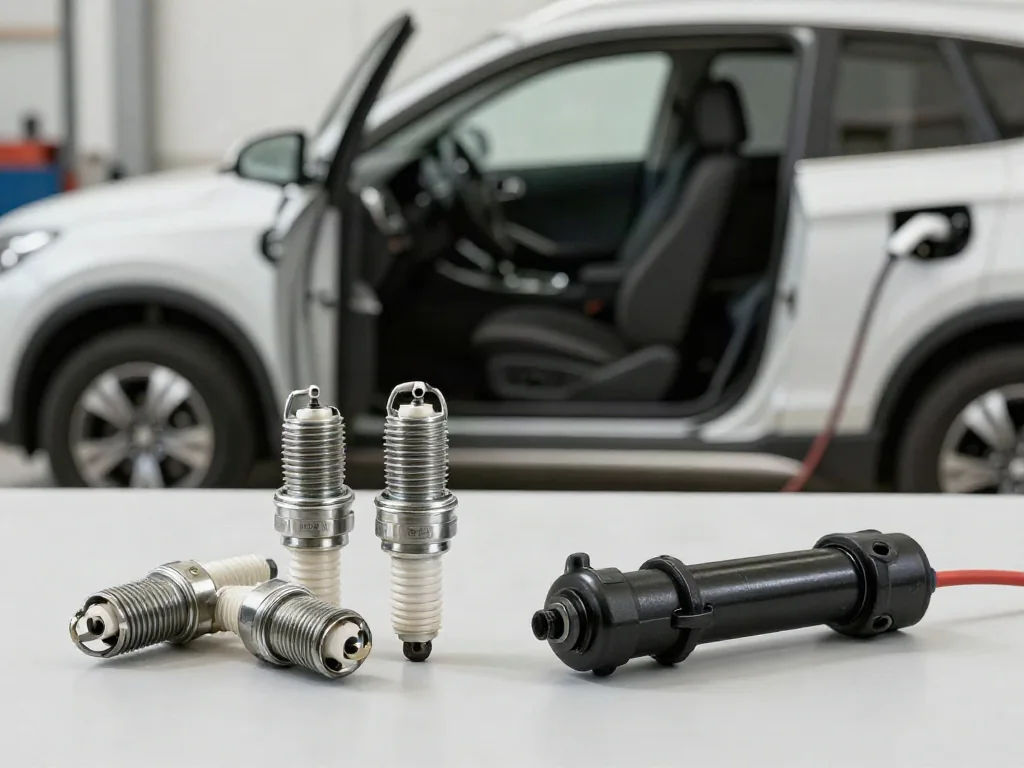
Choosing Ford Explorer spark plugs starts with the engine under the hood, not a trim badge or a generic catalog listing. Spark plugs for Ford Explorer engines vary by model year and powertrain, so the correct spark plug specification, replacement interval, and access path must be confirmed for that vehicle. Start by identifying the engine, then read the maintenance schedule, verify plug type and electrode gap, judge service complexity, interpret misfire clues, and keep a record of the work.
Identify Your Explorer’s Engine Before Choosing Spark Plugs
Ford Explorer spark plugs are application-specific because the Explorer has used several gasoline engines across generations, each with its own coil layout, thread design, and heat range. Model year alone is not enough if the same year offered more than one displacement or if a replacement engine was installed. Engine identification should come from the owner's manual, underhood labels, and VIN-based parts information rather than from a Sport or Limited badge. Those badges describe trim, not the ignition hardware that actually fires the mixture.
Once the engine is confirmed, plug specifications, maintenance requirements, and access procedures can be pulled for that exact Explorer configuration. A parts catalog that lists spark plugs Ford Explorer owners commonly buy still needs the engine code or VIN decode before an order is placed. Coil-on-plug engines, older distributor-style layouts, and later turbocharged options do not share the same reach, seat, or ignition coil interface. Confirming the configuration first prevents a wrong-thread plug, an incorrect heat range, or a labor estimate that assumes easy plug-well access when the engine is actually crowded.
Find the Applicable Spark Plug Replacement Interval
The spark plug replacement interval lives in the maintenance schedule for that model year and engine, not in a single Explorer-wide rule. Open the owner's manual or the manufacturer's scheduled-maintenance booklet and match the powertrain listed there to the engine already identified. Some schedules place plugs in a long-interval, severe-service, or time-and-mileage chart; others group them with ignition inspection items. Using the correct chart matters because a V6, a V8, and a later EcoBoost-style engine can carry different inspection language even when they share the Explorer nameplate.
Compare the scheduled mileage to the odometer and to documented replacement history before deciding the job is due. A recent invoice that lists the plug part number and mileage is more useful than a guess based on age. If service history is missing, treat the interval as unknown rather than overdue by default, then inspect for misfire, rough running, or a stored ignition concern. Driveability symptoms still warrant diagnosis even when the calendar interval has not arrived, because a fouled plug, a weak coil, or a wiring fault can appear well before the next scheduled replacement.
Confirm Plug Type, Gap, and Application
Do not recommend a plug until an application-specific spark plug specification or a verified part-number cross-reference is in hand. Electrode material, heat range, thread diameter and reach, and seat design, gasket or taper, must match the cylinder head the Explorer actually has. Copper, platinum, and iridium constructions are not interchangeable simply because they thread into a similar hole; the wrong heat range can foul or overheat, and the wrong seat can leak compression. Catalog listings titled spark plugs for Ford Explorer still need that engine match before any box is opened.
Verify the specified electrode gap and follow the plug maker's guidance on whether that gap may be checked or adjusted. A package labeled pre-gapped is not automatically correct for the Explorer's ignition system; shipping, handling, or a mismatched catalog number can leave the gap outside the required window. Confirm cylinder count as well, because the required plug quantity follows the identified engine rather than a one-size Explorer kit. Six-cylinder and eight-cylinder Explorers need different quantities, and any leftover or short-pack order is a sign the application was not verified.
Understand Engine Access and Service Complexity
Access to Ford Explorer spark plugs depends on engine layout and on components surrounding the ignition coils, including intake plumbing, covers, and brace hardware. Some banks sit in open plug wells; others sit under manifolds or close to the firewall. Which covers come off and how deep each well is must be verified for that engine before a shop quotes the job. A look at a cooled, switched-off engine can show coil locations and obvious obstruction, but it does not replace a procedure written for that powertrain.
Restricted access and any required component removal change labor time and the scope of the appointment. A job that looks like a simple coil-and-plug swap can expand if an intake, cowl panel, or brace must come off to reach a rear bank. Ask the shop to describe what must be disturbed on that engine rather than assuming a flat-rate Explorer plug job. Keep personal observation to a cooled, switched-off engine and to visible conditions such as oil in a plug well or a cracked coil boot. Disassembly, stuck plugs, and thread repair belong with a qualified technician.
Recognize Symptoms Without Assuming the Plugs Are at Fault
Rough idle, hesitation, and hard starting can be ignition-related, but they do not establish that Ford Explorer spark plugs have failed. The same feel can come from a weak ignition coil, a leaking boot in a plug well, a fuel-delivery fault, or a mechanical issue that unbalances a cylinder. Treat those symptoms as a reason to inspect the ignition system, not as a parts list. Replacing plugs without testing simply because the vehicle is old enough for service can miss the actual cause and leave the misfire unchanged after the new set is installed.
An engine misfire code is a diagnostic starting point, not proof that a plug has failed. Manufacturer-dependent codes still need vehicle-specific confirmation, and testing may include the coil, fuel delivery, wiring, and mechanical condition of that cylinder. If the check-engine light flashes or the engine shakes severely, stop driving as soon as it is safe and seek assistance; a flashing light often means a misfire that can overheat a catalyst. Visible fluid around ignition components, including oil, coolant, or fuel odor in a well, calls for further inspection rather than plug replacement alone.
Review the Service Scope and Record the Replacement
Ask for an estimate that names the verified plugs, the labor for that access path, and any seals, coil boots, or covers the applicable procedure requires. Extra ignition parts should have a diagnostic reason; coil replacement is not automatic simply because new spark plugs for Ford Explorer engines are going in. A coil that tests within spec, a dry well, and intact wiring do not justify a full coil set. Recording those findings on the estimate keeps the job scoped to what the engine actually needs.
After the work, record the installation date, mileage, and plug part number in the service history so the next interval can be planned from facts instead of memory. That note also helps a later technician confirm what is in the head if a misfire returns. If the same symptoms persist or new ones appear after replacement, schedule professional follow-up rather than assuming the engine needs time to adjust. Fresh plugs should fire cleanly once gaps, torque, and coil seating are correct; lingering roughness still points to diagnosis, not a break-in period.