Ford Explorer 2011–2016 Steering Angle Sensor: Location and Replacement
What is the steering angle sensor and why it matters
The steering angle sensor measures the steering wheel's rotation angle and rate of turn. This data is used by the electronic stability control, traction control, and sometimes the electric power steering or lane-keeping systems to understand driver intent and vehicle direction. On the 2011–2016 Ford Explorer, a faulty or misaligned sensor can trigger warning lights, disable stability or traction control, and produce steering or braking behavior that feels inconsistent. Replacement or recalibration is often required after certain steering or suspension repairs, or when the sensor itself fails.
Direct answer: where it is located
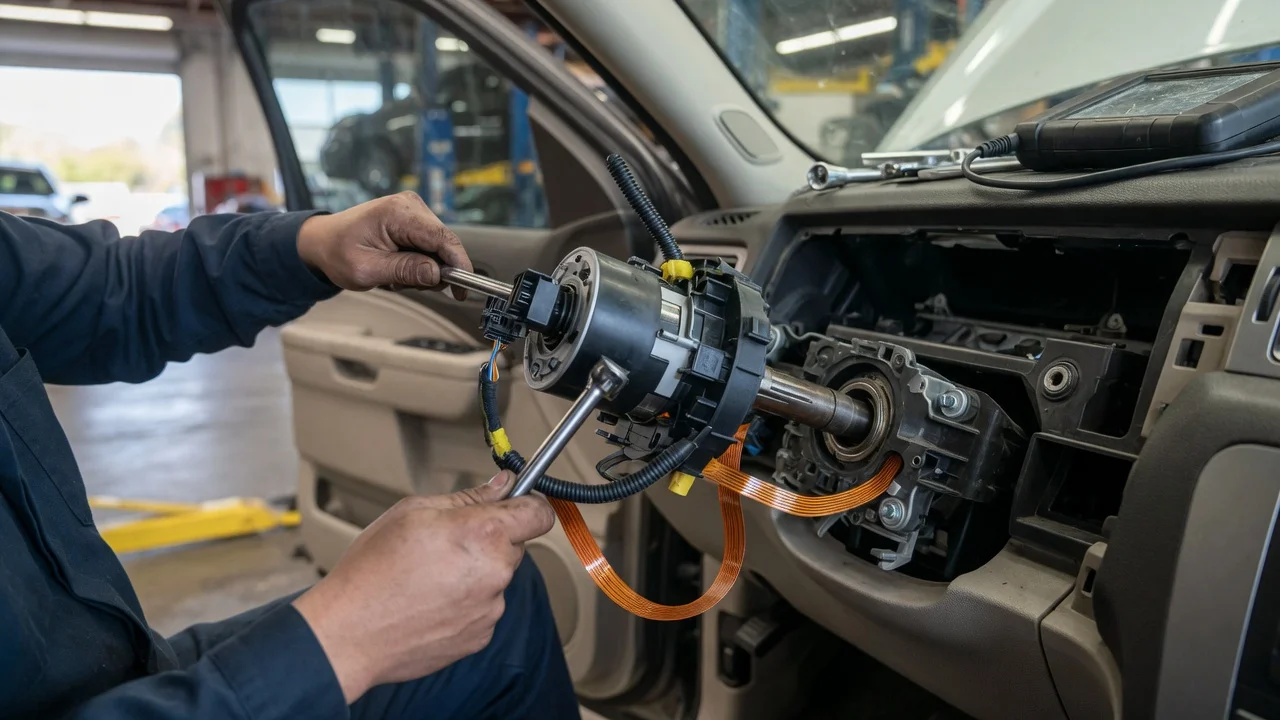
For the 2011–2016 Ford Explorer, the steering angle sensor is integrated into the steering column assembly rather than being mounted as a separate, easily removable sensor near the steering rack. In most configurations for these model years, the sensor is part of the clockspring assembly or the steering column control module behind the steering wheel. This means replacement typically involves removing the steering wheel and airbag, then servicing the clockspring or column module that contains the sensor. In some configurations, the sensor data is collected by the electronic power steering module, but the physical steering angle sensing unit on this generation remains column-mounted.
Recognizing the sensor and avoiding confusion
The steering angle sensor is not the same as the steering wheel position sensor for the audio or phone controls, nor is it the steering rack position sensor used in some electronic power steering diagnostics. On the 2011–2016 Explorer, look for a circular or semi-circular module clipped to the back of the steering wheel area, often combined with the clockspring ribbon connector. It will have a small wiring connector leading to the column harness. The integrated design means you may not find a part labeled 'steering angle sensor' sold alone for all trims; some service parts are listed as a clockspring assembly or steering column control module with the sensor function included.
Signs of a failing sensor
Common symptoms on the 2011–2016 Ford Explorer include an illuminated stability control or traction control warning light, a service AdvanceTrac message, or a steering angle sensor diagnostic trouble code such as C1231 or U0126 in some cases. The steering may feel heavier or lighter than normal in models with electric power steering, and the stability system may intervene unexpectedly during normal cornering. A sensor that has lost its zero-point calibration can cause the vehicle to pull the steering slightly or produce a crooked steering wheel while driving straight.
Replacement and calibration notes
Replacement on the 2011–2016 Ford Explorer generally requires disconnecting the battery, removing the driver airbag, unbolting the steering wheel, and accessing the clockspring or column module. Because the sensor is integrated with the clockspring in many trims, the replacement part is often the full clockspring assembly. After installation, the new sensor must be calibrated or 'centered' with a compatible scan tool. Skipping the calibration step can leave the stability and traction control systems inactive or cause false activation. Some model years may store the calibration within the power steering module and require a specific reset procedure.
Variant-dependent caveats
Exact part numbers and sensor integration vary across the 2011–2016 range. Early 2011–2013 Explorers may list the sensor as a separate service component within the column, while later 2014–2016 models more commonly pair it with the clockspring or column module as one unit. Powertrain and trim can affect whether the steering system is fully hydraulic or electric power assisted, which changes how the sensor signal is processed. Always verify the applicable part for the specific model year, trim, and steering system before purchasing components.