Ford Escape Spark Plug Replacement: Intervals, Types, and Access
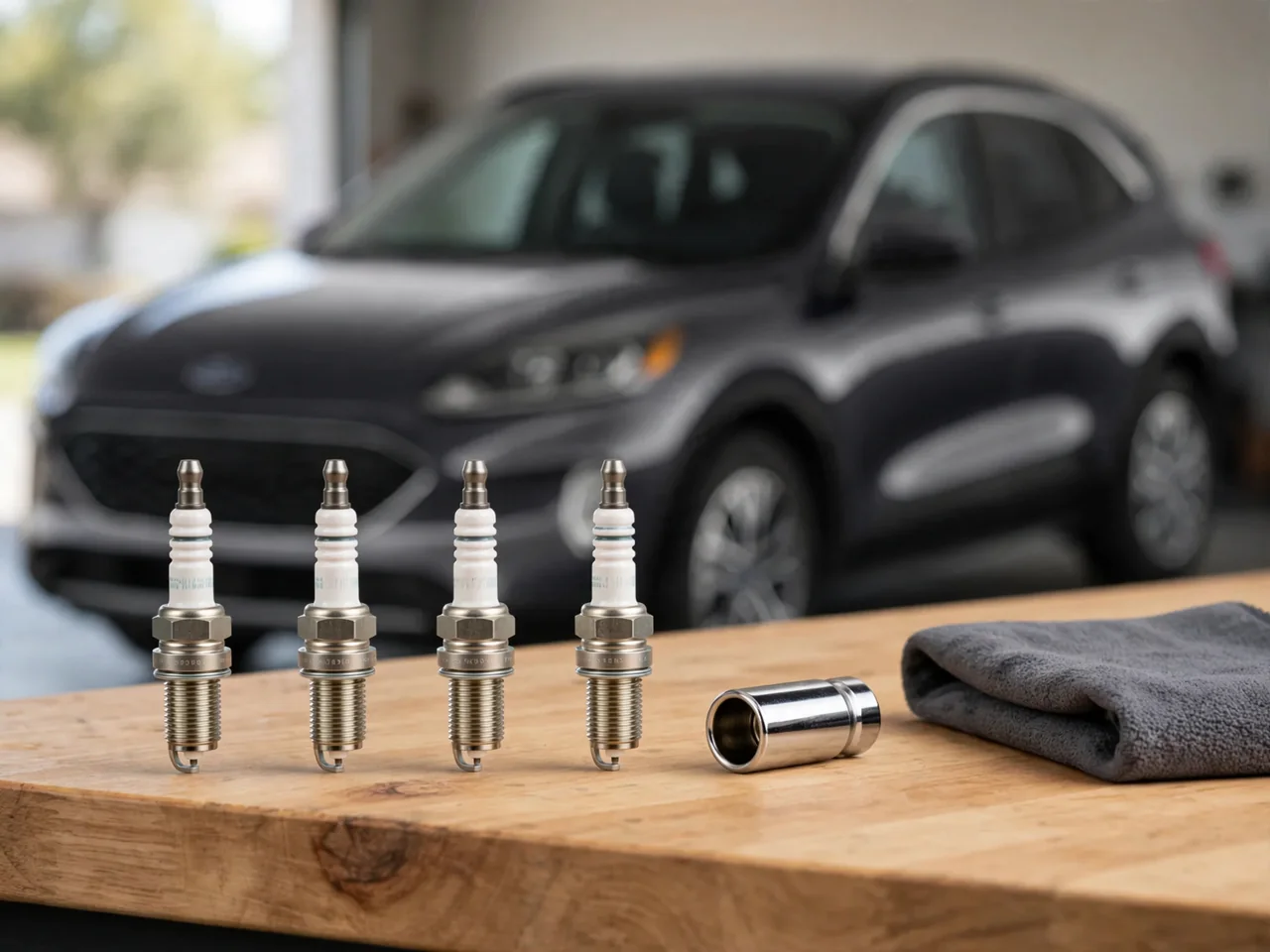
Choosing Ford Escape spark plugs starts with the vehicle itself, not a generic parts list. Escape engines have changed across model years, so the spark plug service interval, thread design, and access path depend on accurate engine identification. Use the owner's manual, underhood labels, and VIN-based lookup before buying spark plugs for Ford Escape engines or planning ignition work. Correct plugs, a verified interval, and a realistic access plan all follow from that identification.
Identify Your Escape’s Model Year and Engine
Ford Escape spark plugs are application-specific because the same nameplate has used different displacements, ignition layouts, and cylinder counts. Selecting a plug by model name alone can produce the wrong heat range, reach, or seat style, and it can also mislead you about how many plugs the engine uses and how they are reached. Confirm the model year first, then identify the actual engine from the underhood identification label, the owner's manual, and a VIN-based parts lookup rather than from memory or a previous invoice.
Engine identification is not a formality. Plug quantity, thread dimensions, coil arrangement, and spark plug well layout vary with the powertrain, so service information for one Escape does not automatically apply to another. After you have the year and engine, verify those details in factory documentation for that configuration. Do not assume a four-cylinder layout, a particular coil-on-plug design, or a shared access path simply because the vehicle is an Escape. Shop by the confirmed engine code when looking up spark plugs; Ford Escape nameplates do not share one specification.
Find the Applicable Spark Plug Replacement Interval
The spark plug service interval belongs in the owner's manual and the official maintenance schedule for that exact Escape, not in a general article or a parts-counter estimate. Open the maintenance section for the identified model year and engine, then find the spark plug replacement entry rather than assuming the same mileage applies across the lineup. Scheduled replacement is a calendar-and-mileage item. Diagnosis prompted by misfire symptoms, a warning light, or poor running is a separate decision and does not, by itself, prove the plugs have reached a published interval.
Dated invoices and the odometer reading at each ignition service show whether the current plugs are still inside the published window or already beyond it. Compare those records with the schedule in the owner's manual before buying parts. If the maintenance history is missing, do not assume the plugs are overdue. Have the ignition system inspected, note the present mileage, and set a documented service plan based on the official interval and the inspection findings. That approach avoids both unnecessary replacement and delayed service when the records simply never followed the vehicle.
Confirm the Correct Plug Type and Specifications
Once the engine is identified, confirm the spark plug part number and specification from that vehicle's parts data, not from a box that merely says it fits an Escape. Electrode material—copper, platinum, iridium, or another design—does not by itself make a plug suitable. Thread diameter and pitch, reach, seat type, heat range, and spark plug gap must all match the application. A longer reach can contact a piston; a shorter reach can hide the electrode; a mismatched seat can leak compression or damage the head. Cross-check every dimension against the identified engine.
A new plug still needs its gap checked against the specification for that engine. Factory-set gaps can shift in handling, and the published figure is the reference, not the assumption that the box is already correct. Fine-wire electrodes bend easily; use only manufacturer-approved gap tools and do not pry the electrode against a hard surface. A plug removed from the engine is not proof of the correct type. Earlier service may have installed the wrong heat range or reach, so compare the removed part with current application data rather than reordering by appearance.
Understand Engine Access Before Planning Service
Access is engine-specific. Coil-on-plug ignition coils often sit directly above each plug, but intake plumbing, covers, braces, or other hardware may still block the spark plug well. Check service information for the identified engine before assuming each plug is immediately reachable. Restricted access changes time, parts handling, and the risk of dropping debris into an open well. Dirt, oil, or coolant around the wells can contaminate a cylinder during service, and fragile coil connectors can fail during handling, expanding the job beyond a plug swap.
Plan the work around the tools and specifications the service information actually lists. A deep socket that matches the plug hex, extensions that keep the socket square, and a torque reference from the identified engine all matter; guessed tightening torque can strip aluminum threads or leave a plug loose enough to leak. Do not treat a published number from a different engine as interchangeable. If reaching the plugs requires removing components you have not serviced before, or if a coil, boot, or connector already looks damaged, stop and use professional service rather than improvising.
Recognize Symptoms Without Assuming the Plugs Are at Fault
Rough idle, hard starting, hesitation under load, and a misfire warning are reasons to diagnose the engine, not proof that the spark plugs have failed. A stored or pending misfire code is evidence to interpret. It does not identify a worn electrode, a failed ignition coil, a fuel-injector fault, a vacuum leak, or a mechanical problem by itself. Those systems can produce overlapping misfire symptoms. Manufacturer-dependent codes also need vehicle-specific confirmation, because the same number can point to different circuits or cylinders depending on the Escape's engine and year.
Write down when the problem appears—cold start, hot restart, idle, cruise, or acceleration—and whether the check-engine light is steady, intermittent, or flashing. Note recent fuel, ignition, or intake work as well. That record helps a technician separate plug wear from coil faults, fuel delivery issues, air leaks, and mechanical problems instead of replacing parts by guess. A flashing check-engine light or severe shaking is not a drive-it-home condition. Stop safely and arrange assistance rather than continuing to drive; an active misfire can overheat a catalytic converter.
Review Inspection Findings and Document Replacement
Professional inspection of removed plugs can show ash, oil wetting, a bridged gap, or a damaged electrode, but those conditions are clues, not a completed diagnosis. Oil in a spark plug well may come from a leaking valve-cover gasket or a degraded coil boot; it does not mean the plug caused a misfire. If a plug is seized, threads are damaged, or fluid is in the wells, pause routine replacement. Those findings need investigation first, because new plugs in a contaminated well or damaged thread can repeat the failure or harm the head.
If rough running or a misfire warning continues after new plugs are installed, treat that as an unfinished diagnosis, not a reason to swap brands again. Recheck coil operation, fuel delivery, intake sealing, and mechanical condition rather than repeating plug replacement. Keep a record of the installed part number, the service date, the mileage, and any inspection notes such as oil in the wells or damaged connectors. Those details set the next spark plug service interval against real history and prevent the next shop from guessing what was last fitted to the Escape.