Ford Escape Shift Lock Release: Find the Instructions for Your Model Year
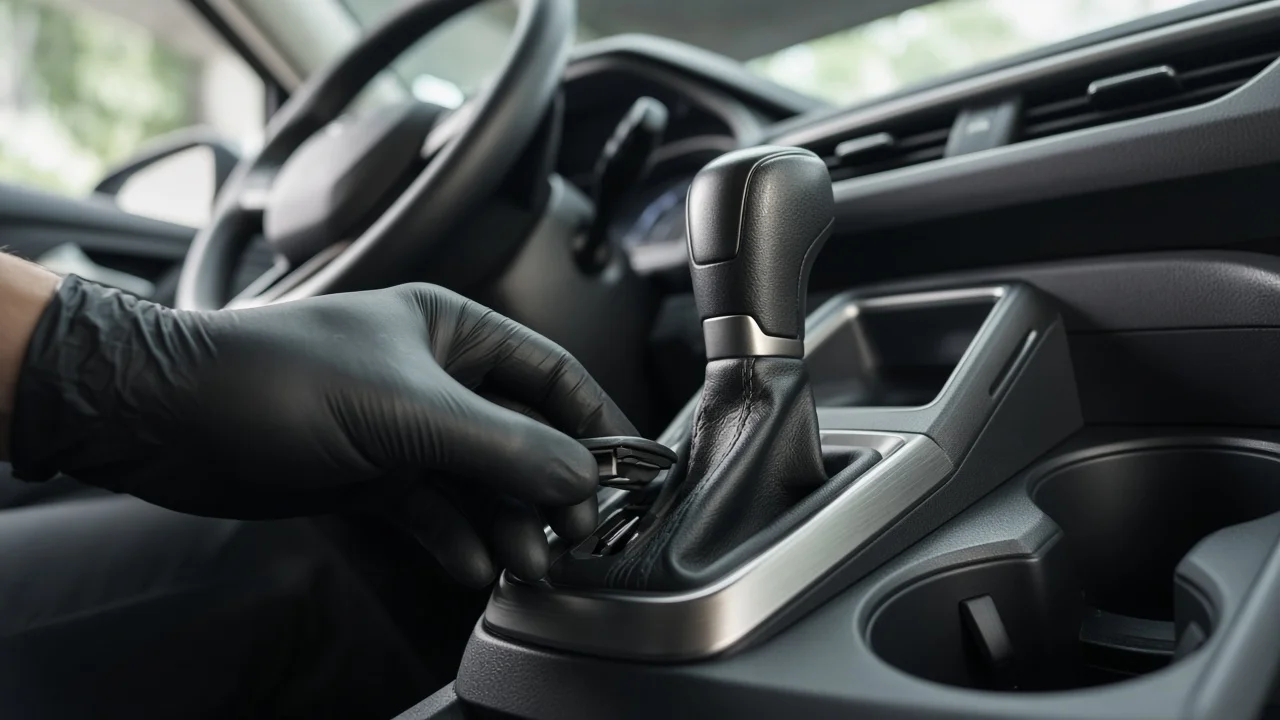
If your Ford Escape will not come out of Park, the shift lock release lets you move the selector manually so the vehicle can be pushed, towed or repositioned. Where that release sits and how it works depends on the model year, the shifter design and whether the Escape is a gasoline or hybrid model. This guide explains how to identify your configuration, what the brake-shift interlock does, and why the override is a temporary step rather than a repair.
The short answer
Escapes with a mechanical shift lever, column-mounted on early models and console-mounted on later ones, generally have a manual override for the brake-shift interlock. It is usually reached through a small removable cover or trim piece near the shifter or steering column. With the parking brake set and the ignition in the position the owner's manual specifies, you insert a small flat tool or the key into the access point, hold it down and move the lever out of Park. Newer Escapes with a rotary shift dial work differently. The dial is electronic, so the manual describes electronic procedures, such as a mode that keeps the vehicle in Neutral, rather than a simple lever override. The exact steps, tool and access point for your vehicle are in the owner's manual for its model year, and that procedure takes priority over any generic description.
The release is meant for situations where the vehicle must be moved and the normal brake-and-shift sequence does not work, for example with a dead battery or an interlock fault. It is not a way to keep driving normally. If the shifter only releases with the override, something in the interlock system needs attention.
How the brake-shift interlock works
The interlock is a safety feature that keeps the selector locked in Park until the ignition is on and the brake pedal is pressed. An electrically controlled actuator holds a locking element against the shifter. When the brake pedal switch signals that the pedal is down, the actuator releases and the lever can move. The manual release mechanically pushes that lock aside, bypassing the electrical signal. It does not repair or reset anything inside the transmission; moving the selector out of Park is what disengages the transmission's parking mechanism.
Because the system depends on electrical inputs, a shifter can stay stuck in Park for reasons that have nothing to do with the transmission itself. Possible contributors include a weak or discharged battery, a blown fuse, a problem with the brake pedal switch or its wiring, a failed interlock actuator, a binding shift cable or linkage, or debris or spilled liquid in the console around the shifter. Each of these produces a similar symptom, so a stuck lever on its own does not identify which part has failed.
What changes the answer for your Escape
The biggest factor is the shifter design, which follows the model year. Early Escapes used a column-mounted lever, later generations moved to a floor console lever, and the most recent models use a rotary dial. The access point for the override, the trim you may need to remove and whether a mechanical release exists at all differ between these designs. The ignition type matters too: a keyed ignition and a push-button start use different steps to put the vehicle in the required ignition state before you attempt the release.
Powertrain also matters. Gasoline Escapes use a conventional automatic transmission, while hybrid and plug-in hybrid versions use a different transmission type with electronic park control. The transmission type affects shift behavior, fluid specification and diagnostic paths, but the shift lock procedure itself is mainly tied to the shifter and its electronics. Service history can change the picture as well: a replaced shifter assembly, console repair or aftermarket remote start installation may alter wiring or trim, and parts with incorrect fitment can make the release behave differently from the manual's description.
Updates within a single generation mean two Escapes that look alike may not share the same procedure. Confirm the exact model year and trim, ideally from the VIN, before choosing which instructions to follow.
Steps to take before and after using the release
Before touching the override, park on level ground if you have any choice, set the parking brake firmly and chock the wheels. Make sure nobody is standing in front of or behind the vehicle. Read the release section of the owner's manual for your model year so you know which cover to remove, which tool to use and which ignition position is required. Do not force trim panels or the shifter; broken clips or a bent lever add to the repair.
A few quick observations help whoever diagnoses the problem later. Check whether the brake lights come on when the pedal is pressed, using a helper or a reflection in a window. Note whether the dashboard lights look normal and the engine cranks strongly, which says something about battery condition. Record any warning messages, and if you have a scan tool, any stored diagnostic codes. Think about whether the problem started after a spill, console work or a battery replacement. These details point a technician toward the right circuit, but none of them confirms a failed part by itself.
Once the selector is out of Park, move the vehicle only as far as needed, then return it to Park and set the parking brake again. Avoid using the override as a routine way to drive. If the brake lights are not working, that is a safety problem for driving on the road as well as a likely clue to the interlock fault.
Limitations and when to get help
This guide cannot replace the procedure for your specific vehicle, because access points and steps vary by year, shifter design and powertrain. On rotary-dial models in particular, follow the owner's manual or a dealer's guidance rather than improvising, and check the manual's towing section before having the vehicle moved, since all-wheel-drive and hybrid versions can have restrictions on towing with wheels on the ground.
If the shifter stays locked with the brake pressed, releases only with the override, or shifts roughly afterward, have it diagnosed. A technician can read diagnostic codes, test the brake switch and interlock circuit, and inspect the shifter and cable. Repair options range from a fuse or switch to an actuator, cable or shifter assembly, and the right one should be confirmed by testing, not chosen from the symptom alone. If you do not have the owner's manual, a Ford dealer service department can identify the correct procedure for your model year from the VIN.