Ford Escape Check Engine Light: Causes and First Checks
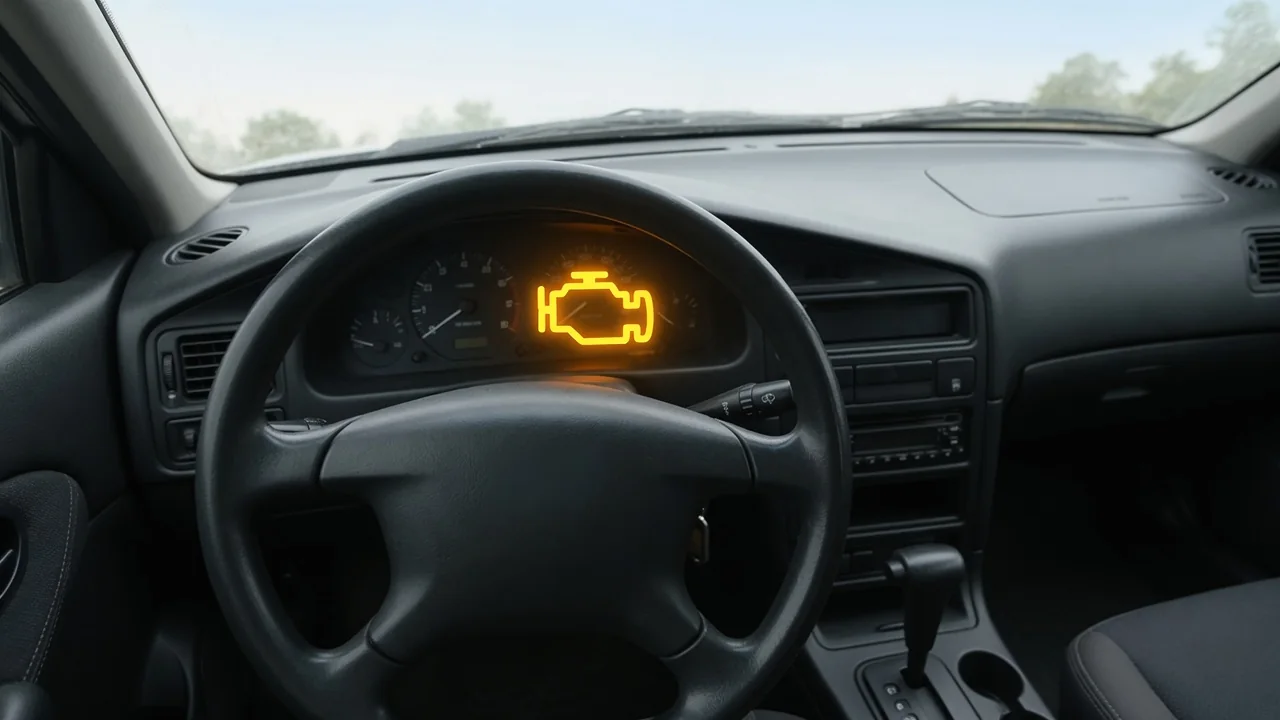
A check engine light on a Ford Escape is the dashboard malfunction indicator lamp reporting that engine-management or emissions monitoring has stored a concern. It does not name a failed part, and it can appear on gasoline and hybrid Escapes alike. Understanding the Ford Escape check engine light starts with the vehicle's year, engine, and hybrid status, then moves through driving-safety signs, first checks, an OBD-II scan, and professional confirmation.
What the Check Engine Light Means on a Ford Escape
On a Ford Escape, the engine-shaped check engine light is the malfunction indicator lamp used by the powertrain control module. When it stays on after the engine is running, the module has detected an engine-management or emissions-related fault and stored evidence for later reading. The lamp itself does not identify a failed component. The same symbol can reflect many different monitored conditions, so the light is a request for diagnosis rather than a named repair.
Before treating any diagnostic detail as applicable, confirm the Escape's model year, engine family, and whether it is a hybrid. Equipment such as fuel-filler design, emissions sensors, and available scan data can differ with that configuration. A brief lamp illumination during ignition-on is the normal bulb check. A check engine light that remains illuminated after startup, or that returns after a restart, means the control module is still reporting a stored or active concern that needs interpretation against that specific Ford Escape.
When to Stop Driving and Arrange Help
A flashing check engine light on a Ford Escape can indicate an active engine misfire while the vehicle is being driven. Unburned fuel reaching a hot catalytic converter can overheat the catalyst and cause further damage, so the flashing pattern is treated as a reason to reduce load, pull over when it is safe, and arrange assistance rather than continuing a trip. The flash is still not a parts diagnosis. It is a warning that combustion is unstable enough to threaten emissions hardware and drivability.
Stop driving and seek help if the Escape shows severe shaking, substantial power loss, smoke, overheating, or a strong fuel smell, even if the lamp is steady. Those symptoms point to conditions that can worsen quickly and are not something to diagnose from the road. A steady check engine light still needs prompt attention. It cannot, by itself, establish whether continued driving is safe. Combine the lamp state with how the vehicle behaves and follow the owner's manual for that Escape before deciding to proceed.
Possible Triggers Behind an Escape's Warning Light
Several monitored systems can turn on a Ford Escape check engine light without proving which part failed. The evaporative emissions system looks for fuel-vapor leaks, and a poor fuel filler seal after refueling can be enough to set a concern. Confirm whether that Escape uses a traditional cap or capless filler before treating the closure as the issue. Ignition, fuel-delivery, or air-metering faults can also cause an engine misfire, rough running, and an illuminated lamp because combustion and fuel trim no longer match expected values.
Emissions sensors, including oxygen-sensor signals, and catalyst-efficiency monitoring are also diagnostic areas when the lamp is on. Those monitors compare exhaust oxygen content and converter performance against expected ranges; an out-of-range reading is evidence to test, not proof that a sensor or catalytic converter must be replaced. Wiring, connectors, exhaust leaks, and fueling issues can produce similar data. Causes should not be ranked by assumed frequency, and a defect should not be assigned to a particular Escape year or engine without supporting evidence from that vehicle.
Safe First Checks Before a Service Visit
Before a service visit, write down when the check engine light appeared, whether it was after refueling or recent maintenance, how the Escape started, idle quality, and any loss of power. Those notes help a technician connect symptoms to stored diagnostic trouble codes later. With the vehicle parked and switched off, check that the fuel-filler closure is secured as the owner's manual describes for that Escape, including capless equipment where fitted. A loose or mis-seated filler can disturb evaporative monitoring, but the inspection is only a first look.
From a safe standing position, note any dashboard messages and any visible fluid or fuel on the ground. Do not open hot cooling or exhaust systems, crawl underneath, or handle hybrid high-voltage components. When the light comes on soon after refueling, that timing is a useful clue pointing toward filler sealing or evaporative emissions, yet it does not establish the cause. Other faults can coincide with a fuel stop. Record the observation and leave deeper inspection to diagnosis that matches this Escape's year, engine, and hybrid status.
Reading Trouble Codes Without Guessing at Repairs
An OBD-II scan of a Ford Escape with the check engine light on retrieves diagnostic trouble codes that narrow which monitor failed, such as misfire, fuel trim, or evaporative emissions. Those codes direct testing; they do not independently identify a failed part. Manufacturer-dependent code definitions must be verified for that Escape's model year and powertrain before any interpretation is treated as correct. Generic descriptions from a handheld tool can be incomplete or misleading if they are not matched to Ford's definition for the fitted engine or hybrid system.
Preserve the exact code numbers, whether they are pending or confirmed, and any freeze-frame data captured when the fault set, including engine speed, load, and related sensor readings if the scan tool shows them. Do not clear codes or disconnect the battery just to turn the lamp off. Erasing memory removes evidence a technician needs, can reset emissions readiness monitors, and does not repair the underlying condition. If the fault is still present, the check engine light can return after enough driving for the monitors to run again.
What Professional Diagnosis Should Resolve
A technician should start with the recorded symptoms, saved codes, freeze-frame data, and this Escape's model year, engine, and hybrid configuration, then choose tests that match that combination. Professional work may include checking for intake or evaporative leaks, evaluating ignition and fueling, inspecting wiring and connectors, and verifying emissions-sensor operation. Those steps interpret the stored evidence rather than replacing parts from a code list. Hybrid Escapes add the need to follow Ford procedures around high-voltage systems, which is another reason configuration belongs in the first conversation with the shop.
Bring the Escape's model year, engine or hybrid setup, mileage, recent work, a description of how it drives, and any saved scan results to the visit. After a repair, confirmation should include checking that the system operates as intended and that the same fault does not return once monitors have run. A darkened check engine light alone does not prove the underlying issue is resolved, because the lamp can go out when codes are cleared even if the condition remains. Ask the shop how they verified the repair against the original codes and symptoms.