Ford Escape Cabin Air Filter Location and Replacement: 2011–2017
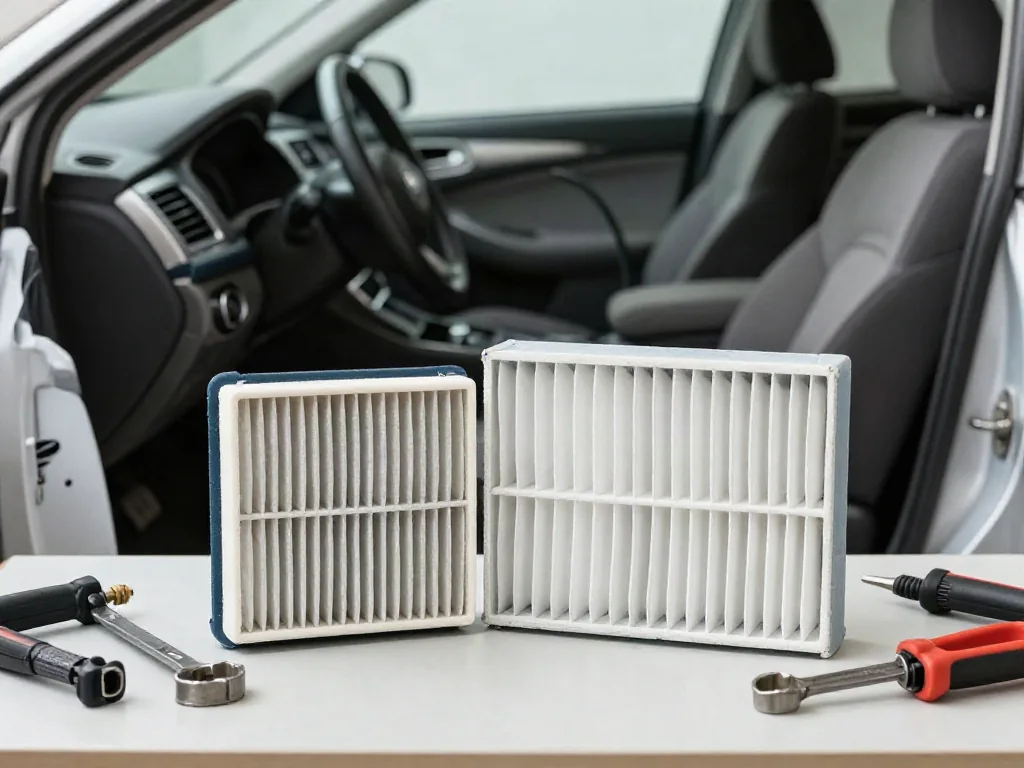
Owners searching for a 2014 Ford Escape cabin air filter, or the same part on a 2011, 2012, 2013, 2015, 2016, or 2017 Escape, are looking for the passenger compartment air filter that cleans air before it enters the cabin. Location and replacement steps are Escape-specific and generation-specific. Confirm the model year, verify that a serviceable filter exists, then use vehicle-specific access details rather than a generic procedure copied from another compact SUV.
Confirm Your Escape’s Model Year and Filter Fitment
Start with the door-jamb certification label so the model year is not guessed from appearance. A cabin air filter for a 2014 Ford Escape and a cabin air filter 2013 Ford Escape listing can look similar in a catalog, yet Ford uses year-specific parts data. The cabin filter, also called the passenger compartment air filter, sits in the HVAC housing and treats air headed into the cabin. It is not the engine air filter in the underhood intake tract.
A package that claims coverage for some years between 2011 and 2017 does not prove the filter belongs in every Escape in that window. Body style, HVAC housing, and filter seal geometry changed, so a 2011 Ford Escape cabin air filter is not automatically the same piece as a cabin air filter for 2015 Ford Escape or a 2017 Ford Escape cabin air filter. Before opening the package, compare length, width, thickness, frame shape, and the filter seal against verified fitment for the VIN or the exact year, engine, and climate-control equipment.
2011–2012 Escape: Check Filter Provision and Access
On a 2011 Ford Escape and a 2012 Ford Escape, do not assume a cabin air filter is installed and serviceable. Some compact SUVs of this period used a cowl intake that fed the HVAC housing with a filter, an empty filter provision, or a different intake arrangement with no owner-serviceable element. Verify the cowl-area intake layout with documentation for the exact model year and equipment, not with a later Escape photo. A cabin air filter 2011 Ford Escape search and a cabin air filter for 2012 Ford Escape listing only help after that provision is confirmed.
If a serviceable element is documented, identify the applicable filter access cover and its retainers before prying. Aged cowl plastics and weather seals tear easily when clips are forced or when a cover is twisted instead of released in the order the procedure shows. When housing pieces are missing, the filter provision is empty, or the intake does not match the year-specific layout, stop. A parts specialist or technician can confirm whether a cabin air filter Ford Escape 2011 or Ford Escape 2012 cabin air filter installation is even intended, instead of an improvised drop-in.
2013–2014 Escape: Locate the Cabin Filter Access Cover
On the redesigned Escape, a 2013 Ford Escape cabin air filter and a 2014 Ford Escape cabin air filter are reached at the HVAC housing in the passenger footwell, not the engine bay. Confirm that location for the exact year, then look for the housing wall, the filter access cover, and nearby carpet or lower dash structure. Remove only the lower trim the documented procedure names. Do not assume glove-box removal is required; forcing the glove box on a cabin air filter Ford Escape 2013 job can break latches that were never part of the path.
The passenger footwell is a confined working space. Position a light so the filter access cover, retainers, and surrounding HVAC housing are visible without pulling on nearby wiring, connectors, or the blower harness. Kneel so hands reach the cover without using the wiring as a handle. If the cover shape, fastener type, or housing layout does not match the vehicle-specific procedure, stop. A cabin air filter in Ford Escape 2013 and 2014 models should follow that year's access route; an unexpected evaporator case, extra duct, or missing cover means the wrong year information is in use.
2015–2017 Escape: Verify Access Details Before Removal
A 2015 Ford Escape cabin air filter, a cabin air filter 2016 Ford Escape, and a 2017 Ford Escape cabin air filter still live in the passenger-side HVAC housing, but the access route must be confirmed year by year. Fasteners, lower trim clips, and filter-cover attachments can differ even when the housing looks familiar. Identify the applicable trim fasteners and cover attachments from model-year-specific information instead of assuming every 2015 through 2017 Escape uses identical hardware. A cabin air filter Ford Escape 2015 listing that fits one equipment package may not match another climate-control layout.
Check that the replacement filter's fitment includes the exact vehicle before any trim comes off. Ford Escape 2015 cabin air filter, Ford Escape 2016 cabin air filter, and cabin air filter 2017 Ford Escape applications should be verified against the VIN or a year-and-equipment match, not against a nearby Escape in the parking lot. Restricted access, a broken or seized fastener, or an unfamiliar nearby component such as a wiring bracket, recirculation door actuator, or extra duct makes professional replacement the safer choice. Continuing past damaged clips often costs more than a shop visit.
Remove, Orient, and Seat the Replacement Filter
Park the Escape on level ground, set the parking brake, and switch the ignition and climate control off so the blower cannot start while the housing is open. Have the correct tools and the verified access procedure for that model year before releasing the documented cover fasteners. Ease the filter access cover off without twisting aged plastic. Withdraw the old cabin air filter for Ford Escape carefully, keeping it level enough to contain loose leaves, dust, and debris so they do not fall into the HVAC housing or the passenger footwell.
Before sliding the new element in, read housing markings or service information for airflow direction. An airflow arrow tells which way air should pass through the media; an UP marking tells which edge belongs toward the top of the slot, and those two instructions are not interchangeable. Seat the new filter without tearing the media or distorting the frame so the filter seal meets the housing. Refit the cover and trim, then run the blower. New rattles, whistling, or a cover that will not latch mean the filter is cocked, the seal is pinched, or a retainer was missed.
Plan Replacement and Recognize HVAC Problems That Need Testing
Use the maintenance schedule for the exact Escape model year and operating conditions rather than a single interval for every 2011-2017 cabin air filter Ford Escape. Dusty roads, wildfire smoke, heavy pollen, and debris at the cowl intake can load the passenger compartment air filter sooner, so inspecting condition between scheduled visits is reasonable. Visible dust cake, moisture, collapsed media, or a distorted frame are useful observations. Appearance alone is not a complete assessment, because a filter can still restrict flow, or look dirty while the blower, ducts, or doors are the larger problem.
Weak airflow, musty odors, and window fogging have several causes and do not prove the cabin air filter Ford Escape 2014 or any other year is the failed part. Recirculation doors, a weak blower, a clogged cowl intake, evaporator moisture, and cabin leaks can produce the same complaints after a correctly seated filter. If low airflow, recurring dampness, blower faults, or inadequate windshield clearing continue after the element is installed and the cover is sealed, have the HVAC system tested. Persistent problems need diagnosis of the housing, blower, and controls, not another untested filter swap.