Ford Escape ABS Tone Ring Recall: Checking Vehicle Eligibility
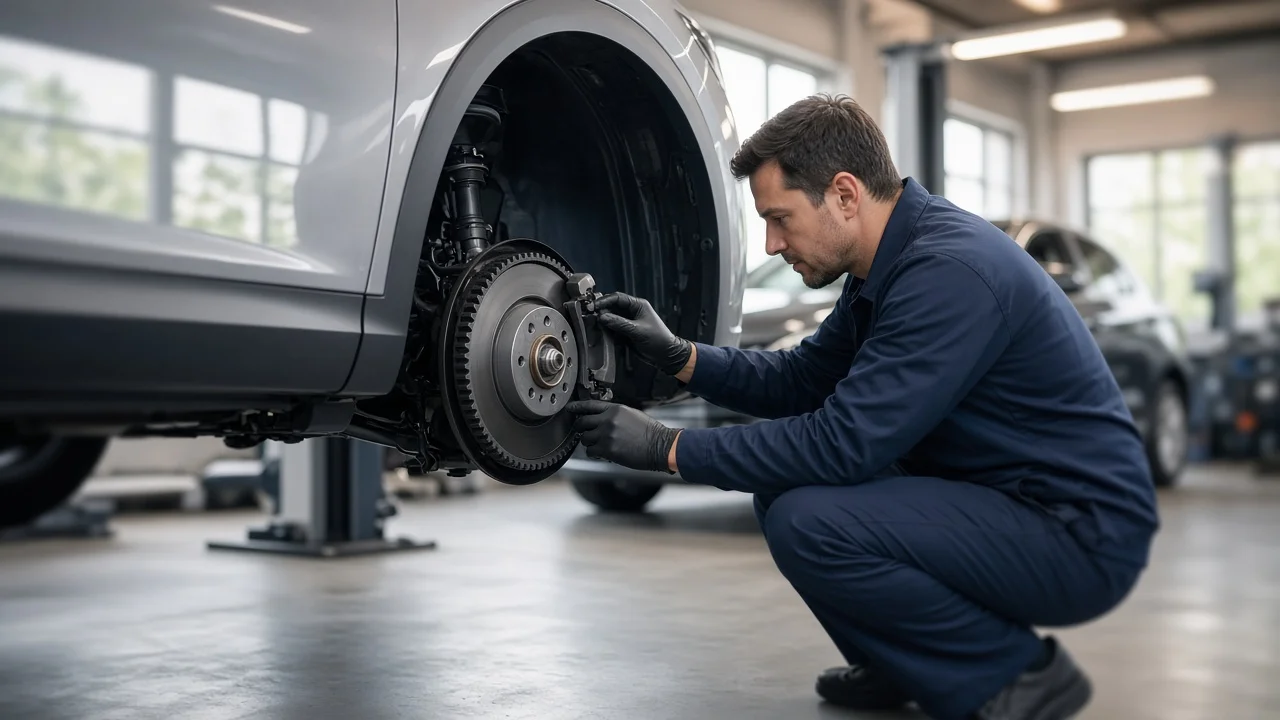
The anti-lock braking system on a Ford Escape relies on a toothed tone ring and a wheel speed sensor at each wheel to measure rotation. When a ring cracks, corrodes or shifts, the ABS module can receive a false signal, triggering warning lights or unwanted ABS activation. Owners who hear about a tone ring recall often assume it covers their vehicle. This guide explains how to confirm whether a campaign actually applies to your Escape and what to do once you know.
Identify the possible campaign
A tone ring, sometimes called a reluctor ring or encoder, gives the wheel speed sensor a pattern of teeth or magnetic poles to read. Depending on the design, it may be pressed onto an axle shaft, machined into a joint housing, or built into the hub bearing assembly. Road salt and moisture can cause rust to build up underneath or between the teeth, which can crack the ring or distort its spacing. The sensor then reports an uneven speed, and the ABS module may react as if that wheel were locking, especially during low-speed stops.
A recall or service campaign is always defined by specific criteria, such as model years, build date ranges, assembly plants, drivetrain configurations or component suppliers. News that one group of Escapes is affected does not mean every model year or trim is included. It is also common for tone ring corrosion to be treated as ordinary wear and repaired at the owner's expense when no campaign exists for that vehicle. The only reliable way to know is to check your own vehicle against current official records.
Confirm the exact vehicle
Eligibility is tied to the 17-character vehicle identification number, not to the model name or the year printed in an advertisement. You can find the VIN at the base of the windshield on the driver's side, on the label inside the driver's door jamb, and on registration and insurance documents. Check that all of these match before running any lookup, because a single mistyped character can return results for a different vehicle or none at all.
Build details matter as much as the model year. The door jamb label shows the month and year of manufacture, and a campaign may include only vehicles built within a narrow window. Front-wheel-drive and all-wheel-drive versions, as well as different engine and hybrid configurations, can use different hub, bearing and axle assemblies, so correct vehicle fitment of the affected part is part of what decides applicability. If earlier repairs installed non-original components, mention that to the dealer, who will need to assess what is actually on the vehicle.
Verify coverage and status
Enter your VIN in Ford's owner recall lookup or in the federal government's safety recall database, both of which list open safety recalls by vehicle. A Ford dealer service department can also run the VIN through the manufacturer's system, which typically shows field service actions and customer satisfaction programs that do not appear in a public safety recall search. Asking the dealer directly is useful when a public lookup comes back clear but you have symptoms or have received a letter.
Write down the campaign number, its title and the status shown, such as open, remedy not yet available or completed. A newly announced campaign may take time to appear against individual VINs, so a clear result today is not a permanent answer. Equally, a lookup showing no open campaign says nothing about the actual condition of your tone rings; it only means no recorded program currently applies to that VIN.
Understand the remedy
Different types of manufacturer actions carry different entitlements. A safety recall addresses a defect related to motor vehicle safety, and in the United States the remedy is provided free of charge to the owner. A warranty extension or customer satisfaction program covers a specific component for a stated period or mileage, and its terms are set out in the owner notice. A technical service bulletin is repair guidance for technicians; it does not by itself make a repair free unless the vehicle is still under applicable warranty coverage.
Do not assume what the repair will involve or when it will be available. Depending on the campaign, the remedy may be an inspection, replacement of the tone ring, hub bearing, axle shaft or wheel speed sensor, or a software update to the ABS module, and parts may be released in stages. Some notices describe reimbursement for owners who paid for the same repair before the campaign, but only the wording of the official notice for your VIN establishes that. Keep any invoices from earlier ABS or wheel-end repairs in case they become relevant.
Arrange the next step
Contact a Ford dealer service department with your VIN and the campaign number, and ask whether parts are in stock before booking. Bring the owner notification letter if you received one, along with records of previous brake, ABS or wheel bearing work. After the repair, request a repair order that names the campaign and shows it as completed, then confirm later that the VIN lookup reflects the completed status.
While you wait, take sensible precautions. An amber ABS warning light usually means the base hydraulic brakes still work but anti-lock function, and often traction and stability control, may be disabled, so allow extra following distance and brake gently on slippery roads. If the red brake warning light comes on, the pedal feels low or soft, the vehicle pulls, you hear grinding, or ABS pulsing at low speed noticeably lengthens your stops, stop using the vehicle and have it towed or professionally inspected.
A tone ring repair does not replace routine brake service. Ask the technician to check brake pads and remaining friction material, brake rotors, caliper operation and brake fluid condition against Ford's service information and wear limits while the wheels are off. Addressing worn parts at the same visit helps ensure the whole braking system performs as designed once the ABS fault is corrected.