Ford Escape ABS Tone Ring: Fitment by Year and Axle
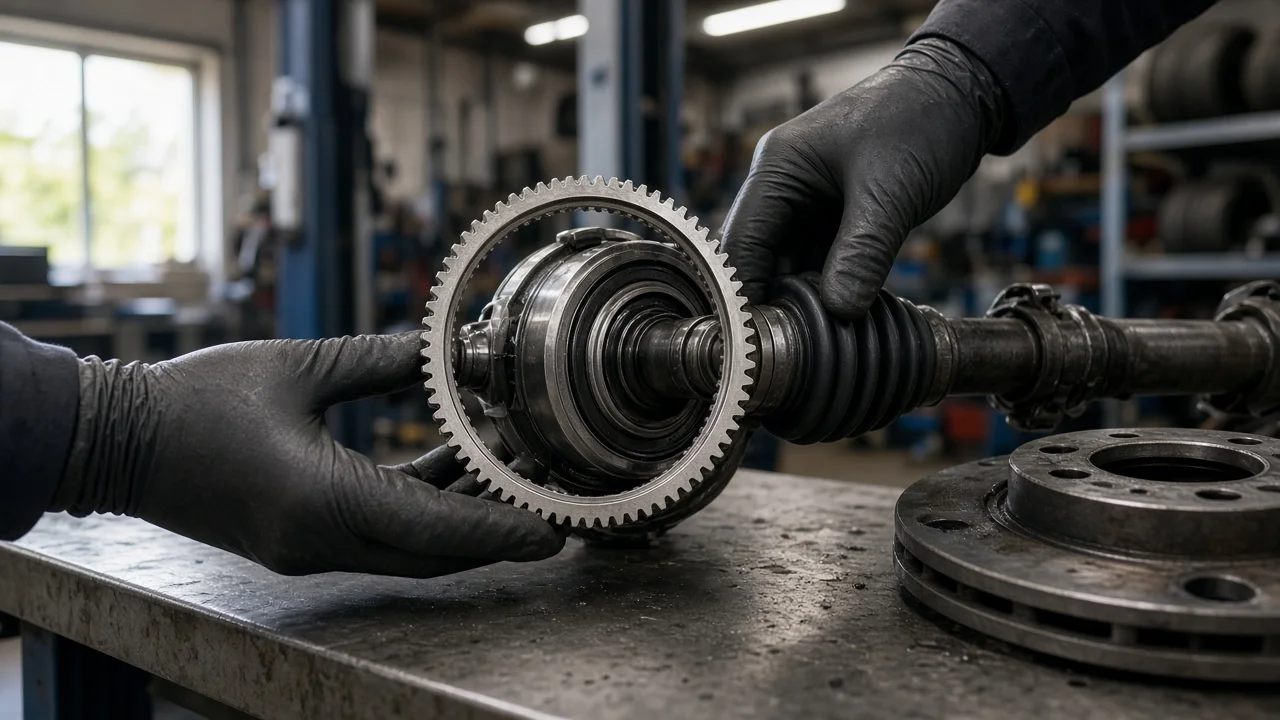
A cracked or rusted ABS tone ring is a common reason for an ABS warning light on a Ford Escape, or for a pedal that pulses during a slow stop. The right replacement depends less on the model year alone and more on the generation, the axle, the drivetrain and how the ring is mounted. This guide explains how to match a tone ring to your Escape, including the 2005, 2008 and 2013 model years owners ask about most often.
The short answer on fitment
No single ABS tone ring fits every Ford Escape. The first-generation Escape and the 2008 to 2012 models share the same basic platform, and the 2008 update was largely a body and interior refresh. On these vehicles the front reluctor ring is typically a toothed steel ring pressed onto the outer CV joint of the front half shaft. A 2005 and a 2008 Escape therefore often use the same front ring design when the drivetrain matches, but that is a starting point, not a guarantee. Rear fitment differs between front-wheel-drive and four-wheel-drive versions, because only four-wheel-drive models have a driven rear half shaft that can carry a ring.
The 2013 and later Escape sits on a different platform, so parts from earlier years should not be assumed to fit. Many modern designs read a magnetic encoder built into the wheel bearing instead of a separate pressed-on ring, which turns the repair into a hub or bearing replacement rather than a standalone ring. If you are shopping for a rear tone ring for a 2013 Escape, confirm with a VIN-based parts lookup whether your exact build uses a separate ring at all before ordering anything.
How the tone ring and wheel speed sensor work together
The tone ring turns with the wheel or axle shaft. Each tooth passing the wheel speed sensor produces a pulse, and the rate of those pulses tells the ABS module how fast that wheel is turning. The module compares all four wheels. When one wheel appears to slow much faster than the others, the module assumes it is about to lock and briefly releases and reapplies brake fluid pressure to that caliper. Traction and stability control rely on the same signals.
Problems start when the ring cracks, loses teeth, or swells from rust building up underneath it. The gap between ring and sensor then changes with every revolution, and the signal drops out or becomes erratic. The module reads that as a sudden wheel slowdown, so ABS can trigger on dry pavement just before a stop, and the ABS or traction control light may come on. The ring never touches the brake pads, rotors or friction material, yet it still controls when the system modulates pressure, which is why a small steel part can make healthy brakes feel wrong.
What changes the right part for your Escape
Generation is the first filter: the first-generation Escape, the 2008 to 2012 refresh, the third generation from 2013 and the fourth generation from 2020 each need separate verification. Drivetrain is the second. Front-wheel-drive and four-wheel-drive models can use different half shafts, and engine choice or a hybrid powertrain can change shaft and joint specifications even within one model year. Treat any listing that simply says it fits every Escape with caution.
Axle position matters just as much. A front ring on an earlier Escape usually mounts on the outer CV joint, while the rear setup depends on whether the rear wheels are driven; on a non-driven rear axle the sensing target is often part of the hub assembly. Mounting style decides what you actually buy: a press-on ring, a complete half shaft, or a hub bearing with an integrated target. Tooth count must match the original exactly, because a ring with the wrong count gives the module an incorrect wheel speed. Replacement half shafts may or may not arrive with a ring installed, so check the listing photos and description.
What the owner can check and do
Start with a scan tool that can read ABS module codes, not just engine codes. A wheel speed sensor fault pinned to one corner points you to the right axle and side. If the tool shows live data, watch all four wheel speeds during a slow, straight drive; a wheel that drops out or jumps while the others read smoothly is a strong sign of a ring or sensor issue. Then raise the vehicle safely, remove the wheel and inspect the ring. Look for cracks, missing or flattened teeth, a rust layer lifting the ring off its seat, and metal debris stuck to the sensor tip.
Before ordering, note the axle, side, drivetrain and mounting style, count the teeth on the old ring, and run your VIN through a parts lookup to confirm vehicle fitment. Decide whether a ring alone is sensible or whether a worn CV joint, torn boot or noisy bearing makes the larger assembly the better repair. If you press on a new ring, clean the seat of all rust and follow the installation method in the service information; a ring that sits crooked or loose will recreate the original fault. Inspect the sensor and its wiring at the same time, and while the wheel is off, check the brake pads and rotors against their wear limits.
Limitations and next step
This guide explains how fitment varies, but it cannot confirm a part number for your vehicle. Production changes, trim packages and powertrain options can split fitment within a single model year, so the VIN-based lookup or the dealer parts catalog has the final word. Similar symptoms can also come from a failed sensor, damaged wiring, a worn bearing or a module fault, so replacing the ring without testing may not fix the problem.
An amber ABS light usually means anti-lock and possibly stability functions are disabled while the base brakes still work, so drive gently and arrange a repair soon. If the red brake warning light comes on, the pedal feels soft or sinks, brake fluid is low, or the vehicle pulls or grinds when braking, stop driving and have it inspected by a professional. Pressing rings onto joints and replacing hub bearings also calls for proper tools and torque specifications. After any repair, clear the codes and confirm on a test drive that all four wheel speeds read evenly.