Ford Edge Torque Converter Shudder Diagnosis
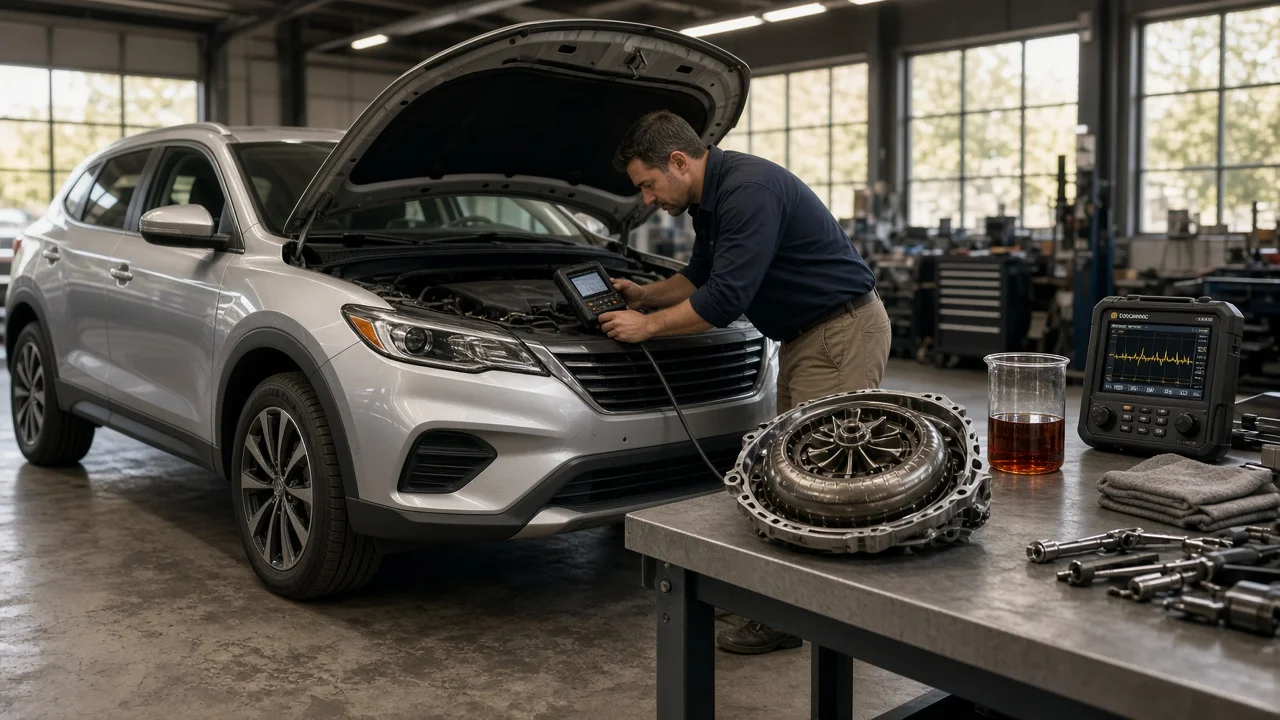
A shudder that feels like driving over rumble strips during steady, light-throttle cruising is a common transmission complaint on the Ford Edge. The torque converter clutch is often the first suspect, but it is not the only one. Engine misfires, worn mounts and driveline faults can feel almost identical. This guide covers how to describe the symptom, separate competing causes, run checks in a sensible order and judge what the results prove before any part is replaced.
Identify the transmission and configuration first
The Edge has used more than one automatic transmission across its model years. Earlier generations used six-speed units, while later models moved to eight-speed automatics. The engine also matters: four-cylinder EcoBoost, naturally aspirated V6 and turbocharged V6 versions do not all share the same transmission. Front-wheel drive and all-wheel drive versions differ too, because AWD models add a power transfer unit and a rear driveline that can create vibrations of their own. Before comparing your Edge with anyone else's, confirm the model year, engine, drivetrain and transmission from the vehicle's build information or a dealer lookup by VIN.
This matters because the fluid specification, the fluid level check procedure, software calibrations and the diagnostic path all vary by transmission type. The six-speed and eight-speed units do not use the same fluid, and the wrong fluid can itself cause converter clutch shudder. A fix reported for one version may not apply to another, and the fitment of replacement converters and valve body parts is specific to the exact unit.
Establish the symptoms
Converter clutch shudder usually appears while the clutch is applying or holding at light throttle, often somewhere around 25 to 50 mph, and sometimes at highway speed on a gentle climb. It feels like a rapid vibration or rumble and often fades when you accelerate harder or lift off the throttle. Record the conditions precisely: road speed, gear if your display shows it, whether the engine is fully warm, how much throttle you are using, whether it happens on flat roads or only on slight inclines, and whether the tachometer needle makes small, rapid movements during the event.
Note any associated signs: a steady or flashing check engine light, harsh or delayed shifts, engine speed flaring between gears, new noises, fluid leaks or a burnt smell. Then review the service history. A recent fluid service and the fluid used, a software update, spark plug or ignition coil work, new tires, an alignment or a recent impact are all relevant. A shudder that began right after a specific change is a strong lead.
Distinguish plausible causes
Within the converter clutch system, likely causes include fluid that has degraded or is the wrong type, worn converter clutch friction material, unstable apply pressure from a solenoid or valve body fault, and an outdated control calibration. Evidence that supports this group: the shudder occurs only in the speed and load window where the clutch applies, it stops when the clutch is released, and scan data shows clutch slip fluctuating while the clutch is commanded on. Diagnostic codes in the P0740 to P0744 range point toward the converter clutch circuit or its performance but do not identify which component has failed.
An engine misfire under light load in a high gear can feel exactly like converter shudder, especially on turbocharged engines. Evidence that supports a misfire: rising misfire counters, P0300-series codes, a flashing check engine light, or a vibration that continues after the converter clutch releases or gets worse with more throttle. If misfire data stays clean during the event, this explanation becomes weaker.
Driveline and chassis faults are the third group: worn engine or transmission mounts, CV joints, tire or wheel problems, and on AWD models the power transfer unit, driveshaft or rear drive unit. These vibrations tend to follow road speed rather than throttle or converter clutch state. A vibration that remains at the same speed while coasting with no load points away from the converter.
Checks in a useful order
Start with checks an owner can do safely. Reproduce the shudder on a quiet road and confirm the conditions you recorded. While it is happening, press the brake pedal just enough to light the brake lamps; on many vehicles this commands the converter clutch to release. Note whether the shudder stops immediately. Look under the vehicle for leaks, inspect the tires for uneven wear or damage, and read stored and pending codes with a basic OBD-II reader.
The next checks need tools, specifications or a qualified technician. Checking fluid level and condition correctly on these transmissions usually requires the vehicle to be level and the fluid within a specific temperature range, and an incorrect check leads to wrong conclusions. A scan tool with Ford-level data can show converter clutch command and slip, commanded pressure, transmission fluid temperature and misfire counters during a test drive. A technician can also check for software updates and service bulletins that apply to your VIN and inspect mounts, axles and AWD components on a lift.
Interpret the findings
If the brake tap stops the shudder, misfire data is clean and slip fluctuates while the clutch is commanded on, the converter clutch system is the strong suspect. That result still does not separate the fluid, the converter itself and the hydraulic controls. Dark, burnt or incorrect fluid suggests a correct fluid service using the specified Ford procedure as a first step, followed by enough driving to judge the result. Where a software update or service bulletin applies, it is normally addressed before hardware is replaced.
If the shudder continues after correct fluid and calibration, converter replacement or valve body and solenoid repair becomes reasonable, and pressure data helps decide which. Significant friction material or metal debris in the fluid suggests internal wear beyond the converter, in which case a converter alone may not solve the problem and repair options widen to an overhaul or replacement transmission. If misfire evidence appears, or the vibration is unaffected by converter clutch release, do not replace the converter. A single code or a single test is not confirmation of a failed part.
Urgency and next action
Stop driving and arrange inspection or towing if you see a flashing check engine light, engine speed rising without matching acceleration, loss of drive or a reduced-power mode, a transmission overheat warning, a burnt smell, a significant leak, loud clunks or a severe vibration. Even a mild shudder deserves prompt diagnosis, because a slipping converter clutch can contaminate the fluid with friction material and spread wear. There is no reliable way to predict how long the transmission will last in this state.
Give the repair shop the VIN, engine and drivetrain, the transmission type if known, the exact conditions when the shudder occurs, any codes with freeze frame data, and the service history including the fluid used and dates. Ask how the diagnosis was confirmed and what each repair option addresses, from fluid service and software to converter, valve body or full transmission work. Check whether any factory or extended warranty coverage applies before authorizing teardown.