Ford EcoBoost Engine Repair: Assessing Repair Options
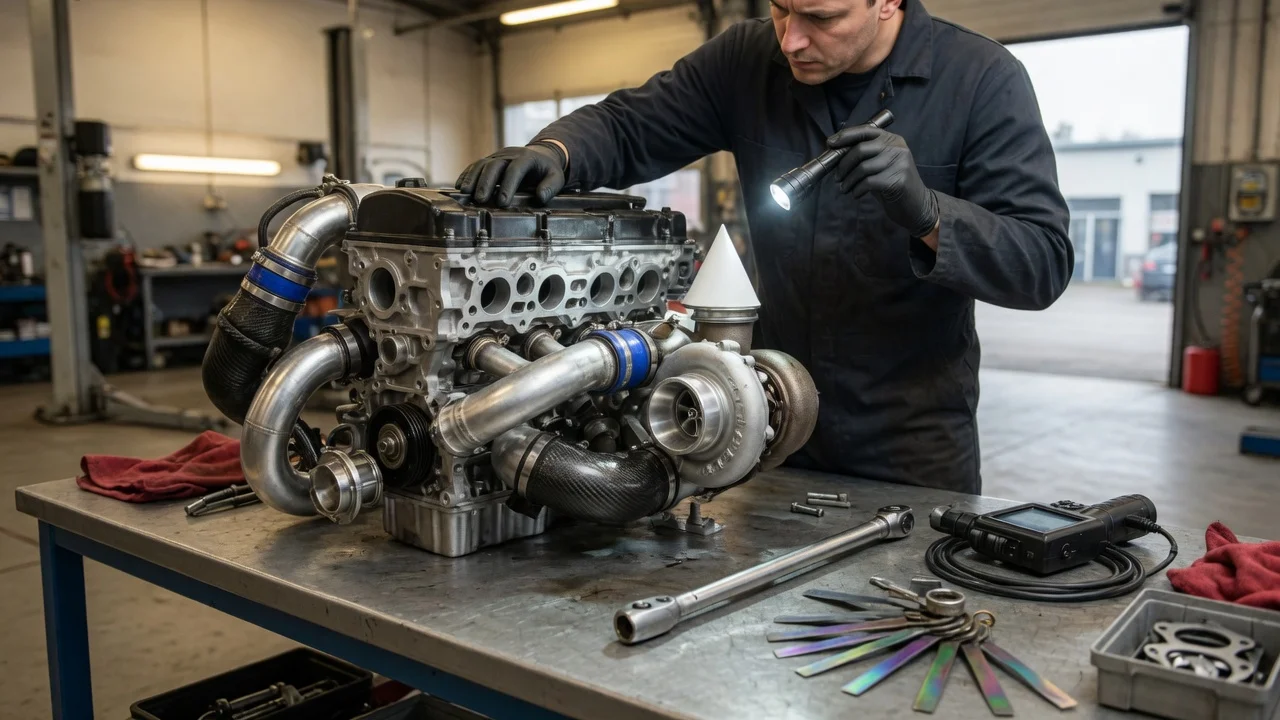
What Ford EcoBoost Engine Repair Really Involves
Ford EcoBoost engine repair is not one fixed procedure. The EcoBoost family spans multiple displacements, cylinder counts, model years, and vehicle applications, so the appropriate repair path depends on the specific variant, the failure mode, and the condition of the surrounding engine. Smaller repairs may mean replacing a coolant line, ignition coil, or turbocharger oil feed component. Larger failures can require cylinder head work, timing component replacement, or a complete long block.
Before choosing a repair, the practical step is to separate an external or serviceable fault from internal engine damage. A repair estimate is only meaningful once the failed system has been identified through inspection and, where available, diagnostic data. The same symptom can have different causes across EcoBoost generations, so model-year and engine-specific information should be confirmed before parts are ordered.
What Could Explain the Symptom and What to Check Next
Because EcoBoost engines combine direct fuel injection, turbocharging, and variable valve timing, several systems can produce overlapping symptoms. A coolant loss complaint, for example, may point to a leaking hose, a failing water pump, or an internal issue that allows coolant into a combustion chamber. A misfire may come from an ignition coil, a fouled plug, a fuel injector, or loss of compression.
A fault code is evidence to investigate rather than proof that one part has failed. A misfire code on a particular cylinder should trigger checks of that cylinder's plug and coil condition, but it does not rule out a mechanical cause. Observable checks support the decision: inspect coolant level and residue, examine oil for discoloration or contamination, note whether smoke appears at cold start or under load, and record whether the engine runs roughly at idle or only during boost.
A rising temperature gauge, coolant loss with no visible external leak, persistent white exhaust vapor, or oil that appears milky are conditions that justify stopping use and arranging professional diagnosis. Continuing to drive with suspected coolant intrusion or low oil pressure can turn a repairable fault into major engine damage.
Comparing Repair Options
When the failure has been identified, the main alternatives are component repair, partial overhaul, and engine replacement. The right choice depends on mileage, internal condition, parts availability, labor cost, and how long the vehicle is expected to remain in service.
Option | Typical Fit | Main Advantage | Main Trade-off; Component repair | Isolated external or bolt-on failure | Lowest immediate cost | Does not address other wear; Partial overhaul | Confirmed internal fault in an otherwise sound engine | Keeps the original engine | Labor-intensive; condition of other parts must be verified; Replacement engine or long block | Widespread damage, oil-starvation history, or high-mileage core | Refreshes the major assembly at once | Highest cost; requires correct engine variant and calibration
Component repair is preferable when the failed part is accessible and the rest of the engine tests as healthy. Partial overhaul makes sense when a specific internal component has failed, the cylinder walls and bearings remain within specification, and the cost of machining plus parts is clearly below replacement. Replacement tends to be the safer financial decision when several internal systems are worn, when metal debris has circulated, or when the labor to overhaul the existing core approaches the installed price of a warranted assembly.
Quotes should be compared using the same scope. A low price may include only the failed part, while a higher estimate may include replacement of related gaskets, fasteners, fluids, and timing components. Where data is available, compare warranties and confirm whether the replacement or rebuilt unit matches the vehicle's engine code, model year, and control software.
Getting a Defensible Decision
A supported repair decision combines a confirmed diagnosis, an assessment of the engine's overall health, and comparable estimates for the viable options. Without compression, leak-down, cooling system, or other relevant test results, an internal-failure estimate can remain speculative. If the evidence is incomplete, it is reasonable to ask the diagnosing shop to explain which test identified the failure and whether the recommended repair addresses the root cause rather than only the current symptom.
The most cost-effective outcome is not always the cheapest initial repair. Where the core engine is strong, fixing the failed component preserves value. Where reliability matters more than retaining the original assembly, a correctly specified replacement may reduce repeat repair risk, provided the installation and any required control-module programming are included in the quote.
Because supplied material does not include variant-specific repair costs, failure-rate data, or measured test results for individual EcoBoost engines, those figures are not stated here. The remaining uncertainty is material for a final cost comparison, and it should be resolved from the vehicle's own service history and a shop's written diagnosis.