Ford EcoBoost Engine Problems: Symptoms and Failure Diagnosis
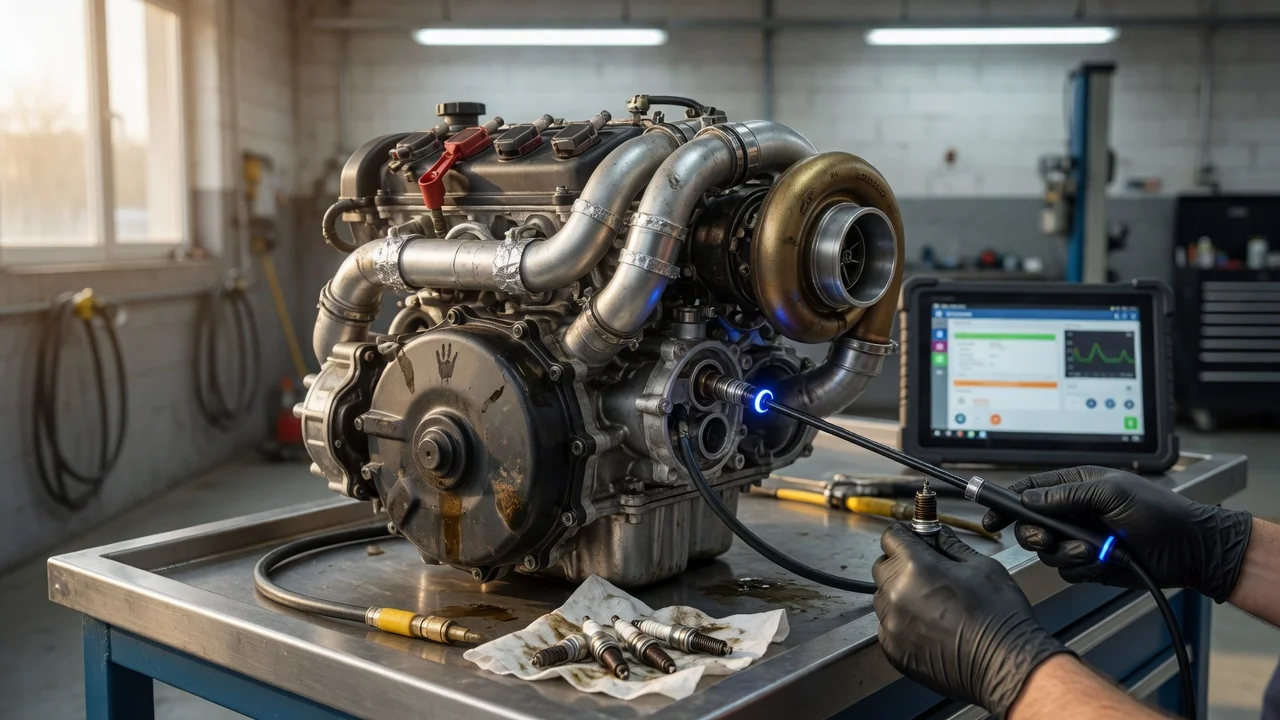
Direct answer
Ford EcoBoost engine failure is not one single defect. EcoBoost is a family of turbocharged gasoline direct-injection engines used across many Ford models and displacements, so the likely failure mode depends on the specific engine, model year, mileage and service history. The most commonly reported problems involve coolant loss, ignition misfires, carbon buildup on intake valves, turbocharger issues and, on some early engines, internal coolant leakage into a cylinder. A single symptom rarely identifies the failed component. The practical answer is to treat the symptom as the starting point and use targeted checks to distinguish the possible causes.
Why EcoBoost problems cannot be generalized
The EcoBoost name covers several engine families with different displacements and layouts, including smaller four-cylinder engines and larger V6 engines. A coolant issue on one generation may not apply to another, and a part number or repair procedure can differ by market and configuration. When diagnosing a reported problem, identify the exact engine displacement, model and model year first. Do not assume that a failure described for one EcoBoost engine automatically applies to a different EcoBoost vehicle.
Common symptoms and what they can indicate
The following symptoms are frequently associated with EcoBoost engine problems. Each one can have more than one cause, so the list is ordered to help direct diagnosis rather than to identify a replacement part.
Rough idle, hesitation or misfire: ignition component wear, fuel delivery, carbon buildup or compression loss; White exhaust smoke and unexplained coolant loss: possible internal coolant entry into a cylinder, but also external leakage or turbocharger-related coolant leakage; Loss of power or reduced boost: turbocharger control, charge-air leakage, wastegate operation or engine protection mode; Rattling or cold-start noise: timing chain and related components on some engines, but noise location must be confirmed; Excessive oil consumption: turbocharger seal wear, piston or cylinder condition, crankcase ventilation issues; Illuminated malfunction indicator light with stored codes: a diagnostic result, not proof of a failed component
Interpreting fault codes and diagnostic readings
A fault code tells you which system or circuit reported a problem, not which component to replace. For example, a misfire code identifies the affected cylinder or cylinders, but the cause may be ignition, fuel, mechanical compression or a condition that affects the mixture. Read the code definition for the applicable engine and model year, then check the operating conditions that the system expects before interpreting the reading.
A practical diagnostic order for a reported symptom
Start with the least invasive checks that can separate major cause groups. The order below is a general approach; the applicable service information for the specific vehicle takes priority.
Confirm the reported symptom under conditions that produce it, including cold start or load if relevant; Retrieve stored diagnostic trouble codes and note freeze-frame data such as engine temperature, speed and load; Inspect coolant level and pressure test the cooling system when coolant loss is reported; a pressure drop can help separate external leakage from internal consumption; Check spark plugs and ignition components when misfire is present; plug condition can suggest rich, lean, oil-fouled or coolant-fouled combustion; Perform a relative compression check or cylinder leak test when mechanical cylinder damage is suspected; Inspect induction and charge-air connections when boost loss is reported; Confirm the actual fault before replacing a turbocharger, injector, ignition coil or sensor
What each result supports
Check | Supports if found | Leaves unresolved if absent; Cooling system pressure test | External leak or pressure loss path confirms coolant escape | Does not by itself prove whether leakage is internal or external if the drop is small; Spark plug inspection | Fouling or damage points toward oil, coolant, fuel or ignition cause | A normal plug can still accompany an intermittent misfire; Cylinder leak test | Air escaping from cooling system, intake, exhaust or crankcase helps locate cylinder leakage | A pass does not rule out turbocharger, fuel or control-system faults; Boost pressure or smoke test | Leak or pressure deviation may explain power loss | A pass leaves turbocharger control, wastegate or engine protection causes open; Fault code retrieval | Stores affected circuit, cylinder or system | Code alone is not proof that a listed component requires replacement
Material gaps and vehicle-specific limits
This guide does not provide exact torque values, test pressures, wiring diagrams or model-specific service procedures because those values depend on the applicable engine, market and publication. Wiring checks, sensor reference values and component locations should be taken from the correct service information for the vehicle being diagnosed. Without those specific values, a diagnostic decision should remain provisional.
Keeping the diagnosis reliable
Avoid replacing a part based only on a keyword search or a code description. A coolant-fouled spark plug may lead to a head gasket or internal coolant leak, while an oil-fouled plug may lead to turbocharger or cylinder wear. The useful distinction comes from the physical test result and the conditions in which the symptom occurs. When a check does not separate two causes, move to the next check that can.