Ford Crown Victoria Torque Converter Shudder Diagnosis
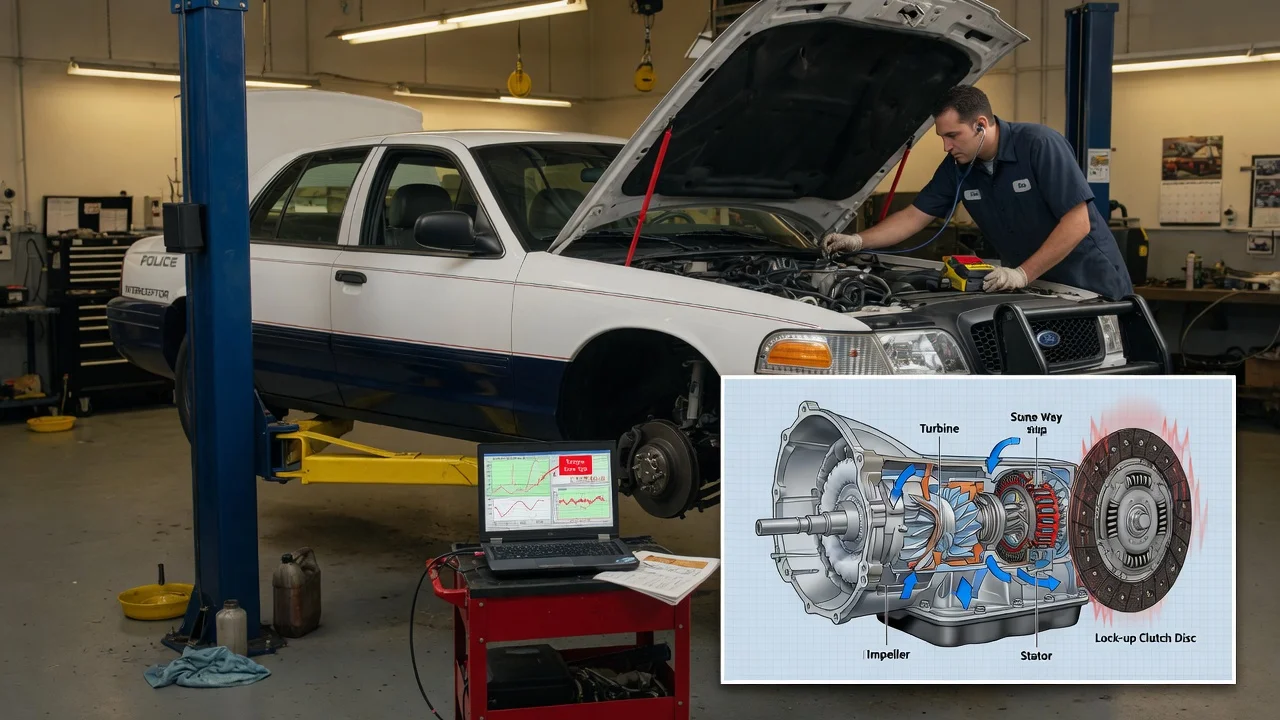
A shudder at steady cruising speed that feels like driving over rumble strips is a common Crown Victoria complaint, and the torque converter usually gets blamed first. That suspicion is reasonable, but it is not proof. Engine misfires, driveline vibration and fluid problems can feel almost identical. This guide covers how to describe the symptom accurately, separate the likely causes, run checks in a sensible order and decide what to do next without replacing parts on a hunch.
Establish the symptoms
Start by pinning down exactly when the shudder appears. On a rear-wheel-drive Crown Victoria, torque converter clutch (TCC) shudder usually shows up at light, steady throttle once the transmission is in its upper gears and the computer commands the converter to lock up. It often feels like a rapid, coarse vibration through the seat and floor. The tachometer may flicker slightly. The shudder may fade under harder acceleration or when you lift off the throttle. Note the road speed, gear, throttle position and whether the car was fully warmed up. Also note whether it happens uphill, on flat road, or only with the air conditioning running.
Record any related signs as well. These include a check engine light, harsh or delayed shifts, flare between gears, burnt-smelling fluid, or a clunk when coming off the throttle. Then list recent changes, because they shift the odds. Relevant changes include a fluid service with an unknown product, a converter or transmission rebuild, spark plug or coil work, new tires, driveshaft or rear axle service, and a large gap in mileage since the last transmission service. If the car is a former police or fleet unit, its service history and duty cycle matter. Long idle hours and hard use can age the fluid and converter clutch faster than the odometer suggests.
Distinguish plausible causes
Identify the transmission before chasing causes. Crown Victorias used Ford's electronically controlled four-speed rear-wheel-drive automatics: the 4R70W in many model years and the related 4R75 series in later ones. The transmission code on the vehicle certification label in the driver's door area identifies the exact unit. That identification determines the correct fluid specification, valve body parts and converter fitment. Police Interceptor, civilian and fleet versions can differ in axle ratio and calibration, so match parts and information to the specific car rather than to the nameplate.
Several causes compete, and each fits a different history: • Worn or contaminated fluid that has lost its friction properties is a frequent contributor. It fits a car with overdue service or the wrong fluid added. • A glazed or worn converter clutch lining fits shudder that persists after a correct fluid service and appears only during lockup. • Valve body wear, especially in the circuits that control converter clutch apply, can cause slipping or harsh engagement. So can a weak or sticking TCC solenoid. These faults often come with stored codes or inconsistent apply. • An engine misfire under the extra load of lockup can feel exactly like converter shudder. • Worn driveshaft universal joints, an out-of-balance driveshaft, rear axle problems or tire faults cause vibration that tracks road speed rather than lockup.
The pattern helps you weigh these causes. Vibration that changes with road speed regardless of gear or lockup state points toward the driveline or tires. Vibration that follows engine load, worsens on hills and comes with a misfire code or rough idle points toward ignition or fuel delivery. Shudder that starts as lockup engages and stops when lockup releases supports a converter clutch or lockup control problem. Even then, it does not identify which part has failed.
Checks in a useful order
Begin with safe observations anyone can make. With the car warmed up and parked on level ground, check the transmission fluid level and condition on the dipstick, following the procedure in the owner's manual. For these transmissions, the check is typically done with the engine running and the fluid at operating temperature. Look for dark, burnt-smelling fluid or debris on the dipstick, and find out what fluid was last used. These units take Ford Mercon-family fluid; confirm the exact specification for your model year in the manual or on the dipstick. Look for leaks and visibly damaged driveshaft or mount components, but never get under a vehicle that is not properly supported.
Next, do a simple road test on a quiet road. At a steady cruise where the shudder appears, press the brake pedal just enough to turn on the brake lights without slowing down. The brake switch signals the computer to release converter lockup. If the shudder stops immediately, the problem is tied to lockup. That could mean the converter clutch circuit, or an engine misfire that the lockup load exposes. If nothing changes, look harder at the driveline, tires and engine mounts.
Tests beyond that need tools. A scan tool that reads powertrain diagnostic codes and live data can show stored or pending TCC circuit, TCC performance and cylinder misfire codes. It can also show commanded versus actual converter slip, engine rpm and transmission temperature. Line pressure testing, solenoid electrical checks, valve body inspection and driveshaft balance or runout checks require specifications and equipment, and usually a qualified transmission technician. Do not use a full fluid flush or a friction-modifier additive as a diagnostic step before the cause is understood. Either one can mask evidence and make results harder to interpret.
Interpret the findings
Each result narrows the picture without settling it. Low fluid points to a leak that must be found and fixed. Topping up may reduce shudder, but it does not prove the converter is healthy. Dark or burnt fluid suggests overheating and wear, which raises the chance that the converter clutch or other friction parts are damaged. A fluid and filter service with the correct fluid is a reasonable first repair. If the shudder returns afterward, the wear was probably already present. Metallic debris is a stronger sign of internal damage and calls for professional inspection before more service is attempted.
A brake-tap test that stops the vibration confirms that lockup is involved. It does not confirm a failed converter. Other results point in specific directions: • Misfire codes, or misfire counts that rise during lockup, point first to ignition or fuel repair. Recheck the shudder after that work. • A TCC circuit code points toward wiring, connector or solenoid electrical faults. Test these before considering the converter. • A TCC performance code with clean fluid and no misfire is more consistent with a slipping converter clutch, valve body wear or a solenoid control problem. A technician comparing commanded and actual slip can help decide among them. Replace the converter only after these alternatives have been ruled out. If it is replaced, clean or replace the transmission cooler and lines so debris does not return to the new unit.
Urgency and next action
A mild shudder with normal shifting and no warning lights is not usually an emergency. It is not harmless, though. A slipping converter clutch generates heat and debris that can damage the rest of the transmission. Stop driving and arrange an inspection if you notice any of the following: the transmission slips or will not move the car, shifts become erratic, the fluid smells strongly burnt, fluid leaks heavily, or the engine stalls when coming to a stop, which can mean the converter is staying locked. Once these signs appear, no one can reliably predict how much driving the transmission has left.
Before visiting a shop, gather the information that shortens diagnosis: • Year, engine, and the transmission code from the certification label; • Mileage; • Service history, including fluid type and date of the last service; • Any stored diagnostic codes; • Your notes on when the shudder occurs and what the brake-tap test showed; With this information, the technician can confirm fitment and choose among repair options based on evidence rather than the symptom alone. Those options include a fluid and filter service, solenoid or valve body repair, ignition repair, driveline work, or converter replacement with or without wider transmission work.