Ford Coyote 5.0 Timing Chain: Layout, Wear Signs, and Replacement
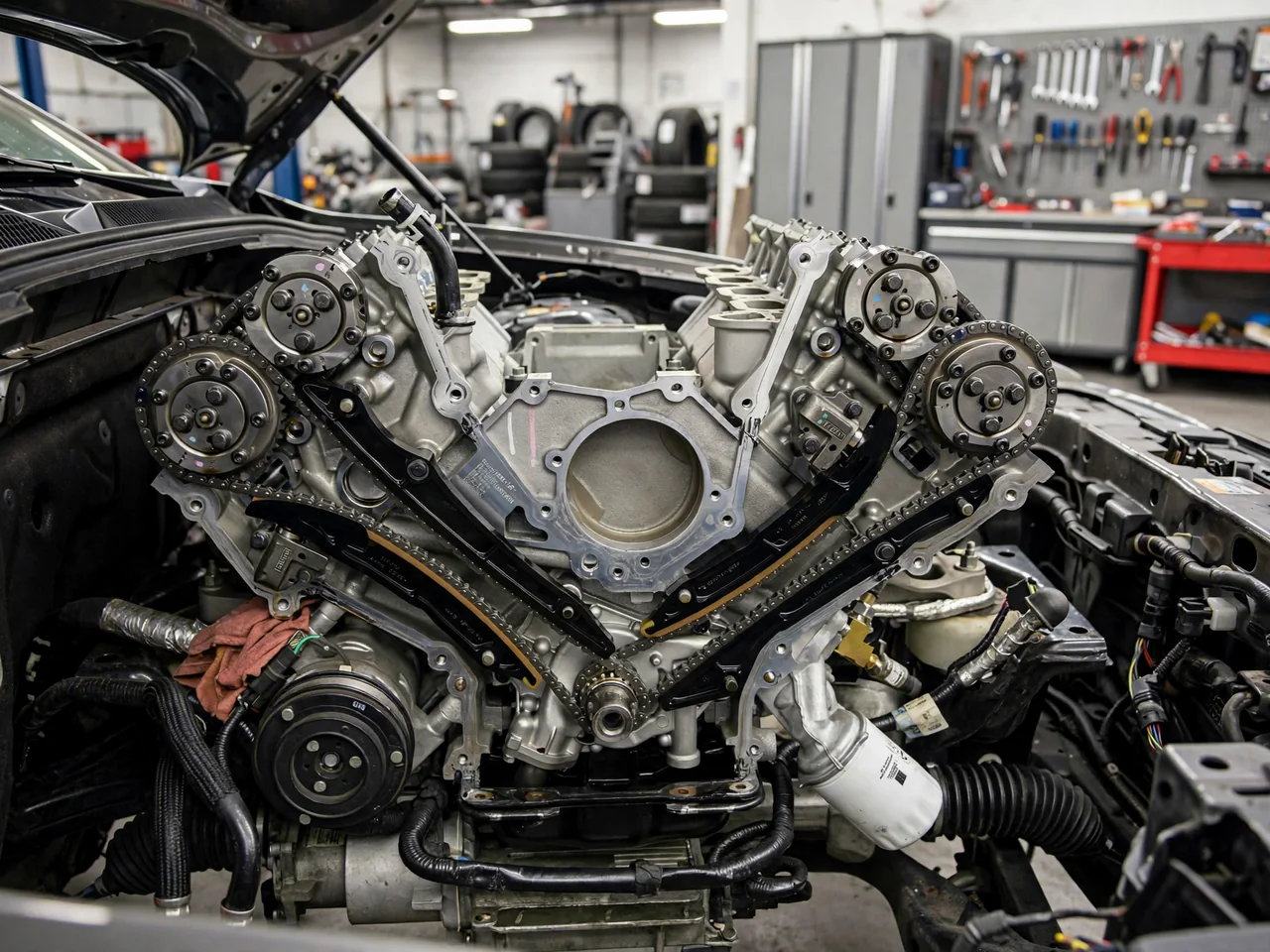
If your 5.0 Coyote is making rattling noises or setting cam timing codes, understanding the timing chain system is the first step to a reliable fix. The Coyote 5.0 uses a multi-chain dual overhead camshaft design with hydraulic tensioners, plastic guides, and variable cam timing. A proper 5.0 Coyote timing chain diagram helps you visualize these components and diagnose issues accurately before any parts are replaced.
How the Coyote 5.0 Timing Chain System Works
The Coyote 5.0 timing chain system synchronizes the crankshaft with the two overhead camshafts on each cylinder head, using a primary chain and two shorter secondary chains. The primary chain connects the crankshaft sprocket to an intermediate shaft, which then drives the exhaust camshafts via the secondary chains. This layout ensures valve events occur at the correct crank angle.
Hydraulic chain tensioners maintain constant pressure on the chains as they wear, and plastic-faced guides control chain movement across their long spans. Cam phasers on each intake and exhaust camshaft allow variable cam timing under oil pressure. Because engine revisions across model years change sprockets, guides, and tensioner designs, always identify your specific vehicle application and engine calibration before comparing diagrams or parts.
What a Coyote Timing Chain Diagram Can Tell You
An application-specific 5.0 Coyote timing chain diagram shows the exact path of each chain around the crankshaft sprocket, intermediate sprocket, and camshaft sprockets. It also marks the location of the fixed and pivoting guides, the tensioner plungers, and which side of the chain is loaded. This lets you see how a single broken guide can introduce slack or how a tensioner bleed-down affects startup noise.
However, a generic overview diagram cannot confirm wear, verify actual valve timing, or substitute for the factory service procedure. Different VIN ranges and engine revisions may use revised sprockets with different tooth counts or one-piece versus multi-piece guides. Confirm the diagram matches your truck’s model year, build date, and calibration. Then use it only as a reference for visual identification, not for timing alignment or disassembly instructions.
Timing Chain Wear Concerns and Symptoms Worth Checking
Timing chain wear on a Coyote 5.0 often shows up as a brief rattle at cold startup, usually lasting one to three seconds until oil pressure builds in the tensioners. Persistent mechanical noise that follows engine rpm, rough idle, misfire codes, or a camshaft correlation DTC can also occur. Yet each symptom has multiple possible causes, including oil viscosity problems, low oil pressure, or a failing VCT solenoid, so no single sound proves a chain is stretched.
Oil level and condition directly affect the hydraulic tensioners and cam phasers. Aeration from overfilling or low pressure from a partially clogged pickup can cause timing instability. But changing the oil is not a repair if damage already exists. Mileage alone cannot establish replacement need—many fleets run well past 150,000 miles without chain issues, while others need attention sooner. There is no blanket replacement interval for the Coyote timing system.
Safe Observations and Professional Diagnostic Testing
Before visiting a shop, record when the rattle occurs, how long it lasts, engine temperature, and whether the check engine light is on. Note any recent oil changes, battery disconnections, or collision repairs. Do not deliberately recreate severe symptoms by revving in neutral or holding high load. Check the oil level on level ground following the owner’s manual, but keep hands and tools away from moving belts, pulleys, and the timing cover.
A professional diagnostic will verify any stored code’s vehicle-specific definition, since a P0016 or P0018 can be set by a phaser, solenoid, oil passage restriction, or stretched chain. The technician should measure hot oil pressure, compare commanded versus actual cam angle for each phaser, and run a crankshaft-to-camshaft correlation test. If an oil-pressure warning appears or mechanical noise becomes severe, stop the engine safely and tow the vehicle.
Choosing a Timing Chain Kit for a 2018 F-150 5.0
For a 2018 F-150 5.0, never assume any timing chain kit fits without checking the VIN, engine calibration, and build date. Ford used several revisions of the Coyote during that generation, and chain guide lengths, tensioner bodies, and phaser part numbers can differ. Confirm the kit is listed for your exact application through a dealer or reputable parts catalog before purchasing.
A kit label does not establish what is inside the box. The estimate should itemize primary and secondary chains, all guides, tensioners, front crankshaft seal, timing cover gaskets, and any one-time-use fasteners. Ask specifically whether cam phasers are included and whether diagnosis supports replacing them—replacing phasers on a perfectly functional unit adds cost without benefit. Verify any superseded part numbers through the supplier’s official revision history.
What a Timing Chain Replacement Estimate Should Cover
A proper timing chain replacement on a Coyote 5.0 requires removing the accessory drive, valve covers, timing cover, and often the oil pan, then carefully locking the camshafts and crankshaft. The job is not a DIY-level project without factory service information and specialized tools. The estimate should include diagnostic findings, a list of replacement components, labor hours for access and reassembly, engine oil, coolant, RTV, and warranty terms.
Cost drivers vary widely with vehicle application, confirmed damage, and repair scope. Does the pan have to be dropped because guide pieces fell in? Are phasers being replaced? Is the front seal or oil pump being done while open? Completion verification should include a hot idle and road test for leaks, abnormal noise, and relevant fault codes. The final scan should confirm correct cam timing operation, not simply show that codes were cleared.