Ford C-Max Glow Plug Relay Location
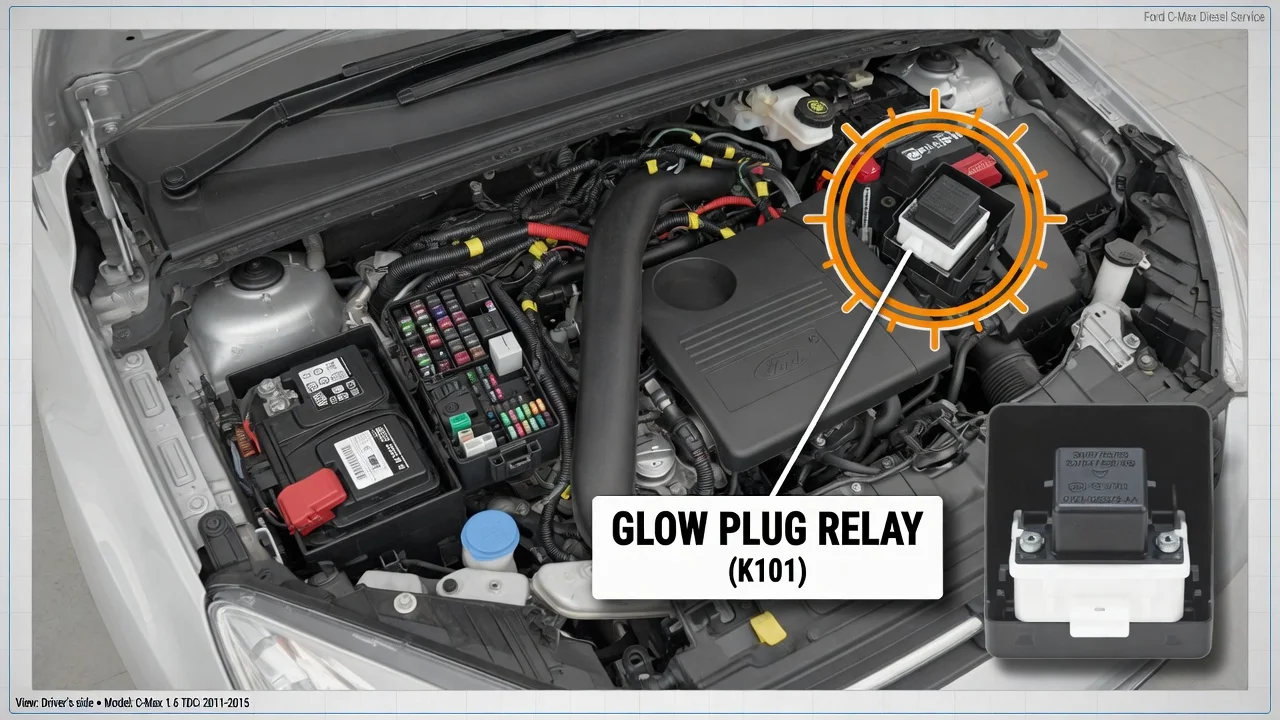
Finding the glow plug relay on a Ford C-Max starts with one question: does your car have glow plugs? Only diesel versions do. The C-Max sold in the United States came as a gasoline hybrid and a plug-in hybrid, so it has spark plugs and no glow plug relay. Diesel C-Max models from Europe and other markets do use one. The sections below explain where it usually sits, how to identify it and how to check the circuit safely.
Where the glow plug relay is on a C-Max
On a US-market C-Max Hybrid or C-Max Energi, there is nothing to find. These cars use a 2.0-liter gasoline engine. If a parts listing or code reader refers to a glow plug circuit, the wrong vehicle or engine was usually selected. Confirm the engine configuration from the VIN or the emissions label under the hood before you buy anything.
On diesel TDCi versions, the part is normally a glow plug control module rather than a small plug-in relay in the cabin fuse box. It sits in the engine compartment, mounted to the body or to a bracket close to the engine wiring harness. Its exact position depends on the engine and model year. The dependable way to find it is to start at the glow plugs on the cylinder head and follow their heavy supply wire or busbar back to the module. The module also has a multi-pin connector from the engine harness, which helps confirm you have the right part.
How the glow plug system works
A diesel ignites its fuel with the heat of compression alone. When the engine is cold, the cylinder walls absorb so much of that heat that ignition becomes unreliable. Glow plugs solve this by heating each combustion chamber before and during cranking. The engine control module decides how long to glow, mainly from coolant temperature, and commands the glow plug module. The module then switches heavy battery current to the plugs. The coil-shaped warning lamp on the instrument cluster shows the preheat phase, and it can flash or stay lit when a fault is stored.
Many modern modules keep the plugs powered for a while after the engine starts. This afterglow reduces white smoke, noise and rough running while the engine warms up. The module can also monitor the current in each plug circuit and report faults to the engine computer. As a result, a failed plug or a damaged wire can set a code that seems to point at the module itself.
Glow plugs only assist ignition. The engine still needs correct fuel delivery. A lift stage moves diesel from the tank through the fuel filter to the high-pressure fuel pump, which feeds a common rail at very high fuel pressure. Each injector then meters fuel into its cylinder. A cold-start complaint can come from either the heating side or the fuel side, so the glow plug relay is one suspect, not an automatic culprit.
What changes the answer
Across two generations, the C-Max was offered with several TDCi diesel engines of different displacements. The glow plug module, its bracket and its wiring changed between them, so a first-generation car and a later facelift model may look quite different in the same area of the engine bay. Previous repairs matter too. An aftermarket replacement module can differ in shape from the original, and after engine or front-end work the module may have been refitted in a slightly different spot.
Operating conditions change what you notice. In mild weather, a diesel with one or two weak glow plugs, or with a module that has stopped working, may start almost normally. The fault then only shows up on cold mornings. A tired battery or a poor ground connection can also slow cranking and mimic a glow system failure, because the glow plugs and the starter both draw heavily on the battery at the same time.
What the owner can check
Begin with a scan tool. Codes such as P0380 or P0670, or the cylinder-specific glow plug circuit codes P0671 to P0674, point to the heating circuit rather than to fuel delivery. Note the codes before clearing anything. Next, check the glow plug fuse in the battery-side fuse box, using the fuse diagram in the owner's manual for your exact version. Then inspect the module connectors and the plug feed wire for corrosion, chafing or heat damage.
Disconnect the battery negative terminal first. You can then unplug the feed from each glow plug and measure its resistance with a multimeter. A healthy plug reads very low resistance, and the readings should be similar across all cylinders. An open circuit means the plug has failed. A clamp-on ammeter on the supply cable during the preheat phase shows whether current actually flows. If the plugs test good, the module has power and the command signal from the engine computer is present, but no current flows to the plugs while the lamp is on, the module is the likely fault.
Keep the work electrical. Do not loosen injector lines, the rail or the high-pressure pump while you work in this area, and do not try to release pressure from the system yourself. Common-rail diesel systems operate far above 1,000 bar (more than 14,500 psi), and a fine jet of fuel at that pressure can penetrate skin. The module and plugs can also be hot after afterglow. A glow plug seized in the cylinder head can snap if forced, so stop and get help if one will not turn with reasonable effort.
When the problem is fuel, not glow
If the glow circuit checks out but the engine still starts poorly, look at the fuel supply. Several faults can stop the rail from reaching starting pressure: air drawn in after a fuel filter change, a clogged filter, diesel that has waxed in cold weather, a weak low-pressure supply or excessive injector leak-back. A careful visual leak check for wet diesel around the filter housing, lines and injectors is safe and useful. Measuring rail pressure or injector return volumes requires proper tools and specification data.
On a gasoline hybrid C-Max, cold-start or rough-running complaints have nothing to do with glow plugs. The relevant path there is scan data such as fuel trim and fuel pressure, plus spark and intake checks. For either fuel type, treat additives with caution. A winter anti-gel treatment is designed to help prevent diesel from waxing, but no additive repairs a failed relay, a burned-out glow plug or a worn injector.
Limitations and next step
This guide cannot give an exact mounting position for every C-Max engine and model year. Photos from forums or parts catalogs may also show a different version than yours. For a definitive location, use VIN-based workshop information, or ask a Ford dealer to look up the component for your car.
Get professional help if glow plug codes return after new plugs are fitted, if wiring or connectors show signs of melting, if you find a fuel leak or if a glow plug is seized in the head. A diesel specialist can test the module command signal, measure rail pressure and evaluate the injectors without opening the high-pressure system unsafely.