Ford Brake Warning Light: Meaning and Diagnostic Checks
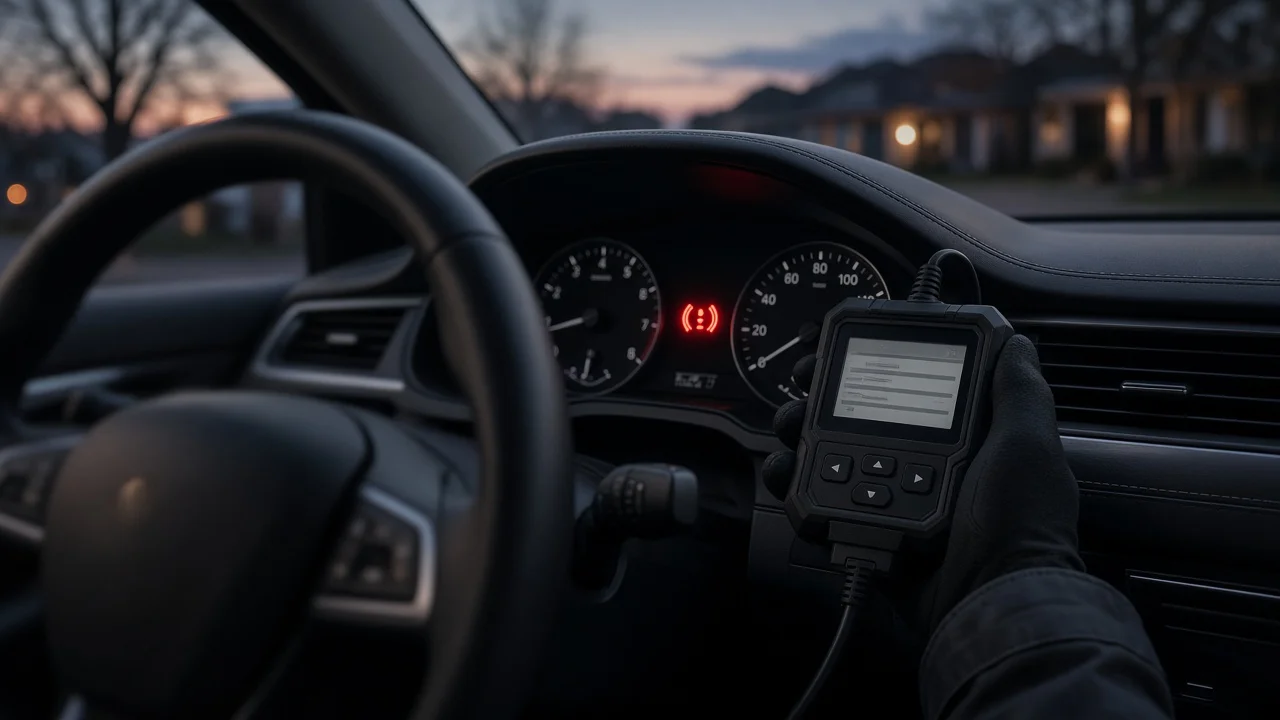
The brake warning light on a Ford is not a reminder to schedule maintenance someday. On most models it is a red lamp showing the word BRAKE or an exclamation point inside a circle. It reports one of three things: the parking brake is applied, the brake fluid level is low, or the system has detected a fault. Working out which one applies starts with careful observation, not guessing at parts.
Establish the symptoms
Begin by noting exactly when the light appears. A brief glow at ignition that goes out after the bulb check is normal. A light that stays on from startup points one way. A light that comes on only during turns or hard stops points another, and so does one that flickers over bumps. Check the message center too, because many Ford models show a text message, such as a low brake fluid warning or a parking brake fault, alongside the lamp. Also note whether the amber ABS light or traction control light is lit at the same time.
Then record how the brakes feel and sound. A pedal that is soft, sinks slowly under steady pressure or travels farther than usual is significant. So is pulling to one side, grinding, or a burning smell after a drive. Finally, list recent changes: new brake pads or rotors, a fluid flush, a battery replacement, a parking brake adjustment, or wet spots near a wheel or under the engine bay. These details often tell you more than the light itself.
Distinguish plausible causes
The simplest cause is the parking brake. On vehicles with a pedal or lever, the light should go out when the brake is fully released. If it stays on, the release may be incomplete or the switch misadjusted. On Fords with an electronic parking brake, a system fault may show its own message or an amber indicator, and some models need a specific service procedure after rear brake work. If the light changes as you move the parking brake control, this cause becomes more likely. If nothing changes, look elsewhere.
Low brake fluid is the next common explanation. The fluid level drops gradually as brake pads wear, because the caliper pistons move outward and more fluid sits in the calipers. A level near the minimum mark combined with thin friction material suggests normal wear. A leak is a far more serious finding. Signs of one include a level that falls quickly, wet residue on a tire sidewall, inner wheel or near the master cylinder, or a pedal that has become soft.
Electrical and control faults make up the third group. A failed fluid level float, a damaged connector at the reservoir or a wiring problem can trigger the lamp even when the fluid level is correct. When the red brake light and the ABS light come on together, the ABS module may have disabled electronic brake force distribution, which balances braking between the front and rear axles. Some models also use pad wear sensors that report through the warning system. Not every Ford has them, so check the vehicle fitment information before assuming yours does.
Checks in a useful order
Safe observations come first and need no tools. Park on level ground, confirm the parking brake is fully released and watch whether the light responds. Find the brake fluid reservoir, usually toward the rear of the engine bay on the driver side, and compare the level against the MIN and MAX marks. Leave the cap closed unless you need to add fluid. Look for drips under the car and damp areas behind each wheel. Note how the fluid looks, but color alone is not a reliable test of its condition.
Next come checks that need basic tools or specifications. Measuring pad and rotor thickness usually means removing the wheels. The readings only mean something when compared against the wear limits in the service information for your exact model and brake package. Inspect brake hoses and lines for cracks or wetness. Look for signs of a sticking caliper, such as uneven pad wear or one wheel giving off noticeably more heat after a short drive, and never touch hot brake components. If you need to top up, use only the fluid type printed on the reservoir cap or listed in the owner's manual.
Some tests belong with a qualified technician. Reading stored codes from the ABS and body control modules requires a scan tool that can reach those systems; a basic engine code reader is not enough. Pressure testing, master cylinder evaluation, bleeding an ABS-equipped system and electronic parking brake service modes all need specific equipment and procedures. Any job that opens the hydraulic system should be done with the correct tools and Ford service information.
Interpret the findings
If the light goes out when the parking brake is released and stays out on a test drive, the cause is fairly well established. Still confirm the switch or cable is not leaving the rear brakes partly applied. A low fluid level paired with pads near their wear limit supports normal wear, but it does not rule out a small leak. Replacing worn pads pushes the caliper pistons back and returns fluid to the reservoir. If you add fluid without addressing the pads, you hide the symptom and may overfill the reservoir later.
If the fluid level is correct and the light stays on, suspect the sensor, the wiring or a module fault, and read the stored codes before replacing anything. A falling level with visible wetness confirms a leak, but the source still has to be pinpointed: a caliper seal, hose, line or master cylinder. If the red and amber lights are on together, treat it as a braking system fault until a scan shows otherwise. In every case, replace a part because a test proved it faulty, not because it is the usual suspect.
Urgency and next action
Stop driving and arrange towing or mobile service if any of these apply: the pedal feels soft, sinks or travels closer to the floor than usual; fluid is visibly leaking; the vehicle pulls hard; stopping distance has clearly increased; or the red brake light comes on together with the ABS light while driving. If the light appears while you are moving, find a safe place to stop, make sure the parking brake is released and check the pedal. If the light stays on, have the system inspected promptly. Do not assume any remaining distance is safe, and do not take the light going out as proof the problem is gone.
Before the repair, give the shop these details: model year, engine and trim, the exact message center text, when the light appears, how the pedal feels, the fluid level you observed, and any recent brake work. Mention whether replacement parts were matched to your vehicle fitment, since a mismatched pad, rotor or caliper can create new problems. This information helps the technician confirm the fault quickly and avoid replacing components that were never the cause.