Ford Brake Fluid Requirements for F-150, Fusion, Focus, and Escape
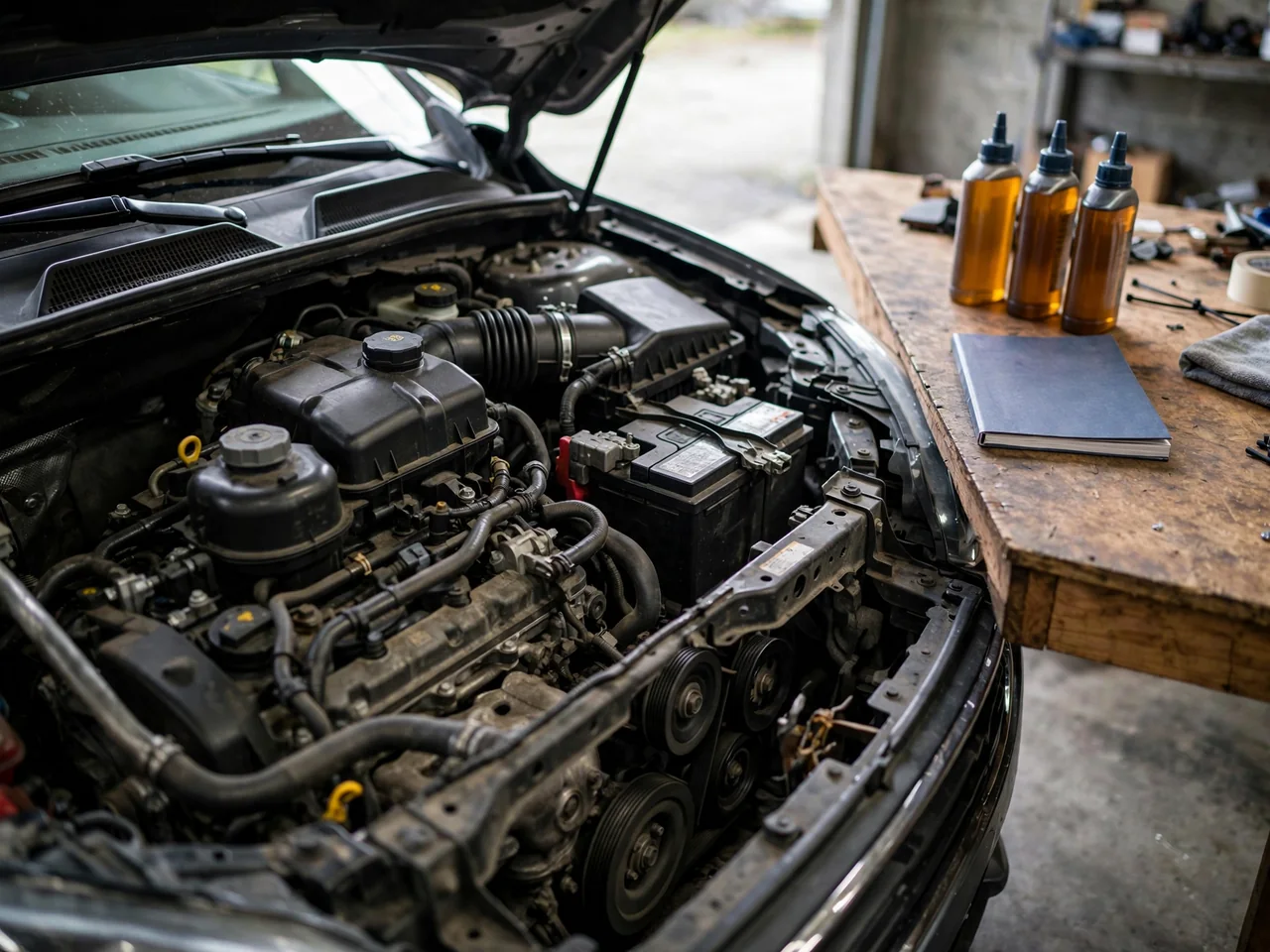
Ford owners asking which Motorcraft grade their F-150, Fusion, Focus, or Escape uses should start with model year, not a shared bottle. The correct brake fluid for Ford is the DOT grade and Ford brake fluid specification in that year's owner's manual. Motorcraft brake fluid is sold as more than one product, so confirm the stated requirement before topping the reservoir or scheduling replacement.
Find the Brake Fluid Specification for Your Ford's Model Year
Before looking up brake fluid for Ford, identify the model year and the configuration the documentation uses, such as hybrid status or drivetrain when those details change listed fluids. The door-jamb certification label typically establishes the year; the matching owner's manual then maps it to capacities and specifications. Use the edition for the vehicle as built, because Ford brake fluid requirements can change between generations of the same nameplate.
Open the capacities and specifications section and read both the stated DOT grade and any Ford brake fluid specification printed with it. The brake fluid reservoir cap can repeat a grade marking, but a cap stamp is not a substitute for the full specification line. Do not infer suitability from the Motorcraft name alone, because Motorcraft products span more than one grade. If the manual, cap, and label disagree, or a page is missing, use vehicle-specific Ford documentation or a qualified service provider.
Check the F-150 Requirement Before Choosing a Bottle
Owners seeking brake fluid for Ford F-150 should treat model year as the starting point rather than the pickup nameplate. F-150 brake fluid is not one grade across every generation, so a bottle that suited one truck may not match another. State a year-specific requirement only after the applicable owner's manual confirms it. Until then, do not treat Motorcraft DOT 3, Motorcraft High Performance DOT 3 brake fluid, or DOT 4 LV as the default fluid for every F150.
Match the documented requirement to the bottle's grade and specification statements rather than packaging color or a Motorcraft logo. The product should state the same DOT grade the manual lists and should claim the Ford specification when the manual names one. Fluid already in the F-150 reservoir cannot be identified reliably by color, because aging, contamination, and original dye all shift appearance. If service history is unknown, have the existing fluid identified or exchanged under the correct specification instead of topping an uncertain system.
Verify Fusion Brake Fluid, Including 2010 and 2012 Models
Brake fluid for Ford Fusion should come from that sedan's model-year owner's manual, not from a neighboring year or from F-150 guidance. Give 2010 Ford Fusion brake fluid and 2012 Ford Fusion brake fluid separate lookups, because each year has its own book. Check whether that documentation distinguishes hybrid and other configurations before stating a requirement. Name the specified DOT grade and Ford specification only when that year's pages confirm them; if a hybrid or trim page is silent, leave that application unresolved.
Owners of other Fusion years can perform the same check without carrying a 2010 or 2012 recommendation across model years. Locate the capacities pages for that exact year, confirm any hybrid or drivetrain split, and match a Motorcraft bottle only to the printed grade and Ford brake fluid specification. Later-generation Ford Fusion brake fluid is not established by what a 2010 or 2012 car required, even when the reservoir cap looks similar. If the printed specification is incomplete, a dealer can retrieve the vehicle-specific fluid list.
Locate the Correct Focus Brake Fluid Requirement
Brake fluid for Ford Focus depends on the exact model year and the market the car was built for, because Focus generations and regional specifications are not interchangeable. A North American owner's manual does not automatically answer a car sold elsewhere, and a later hatchback does not inherit an earlier sedan's fluid line. Check variant information, including engine and any hydraulic-system notes, before assigning a specification. Until those pages confirm a grade, leave Ford Focus brake fluid unresolved rather than borrowing an F-150 or Fusion answer.
The selected product's suitability information must show the same DOT grade the Focus manual lists and must claim any Ford brake fluid specification that manual names. A Motorcraft DOT 3 marking helps only when DOT 3 is the documented grade; it does not approve a Focus whose book calls for DOT 4 LV. Keep uncertain applications unresolved until vehicle-specific documentation confirms the requirement. A Ford service provider can pull the correct fluid list by VIN when the glove-box book is incomplete.
Confirm Escape Brake Fluid by Year and Configuration
Confirm Escape brake fluid from that crossover's model year and relevant configuration, including hybrid status where documentation splits conventional and hybrid systems. Brake fluid for Ford Escape is not established by a recommendation written for an F-150, Fusion, or Focus. Use the applicable owner's manual to establish the required DOT grade and Ford specification, then match a bottle only to those statements. If hybrid pages list a different fluid from the gasoline pages, follow the configuration that matches the vehicle as built.
Ford Escape brake fluid already in the reservoir cannot be named from color, and unknown service history is a reason to pause before adding or replacing fluid. A previous owner may have used a different DOT grade or mixed products. Direct those vehicles to professional assessment so the shop can identify the correct specification, inspect for leaks or worn pads that explain a low level, and choose an appropriate exchange method. Do not treat another Ford model's fluid as a stand-in while that assessment is pending.
Read Motorcraft DOT 3 and DOT 4 LV Labels for Your Application
Motorcraft High Performance DOT 3 brake fluid is a Motorcraft DOT 3 product whose label states a DOT 3 grade; that wording is useful only after the vehicle's documentation specifies DOT 3 and any accompanying Ford specification. Read the full product description, not just the Motorcraft name, and compare it with the capacities page for the F-150, Fusion, Focus, or Escape in question. If the manual names additional Ford performance language, the bottle should claim that language as well.
For vehicles whose documentation specifies DOT 4 LV, require a product that meets the complete stated requirement, including the low-viscosity designation and any Ford specification printed beside it. A generic DOT 4 label is not the same claim as DOT 4 LV, and branding plus a DOT number alone do not establish approval for a particular Ford. Keep this label check focused on the covered F-150, Fusion, Focus, and Escape applications rather than substituting or mixing grades from shelf proximity.
Check Fluid Level Safely and Plan Replacement Service
When the brake fluid reservoir is accessible, observe the level against its markings, following the owner's manual without opening the hydraulic system. Low fluid may accompany pad wear as calipers extend, or it may accompany a leak; topping off does not establish which is happening and does not correct the cause. If braking feels impaired, the pedal sinks, or leakage is suspected, stop safely and arrange professional help. A brake warning light also needs diagnosis rather than a guess at which part failed.
Base brake fluid replacement timing on applicable Ford maintenance guidance and professional assessment of moisture, contamination, and system condition; do not invent a universal interval or judge fluid by color alone. A service appointment should establish the correct specification for that year and configuration, the reason for any fluid loss, and the appropriate replacement procedure. Do not bleed the system as a home project, because trapped air or incorrect fluid can impair braking.