Ford Brake Booster Check Valve: Identifying the Correct Part by Model
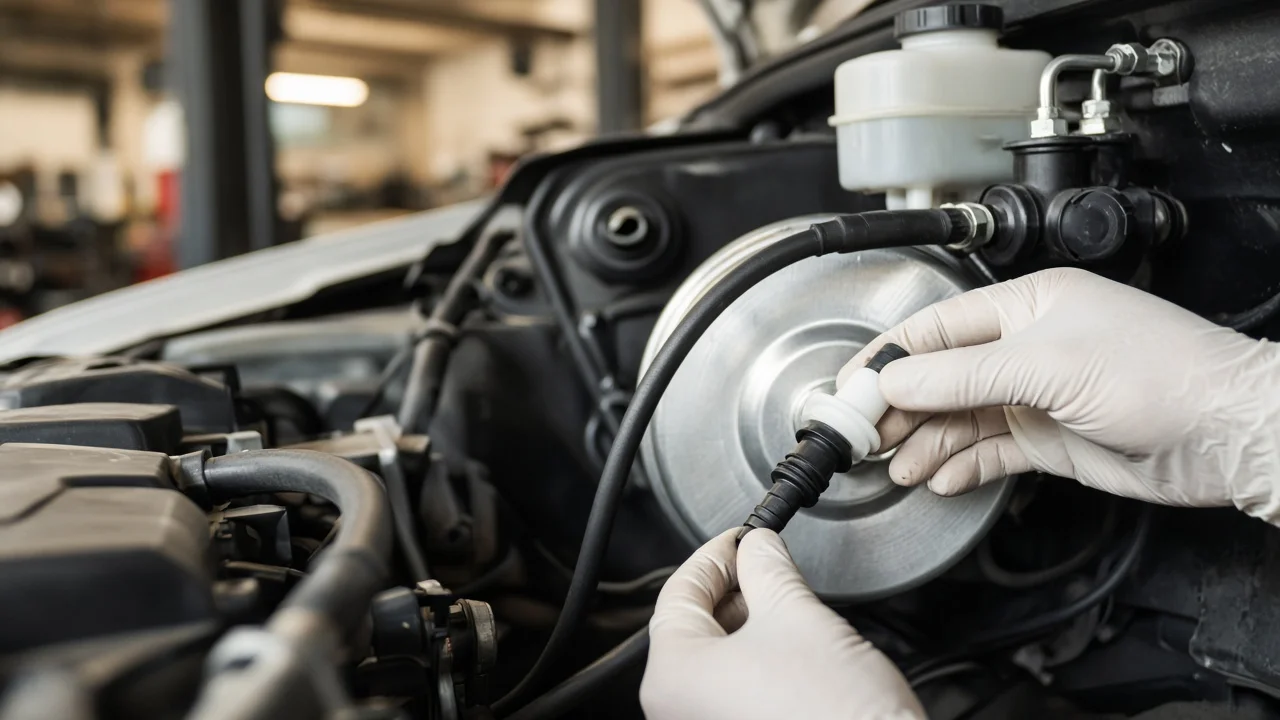
The brake booster check valve is a small one-way valve between the engine vacuum source and the booster on many Ford vehicles. It holds a vacuum reserve so the brakes stay power assisted for a few stops after the engine shuts off or while manifold vacuum is low. Because Ford has used several valve styles, hose layouts and even different boost systems across models, it pays to confirm the fault and the exact part before ordering a replacement.
Establish the symptoms
Start by writing down exactly when the pedal feels wrong. A check valve problem usually shows up as a hard, high pedal on the first stop after the vehicle has sat, which then softens once the engine has run for a moment. Some owners notice it only when climbing a grade or accelerating hard, when engine vacuum drops and a leaking valve lets the reserve bleed away. Others hear a hiss near the booster or the vacuum hose under the hood.
Note any associated signs: a rough or unusually high idle, a check engine light, a change in idle when you press the pedal, a pedal that sinks slowly under steady pressure, or a brake warning lamp. Record recent work as well. A disturbed vacuum hose after an intake or air filter job, a booster or master cylinder replacement, or new brake pads and brake rotors can all change how the pedal feels, and that history narrows the search considerably.
Distinguish plausible causes
A check valve stuck open or leaking lets the reserve escape, so assist is normal with the engine idling but weak right after shutdown or under load. A valve stuck closed, or installed backwards, blocks vacuum entirely and gives a hard pedal all the time. A cracked rubber grommet where the valve seats in the booster shell, or a split or collapsed hose, produces similar results and often a hiss. These causes are supported when assist is good at idle but the reserve disappears quickly.
Competing causes need ruling out. A leaking booster diaphragm tends to hiss at the pedal inside the cab and may drop the idle when you brake, and it keeps losing assist even with a good valve. Low engine vacuum, or a failed auxiliary vacuum pump on engines that use one, weakens assist regardless of the valve. A pedal that sinks toward the floor points to the hydraulic side, such as the master cylinder or a fluid leak at a caliper or line, not the check valve. Glazed or contaminated friction material can make braking feel hard, but that feel does not change between engine running and engine off.
Match the valve to your Ford
First confirm your vehicle actually uses a vacuum booster. Some heavy-duty diesel trucks use a hydraulic booster driven by the power steering system, and hybrid and electric models use electronically controlled brake boost, so a vacuum check valve may not apply at all. On vacuum systems, Ford has used two main layouts: a valve pressed into a rubber grommet on the booster shell, often with an angled outlet, and an inline valve built into or spliced into the vacuum hose. On some models the valve is only sold as part of a complete hose assembly.
Vehicle fitment depends on more than model and year. Engine size, production date, mid-year changes and options can alter the hose diameter, outlet angle and connector type. The most reliable route is to look up the part by VIN through Ford service information or a parts counter, then compare it with the old valve: any part number or markings, the outlet angle, the hose sizes on each side and the grommet style. Photograph the booster port and hose routing before removal so you can check orientation; most valves are marked to show which side faces the engine vacuum source.
Checks in a useful order
Several checks are safe for an owner with the vehicle parked. Inspect the vacuum hose, grommet and valve for cracks, softness, oil swelling or loose fittings, and check the brake fluid level against the reservoir marks. For the reserve test, run the engine for a minute, shut it off, wait a short period, then press the pedal several times; a healthy system normally gives at least a couple of assisted applications before the pedal goes firm. For the assist test, pump the pedal with the engine off until it is firm, hold steady pressure and start the engine; the pedal should drop slightly as assist returns.
Tests that need tools or specifications come next. With the valve removed, a hand vacuum pump should hold vacuum from one direction and pass air freely from the other; blowing through it by mouth is a rough check at best. A vacuum gauge teed in at the booster side shows whether the source supplies enough vacuum and whether the booster holds it after shutdown, compared with the published figures for your engine. Booster leakdown testing, auxiliary pump diagnosis and anything that involves opening the hydraulic system are best left to a qualified technician with the vehicle-specific procedure.
Interpret the findings
If assist is normal with the engine running but the reserve test fails, and the removed valve leaks in the blocking direction, the valve is confirmed. If the valve tests good but the grommet is cracked or the hose is collapsed, replace those parts instead. If the valve holds but the booster still loses vacuum on a gauge, or the hiss comes from inside the cab, the booster itself is the likely fault. If vacuum at the source is below specification, the problem lies with the engine or the auxiliary pump, and a new valve will not fix it.
An engine-off pedal test alone does not prove which component failed, so confirm with a valve or gauge test before replacing the booster. If the pedal sinks, the fluid level is dropping or the warning lamp is on, the hydraulic side needs inspection whatever the valve result. While the wheels are off, measure brake pads and brake rotors against the wear limits in the service information so a worn friction component is not mistaken for a boost problem.
Urgency and next action
A hard pedal means longer stopping distances, especially in an emergency, so treat any loss of assist as a fault that needs prompt repair rather than something to drive around. Stop using the vehicle and have it towed or inspected if the pedal goes to the floor, sinks under steady pressure, the brake warning lamp stays on, fluid is leaking, the vehicle pulls hard to one side or you hear grinding. No mileage can be considered safe with a braking fault, and these symptoms call for professional service before further driving.
To get the correct part and a quick repair, gather the VIN, model year, engine, production date from the door label, any number on the old valve, photos of the booster port and hose routing, and notes on when the symptom occurs and what work was done recently. That information lets a parts counter or technician confirm whether you need a grommet valve, an inline valve, a complete hose assembly or a different repair altogether.