Ford 6.7 Lost Communication With Glow Plug Control Module
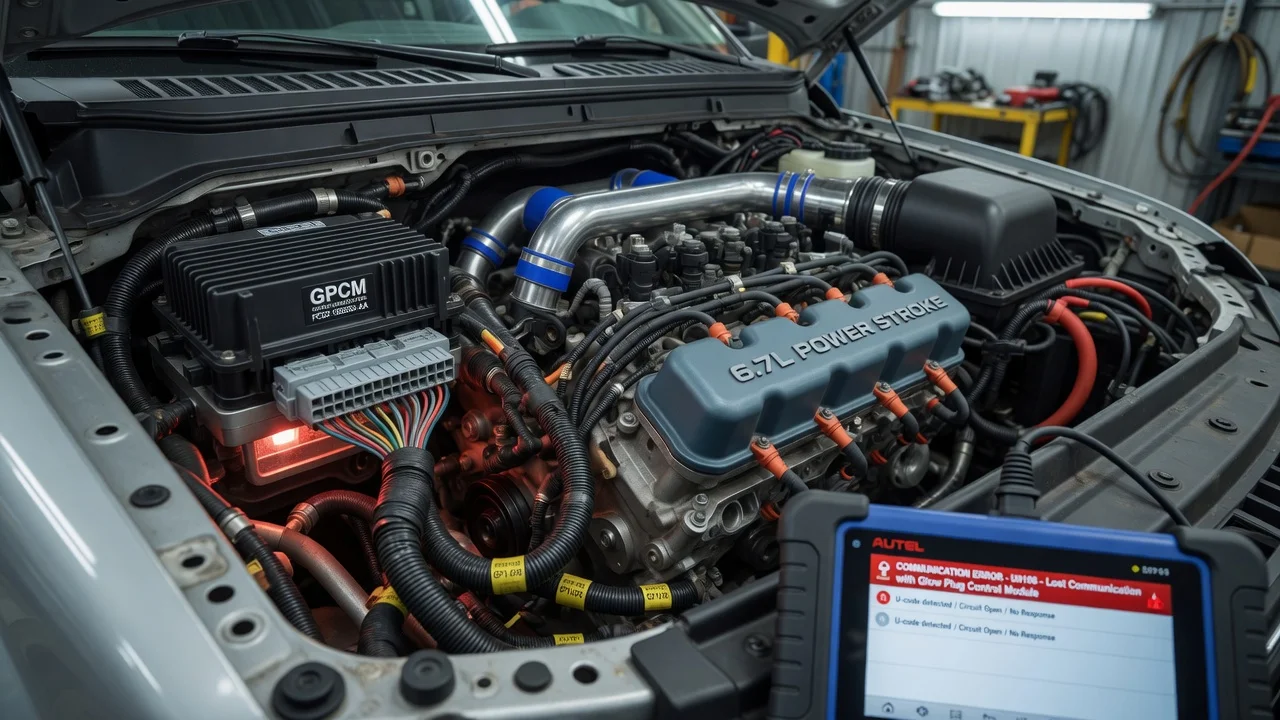
When a 6.7L Power Stroke sets a lost communication with glow plug control module fault, usually stored as U0106, the powertrain control module (PCM) is reporting that it stopped hearing from the module that runs the glow plugs. The truck often drives normally once warm, but cold starts can suffer. This article explains what the code means and what typically causes it. It also covers how to separate it from a fuel delivery problem and what an owner can safely check before paying for diagnosis.
What the code actually means
U0106 is a communication fault. It does not prove that the glow plug control module itself has failed. The PCM commands glow plug operation and expects status messages back. When those messages stop or become invalid for long enough, it logs the code and usually turns on the check engine light. Common root causes are loss of power or ground to the module, a blown fuse, corroded or water-damaged connectors, chafed wiring between the module and the PCM, and low battery voltage during cranking. Less often, the module fails internally. Replacing the module first is a gamble that often misses the real problem.
A diesel ignites fuel with compression heat, so a missing glow plug system mostly shows up in cold weather. Expect longer cranking, rough running and white smoke for the first few minutes, and sometimes a wait-to-start lamp that behaves oddly. In mild temperatures many trucks start and run with little noticeable difference. Repeated rough cold starts still deserve attention, because incomplete combustion adds soot and strain until the engine warms up.
How the glow plug system works on the 6.7
The 6.7 is a V8 with a glow plug in each cylinder. The glow plug control module switches high current to the plugs before startup and can keep them powered briefly afterward to smooth combustion and reduce smoke. It does this on command from the PCM, which considers engine temperature and other inputs. The module also reports the status of each glow plug circuit. That is why individual glow plug circuit codes often appear alongside a communication fault, or instead of one.
To communicate, the module needs three things: battery power through its fuse, a clean ground, and an intact signal circuit to the PCM. Cold glow plugs draw substantial current together. Voltage drop from weak batteries or loose cable connections therefore shows up quickly, especially during cranking, when the starter is also pulling heavily from both batteries.
What changes the diagnosis
Module location, connector design, wiring routes and the exact communication arrangement vary across 2011 and later Super Duty model years. They also differ between pickups and cab-and-chassis versions. A fix that worked on another truck may not apply to yours. The wiring diagrams and any technical service bulletins for your VIN take priority over general advice.
Operating conditions also narrow the cause: • A code that sets only after a wash, rain or salted roads points toward water intrusion or corrosion. • A code that appears only while cranking on cold mornings suggests voltage drop. • A code that keeps returning after clearing, together with glow plug circuit codes, raises suspicion of a shorted plug or damaged harness that may also stress the module's outputs. • Aftermarket tuning, added electrical accessories and recent work near the module or batteries also change what is likely.
Separating it from a fuel system problem
A hard cold start on a diesel is not automatically a glow plug issue. If the engine cranks long, eventually catches, then smokes and runs rough until warm, missing glow plug function fits. Look at fuel delivery instead if the truck is also hard to start warm, stalls, loses power under load or sets fuel pressure codes. Possible causes include a restricted fuel filter, a weak lift pump, air entering the supply side, or a high pressure fuel pump or injector concern. A capable scan tool can compare desired and actual rail pressure during cranking. On this diesel, injector contribution or balance data is usually more telling than gasoline-style fuel trim numbers.
The high pressure side of the common rail system runs at tens of thousands of psi and can hold pressure after shutdown. Do not loosen injector lines or fittings to bleed the system or to do a leak check with the engine running. Never feel for a leak with your hand, because a pinhole spray can inject fuel through skin. Fuel additives may help with gelling or water in some conditions, but they do not repair a communication fault, a failed glow plug or a mechanical fuel system problem.
What the owner can check
Start with a full scan using a tool that reads all modules, not just generic engine codes. Record every code with its freeze frame data before clearing anything. Note any glow plug circuit codes, low voltage codes or other network faults. Several communication codes at once point to a power, ground or shared network problem rather than this single module.
Check the batteries next. The 6.7 uses two batteries, and one weak battery can drag down system voltage during cranking. Clean and tighten both sets of battery terminals and the main ground connections. If the batteries are aging, have them load tested. Then use the owner's manual or the fuse panel label to find and inspect the fuse that feeds the glow plug module.
With the engine off and the key removed, inspect the module connector and nearby harness. Look for corrosion, green deposits, melted plastic, broken locking tabs or wiring rubbing against brackets or the frame. Do not push oversized test leads into connector terminals, which can spread them and create a new intermittent fault. If the code returns after these checks, a technician can measure power, ground and signal integrity and test individual glow plug resistance. Those results show whether the module, a plug or the wiring needs replacing.
Limitations and next step
The code alone cannot tell you whether the module, a glow plug, the wiring or the batteries are at fault; that takes measurements. The guidance here is general. Module location, connector pinouts and test values must come from service information for your exact truck.
Book professional diagnosis in any of these cases: • The code keeps returning. • Glow plug circuit codes accompany it. • The truck will not start in cold weather. • Fuel pressure codes, visible fuel leaks or a strong raw diesel smell appear. Leave high pressure fuel leaks to a qualified technician. While the fault is being traced, plugging in the block heater, if your truck has one, can make cold starts easier.