Focus ST Transmission Synchros: Assessing Wear and Shift Problems
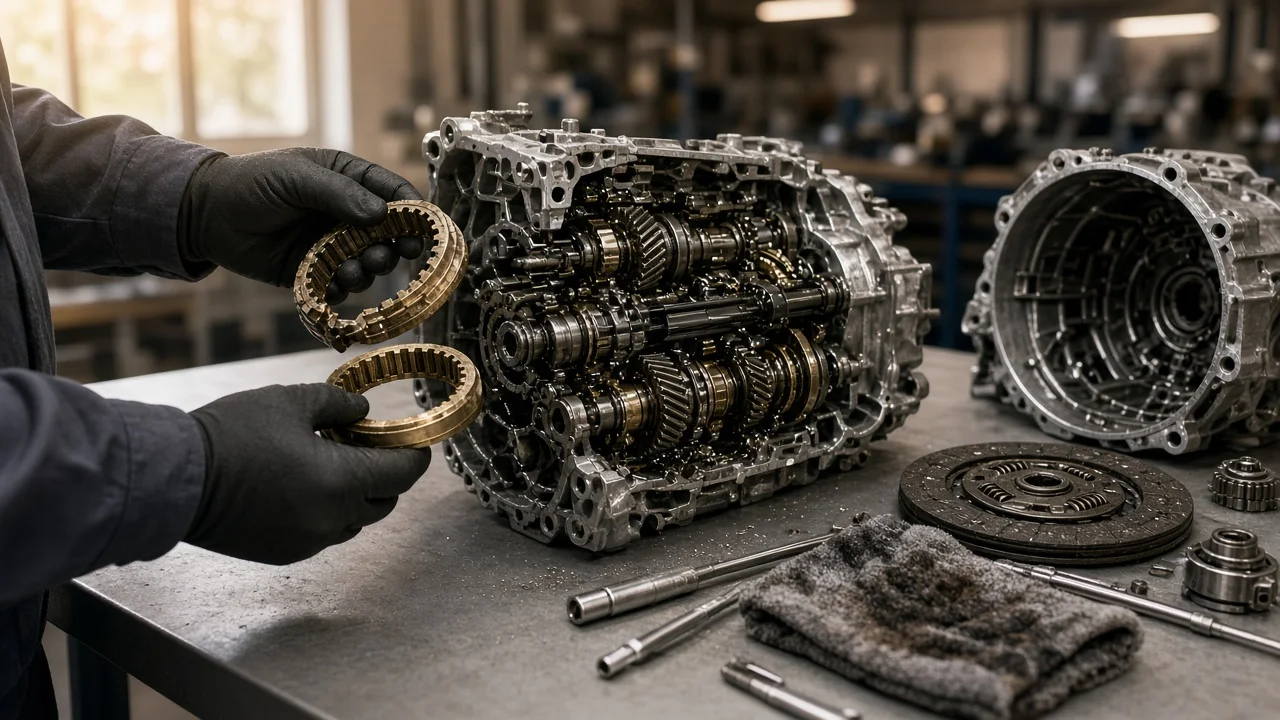
Grinding, notchy or resistant shifts in a Focus ST manual gearbox are often blamed on the synchros, but several other faults feel the same. This guide explains how to assess possible synchro wear step by step. You will identify your transmission, record the shift behavior, separate synchro symptoms from clutch, fluid and linkage problems, and sort the checks you can do yourself from those that need a technician. A symptom alone does not confirm a failed synchronizer, so the aim is to gather evidence before buying parts.
Establish the symptoms
Start by confirming exactly what you have. Focus ST generations differ. The 2013 to 2018 cars sold in the United States came with a six-speed manual. Some later markets also offered an automatic, where synchro wear in the manual-gearbox sense does not apply. Confirm the transmission type from the VIN, the build data or the identification tag on the gearbox case rather than assuming it. Also note any modifications that can change how the gearbox shifts and how much load the synchronizers carry. These include an aftermarket shifter, stiffer shifter bushings, an upgraded clutch or lightweight flywheel, and an engine tune that raises torque. Procedures, fluid specification and inspection steps all depend on this identification.
Next, keep a symptom log over several drives. Write down which gears are affected, whether the problem appears on upshifts, downshifts or both, and whether it happens only on fast shifts or also on slow ones. Record engine and outside temperature. A gearbox that is notchy when cold but smooth once warm points somewhere different from one that grinds at every temperature. Note what you feel and hear, for example: • a brief crunch as the lever goes in; • a lever that blocks and then suddenly drops into gear; • a gear that pops out under load; • trouble selecting any gear at a standstill; Finally, list recent changes such as a fluid service, clutch work, a new shifter, a track day or a tune. A symptom that appears right after a change is a strong lead.
Distinguish plausible causes
Synchronizer wear is a real possibility, especially on cars driven hard or shifted quickly at high rpm. Each synchro uses a friction ring to match the speed of the gear to the speed of the shaft before the sleeve engages. As the ring's friction surface or teeth wear, it cannot match speeds in time, and the sleeve clashes with the gear. Three observations support synchro wear: a grind limited to one or two specific gears, a problem that is worse on quick shifts and eases with slower ones, and a symptom that remains when the gearbox is fully warm. A downshift that becomes clean with rev-matching also fits, but it does not prove which part is worn.
Incomplete clutch release is the most common competing cause. If the clutch does not fully disengage, the input shaft keeps spinning and every synchro has to fight it. The resulting grind closely resembles synchro failure. Clues include grinding into several gears, difficulty selecting first or reverse from a stop, a soft or sinking pedal, and symptoms that change after the clutch is bled. Fluid is the other frequent factor, because wrong, low or degraded fluid changes how the synchro rings grip. A gearbox that shifts poorly only when cold and improves clearly as it warms points toward the fluid rather than a single worn ring. Both problems can exist at the same time.
Shift linkage problems can mimic internal wear or hide it. Worn cable ends, loose bushings, a binding shifter or soft engine and transmission mounts can stop the sleeve from travelling fully. These faults usually show up as vague lever feel, excessive play, or a gear that jumps out under load, rather than a clean grind. A gear that pops out can also mean worn shift forks, worn detents or damaged engagement teeth inside the gearbox. Reverse deserves its own note. On many manual gearboxes reverse is not synchronized the same way as the forward gears, so a brief grind when selecting it may be normal. Confirm how your unit is designed.
Checks in a useful order
Begin with observations that need no tools: • At normal operating temperature, compare a fast shift with a slow shift into the affected gear and note any difference. • At a standstill with the engine running, hold the clutch pedal down for several seconds, then select reverse or first. If the gears still grind after waiting, clutch release becomes more suspect. • With the engine off and the parking brake set, move the lever through all gears. Binding or excessive play points toward the linkage rather than the synchros. • Check the clutch hydraulic reservoir level and look for wet residue near the pedal area or bellhousing. Your owner's manual shows which reservoir feeds the clutch, which may be shared with the brakes. • Inspect the visible mounts for cracked or separated rubber.
Several checks need tools, specifications or a qualified technician. Checking the manual transmission fluid usually means lifting the car level and supporting it safely, finding the fill plug, and knowing the correct fluid specification and fill procedure. Do not guess the fluid, because the wrong product can cause notchy shifts on its own. Bleeding the clutch, inspecting the slave cylinder and assessing the clutch disc and flywheel should follow the service procedure for your car. Manual gearboxes rarely store diagnostic codes for internal wear, but a scan can still reveal faults in the clutch pedal position sensor or related sensors. Measuring synchro ring clearance and inspecting sleeves, teeth and forks requires removing and disassembling the gearbox.
Interpret the findings
Read each result for what it actually shows. A grind confined to one gear that improves with slower shifts, with normal clutch release and correct fluid, makes a worn synchro for that gear likely but not confirmed. Only measurement during disassembly confirms it. Grinding across several gears, or into reverse after a full pause, shifts suspicion toward clutch release. In that case, bleeding or hydraulic repair should come before any internal work. If a correct fluid change improves the shifting, fluid played a role, though wear may still be present. Excessive lever play or binding found with the engine off means the linkage needs correcting before the internals can be judged fairly.
Be cautious with any single finding. Fine metal particles on the drain or fill plug magnet are normal in small amounts, while flakes or chunks suggest active internal damage. A technician can judge which you are seeing. Combine the symptom log and the test results before deciding that a synchronizer is the failed part.
Urgency and next action
Stop driving and arrange an inspection if any of the following occur: • gears cannot be selected reliably; • a gear jumps out under load; • the clutch pedal sinks to the floor or does not return; • the gearbox makes loud knocking or whining noises; • fluid is leaking noticeably; • the fill plug shows significant metal debris; Losing drive in traffic is a safety risk, and continued use can turn a ring replacement into a full rebuild. A mild grind on one gear with no other signs is less urgent. Still, nobody can reliably predict how many miles remain before it gets worse, so have it assessed rather than working around it.
Give the shop the VIN, model year, confirmed transmission identification, mileage and your symptom log. Also share the service history, including which fluid was used and when, any clutch or hydraulic work, and any modifications. Repair options range from a fluid service, clutch hydraulic repair, or linkage and mount replacement, to a gearbox rebuild with new synchro rings and sleeves, to a replacement unit. For any replacement gearbox or internal part, confirm fitment against your exact transmission identification. Agree that the shop will verify the diagnosis before major work begins.