Florida Car Title Search: How to Use the State Lookup
Buying a used car in Florida often means trusting paperwork you are seeing for the first time. A title search through the state's own lookup lets you compare what the seller tells you with what the official Florida title record shows. Knowing when to run it, what information to bring, and how to read the result helps you spot problems early, while there is still time to ask questions or walk away.
When to Run a Florida Car Title Search
A title lookup lets a buyer check the vehicle's state record before any money changes hands. Private sellers and even some dealers may say a car has a clean title, but that claim is only as reliable as the person making it. When you check the Florida title record yourself, you can see whether the recorded status, any title brand, and any lien notation match the seller's story. A mismatch is much easier to deal with before payment than after the car is already in your driveway.
Timing matters. Run the search before you leave a deposit so you don't commit money to a vehicle with an unexpected brand or an open lien. Run it again when you review the seller's paperwork, because that is when you can hold the physical title next to the state record. A final check just before you complete the sale catches any recent change. Keep in mind that the lookup only shows record information. It does not authorize the sale, transfer ownership, or replace the formal title transfer process.
Gather the VIN or Florida Title Number
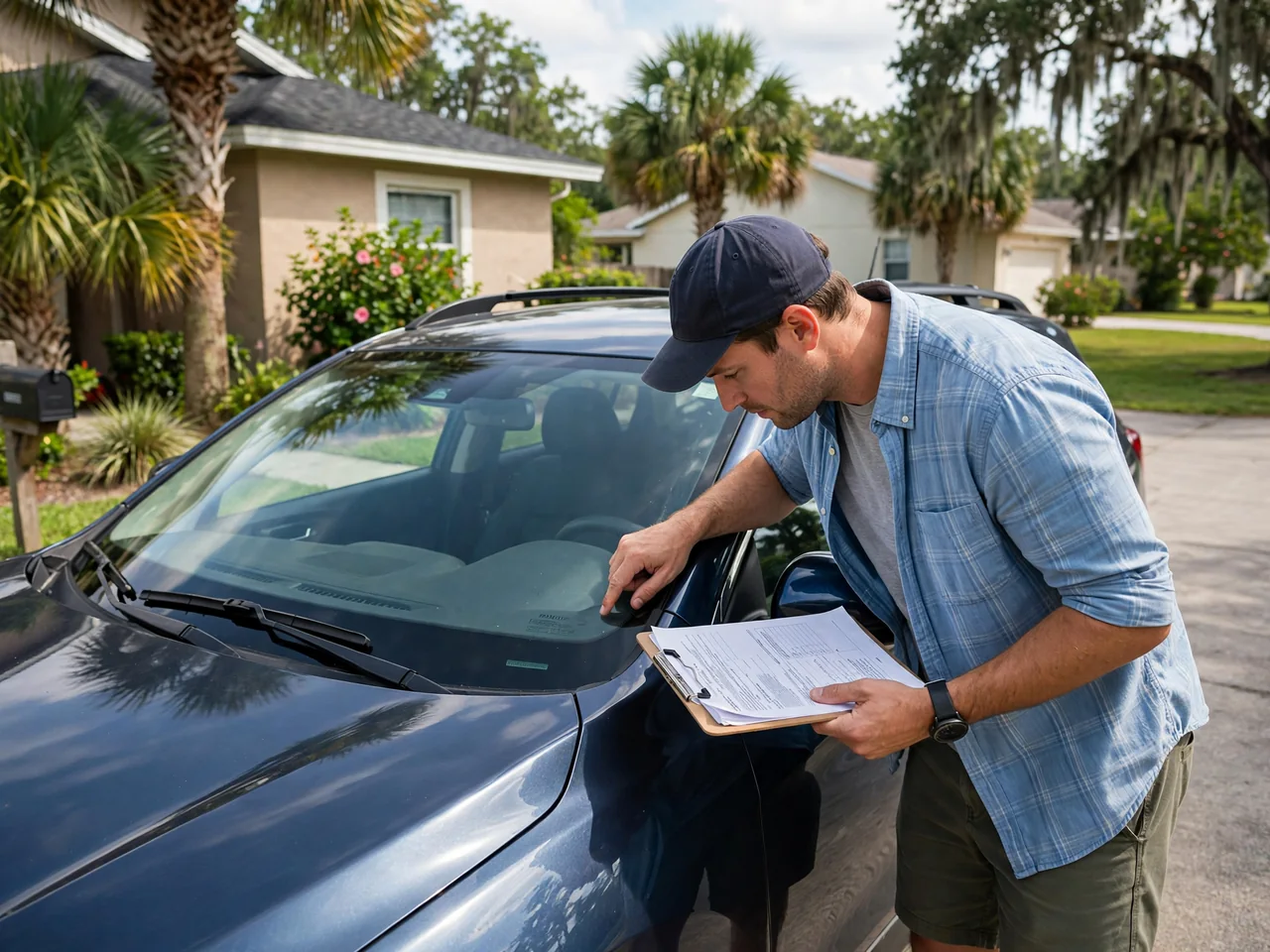
Florida's Motor Vehicle Information Check works from a vehicle identification number or a Florida title number, so have one of them ready before you start. The VIN is the long identifier assigned to the vehicle, and it usually appears on the registration, the title certificate, insurance cards, and service records. On the car itself, the easiest place to find it is the plate visible through the lower corner of the windshield on the driver's side. It often appears on a door jamb label too, so you never need to remove panels or trim.
Before entering anything, compare the VIN on the windshield plate, any door label, and the seller's documents character by character. Standard VINs don't use the letters I, O, or Q, which helps when a character looks ambiguous. If any identifier disagrees, stop and get an explanation before going further. A mismatch can mean a simple paperwork error or a more serious problem. Also note that a license plate number or the seller's name alone may not meet the lookup's input requirements, so don't count on either as a substitute.
Access Florida’s Official Vehicle Information Check
The Florida Department of Highway Safety and Motor Vehicles, usually shortened to FLHSMV, is the state agency responsible for title records and the lookup. Start from the agency's official website rather than a search ad or a lookalike page, because commercial vehicle history services are separate products. On the agency site, find the online services or motor vehicle area and follow it to Motor Vehicle Information Check. Menu labels change over time, so if the link isn't obvious, try the site's own search feature.
On the lookup page, choose whether you are searching by VIN or by title number, type the identifier carefully, and complete any verification step the page shows before you submit. When the result loads, don't jump straight to the status line. First, make sure the vehicle identifiers shown in the record match the car in front of you. A single mistyped character could pull up the record for a different vehicle, which could make a problem car look clean or a clean car look troubled.
Read the Available Title Status, Brands, and Lien Information
The record may show the title number, the current title status, and related details, but the exact fields can vary, so don't assume any particular one will appear. Read what is shown and compare it with the paper title the seller presents. Pay special attention to any title brand. A brand is a recorded designation showing the vehicle has a history the state considers significant. Interpret it using the agency's own terminology rather than guessing, because a brand can affect insurance, resale value, and financing.
A lien notation means a lender or other party held, or may still hold, a security interest in the vehicle. If a lienholder is listed, ask the seller before you pay for written confirmation that the lien has been satisfied, usually a release from the lender. The record may also show that the title is held electronically rather than as a printed certificate. That status alone doesn't tell you whether the seller can complete the transfer, so confirm how they plan to handle the required steps before you commit.
Understand Missing Records and the Limits of a Title Check
If the search returns nothing, start with the simple explanations. Recheck each character you entered, confirm that you chose the correct identifier type, and verify the VIN again on the vehicle itself. A car last titled in another state may not produce a Florida result, and a very recent record update may not show yet. None of these outcomes proves fraud on its own, but each one calls for more inquiry. For example, you can ask to see the out-of-state title or contact the agency directly.
Even a clean-looking result has clear limits. A title record can't tell you the condition of the engine, transmission, brakes, or structure. It also won't capture every accident or repair, especially damage that was never reported or claimed through insurance. A pre-purchase inspection by an independent technician fills that gap. Public access is also limited by privacy rules. The lookup is for confirming vehicle record details, not for finding an owner's name, address, or other personal information, and it shouldn't be used as a way to get them.
Resolve Title Questions Before Completing the Purchase
Before you pay, review the seller's identity, their authority to sell, and the title documents together rather than one at a time. The name on the seller's identification should match the owner shown on the title. If it doesn't, the seller should have documents showing why they can sign on someone else's behalf. If identifiers conflict, authority is unclear, or a lien question is still open, pause the transaction. A legitimate seller can usually wait while you sort things out, and pressure to close immediately is a warning sign in itself.
For record questions and transfer requirements, FLHSMV or a county tax collector's office that handles motor vehicle services can explain what documents your sale needs. For lien questions, contact the listed lienholder, which can confirm whether the loan was paid off. Remember that the lookup is only one step. You still need to make sure every required document is accurate and properly signed. Then complete the title transfer through the proper channel so ownership is legally recorded in your name.