Fleece Transmission Cooler Lines: Fitment and Selection
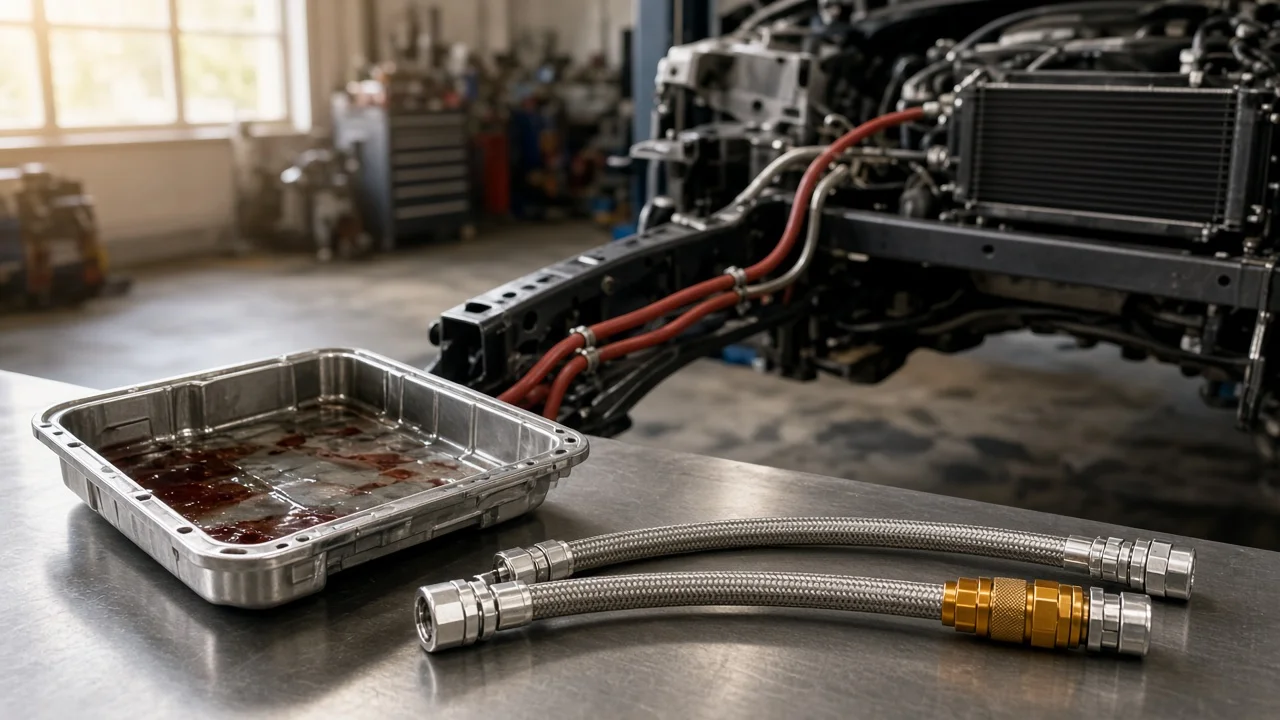
Transmission cooler lines carry fluid between the transmission and its cooler, so a leaking or chafed line can lower fluid level quickly and put the transmission at risk. Fleece Performance is best known for diesel truck parts, and its cooler lines are sold by application for specific pickups. Before you buy, confirm the transmission, model year and cooler layout. Treat a fluid leak as a symptom to trace, not as proof that the lines themselves have failed.
Define the job the product must do
Start with why you are shopping. Common reasons include visible seepage at a fitting or hose section, a line damaged during other work, corrosion on steel sections, or a planned upgrade while the truck is already apart for transmission, radiator or cooler service. On a truck that tows regularly or runs a rebuilt transmission, the goal is often long-term durability and easier future service rather than a fix for an active fault.
Confirm where any leak starts before ordering parts. Transmission fluid travels along the frame, crossmembers and the lines themselves, so a wet line may only be collecting fluid from the pan gasket, the cooler, a fitting at the radiator or the transmission case. Clean the area, bring the truck to operating temperature and inspect again. A fluorescent dye kit helps when the trail is unclear. Also note your practical constraints: whether you will do the work yourself, whether the radiator or other components must come off for access, and how long the truck can be out of service.
Check compatibility
Fitment is driven by the transmission type and model year range, not by the engine alone. Diesel pickups have used several automatics over the years. Ram trucks with the Cummins, for example, have used the 47RE, 48RE, 68RFE and Aisin units, while Duramax-powered GM trucks have used Allison transmissions. Each design has its own line routing and fitting style at the case. Check the build sheet, the vehicle labels or the identification on the transmission, then confirm that your exact transmission appears in the listing's application range.
Next, look at the cooler side. Factory configuration can differ by cab, chassis, towing package and whether an auxiliary cooler was installed. If the truck has an aftermarket cooler, a deeper pan, a remote filter or relocated plumbing, lines built for factory routing may not reach or connect without changes. Confirm the connection type at both ends, any adapters required, and whether the kit includes new O-rings, clamps or brackets. If a previous owner modified the system, the service history and photos of the current routing are more reliable than the catalog year alone.
Features that affect the choice
Construction matters more than a product label. Compare the tubing material, any flexible hose sections and their covering, how the fittings are attached, and whether the ends can be disconnected and reused. Threaded or O-ring sealed ends are generally easier to service later than permanently crimped hose ends. Routing that follows the factory path and uses the original mounting points reduces the risk of chafing against the frame, exhaust or steering components.
Treat terms such as heavy duty, upgraded or lifetime as starting points rather than evidence. More useful are a clear application chart, photos of the actual line ends, a downloadable or included installation guide, a list of supplied hardware and a written warranty with specific terms. Feedback from owners with the same transmission and cooler configuration is more relevant than general praise. Do not assume a new line set will lower operating temperatures. Cooling depends on the cooler, airflow, fluid condition and the transmission's internal circuit, and replacing lines will not correct overheating caused by a restricted cooler, low fluid or an internal fault.
Limitations and ownership costs
Budget beyond the line set itself. Some fluid will be lost during replacement, so buy fluid that meets the fluid specification listed in the owner's manual or service information for your transmission; using the wrong type can affect shift quality and component life. You may also need a drain pan, line or flare-nut wrenches, replacement clamps or seals, and time to check the fluid level correctly. Level-check procedures differ between transmissions, often requiring a specific temperature, gear position and engine state, so follow the procedure for your unit rather than a general rule.
Lines cannot repair an internal failure. If the truck shows slipping, flare, harsh engagement or other changes in shift behavior, overheating warnings or stored diagnostic codes, scan and diagnose before assuming the lines are the cause. Low fluid from a leak can create those symptoms, but so can solenoids, valve body problems or clutch wear. After a transmission failure, debris may remain in the cooler, so flushing or replacing it may belong in your repair options; new lines alone do not remove contamination. After installation, recheck every fitting after the first drive and again after several heat cycles, and confirm clearance from hot and moving parts.
Build a practical shortlist
Before comparing prices, work through a short checklist. Confirm the transmission and model year. Match the cooler configuration, whether factory, towing package or auxiliary. Verify the end fittings at the transmission and at the cooler. Read the list of included hardware and check that installation instructions are available. Price the fluid and supplies you will need, read the warranty terms, and make sure the leak source has been verified rather than assumed.
Put the Fleece listing for your application next to OEM replacement lines and any other aftermarket set listed for the same transmission, then compare them on the checklist rather than on headline claims. Factory replacements suit an unmodified truck where the goal is a straightforward like-for-like repair. An aftermarket set makes more sense when serviceable fittings, sturdier construction or a modified cooler layout matter to you. If fitment or the leak point is still uncertain, have a transmission shop confirm both before you order.