Choosing a Turbo Blanket for the Honda Civic Type R FL5
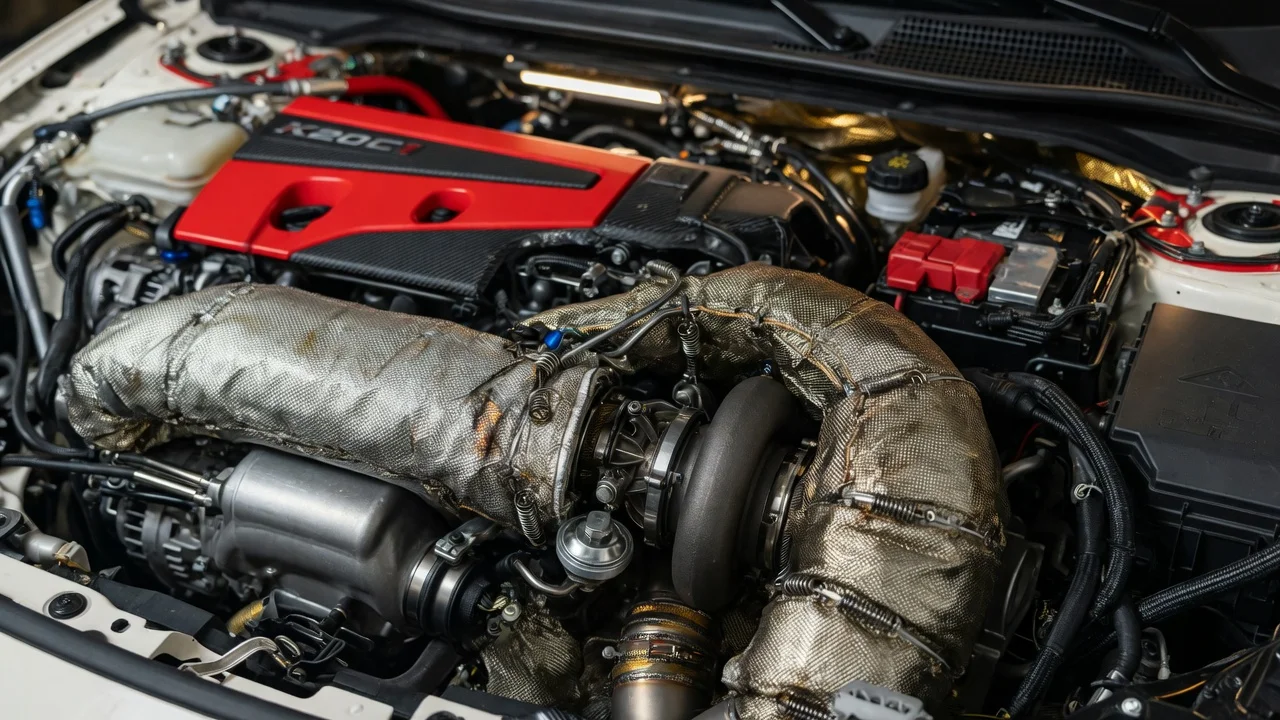
A turbo blanket for the FL5 Civic Type R does a narrow job. It keeps radiant heat from the turbine housing away from nearby components and, to a modest degree, can slow heat soak in the engine bay. Choosing one well depends less on brand claims than on three things: how the car is used, whether the turbo and downpipe are still stock, and how the blanket clears the hardware packed around the hot side of the K20C1.
Define the job the product must do
Start with the problem you are actually trying to solve. Owners usually look at a blanket after noticing heat-related symptoms. Intake air temperatures may climb in stop-and-go traffic, the hood may feel very hot after a drive, or the car may seem to pull less hard after several back-to-back runs on a track day. These are symptom reports, not verified failures. They describe symptom conditions worth logging, but they do not prove the turbo is shedding enough heat to damage anything. They can also have other causes, such as ambient temperature, fuel quality or an intake that draws warm air.
A verified heat problem is something you can see or measure. Examples include a scorched wiring loom near the turbo, a hardened or cracked rubber hose, heat-damaged insulation on a sensor lead, or logged data showing intake temperatures rising under repeatable conditions. With that kind of evidence, a blanket is a reasonable part of the fix. If you only have an impression, log data first with a scan tool or tuning interface so you have a baseline to compare after installation. Be honest about how you drive, too. A daily driver in a mild climate gains little, while a car that sees repeated track sessions, long climbs or hot-weather traffic has a clearer case.
Check compatibility with your FL5
The FL5 is the Civic Type R sold in the United States from the 2023 model year. It uses an updated version of the 2.0-liter turbocharged K20C1. Honda revised the turbocharger compared with the previous FK8 generation, so do not assume a blanket sold for the FK8 will fit the FL5 correctly. Look for a listing that names the FL5 specifically. If a product only carries a generic K20C1 or all-Type-R label, ask the seller which turbine housing it was patterned on before you buy.
Engine configuration matters as much as the chassis code. A blanket shaped for the factory turbine housing will not fit an upgraded or aftermarket turbo, and a replacement downpipe can change clearance at the outlet flange. Check the openings for the wastegate actuator linkage, the oil and coolant lines, the mounting studs and any sensor bosses. Then confirm that the retaining method, typically springs, stainless ties or safety wire, can be secured without forcing the blanket against nearby parts. If the car has had turbo or exhaust work, review the service history so you know exactly which hardware is installed before ordering.
Features that affect the choice
Most blankets use an inner layer of high-temperature fiber such as fiberglass, basalt or silica-based cloth. Some add a woven outer shell marketed as titanium or lava fiber. Those names describe weaves and fiber types; they do not guarantee performance. A stated maximum temperature is only useful if the manufacturer specifications say whether it means continuous exposure or a brief peak. Layer thickness and stitching quality affect both insulation and how well the blanket keeps its shape around the housing over many heat cycles.
Fit and coverage come next. A close, wrinkle-free fit insulates better than a loose, oversized cover, and it is less likely to rub on lines or wiring. Some designs cover only the turbine housing, while others extend toward the outlet. Wider coverage is not automatically better if it blocks access to fasteners or traps heat around components that rely on airflow.
Treat any specific temperature-drop claim as marketing unless the seller explains how, where and on what car it was measured, and under what conditions. Your own before-and-after logging under comparable conditions will tell you more than a percentage on a product page.
Limitations and ownership costs
A blanket cannot fix a failing turbo, cure a boost leak, clear diagnostic codes or cool the charge air directly. Intake temperatures are governed mainly by the intercooler and the intake path. What a blanket does is reduce radiant heat in the bay, which can protect nearby parts and may slow heat soak, though the benefit varies with driving style and weather. It also keeps the turbine housing itself hotter. Opinions differ on how that affects long-term housing and stud durability, so inspect the hot side periodically rather than treating the blanket as install-and-forget.
Ownership costs go beyond the purchase price. Installation can mean removing surrounding components to reach the turbo, so read the instructions before buying. Retaining hardware may need replacing whenever the blanket comes off. The fabric degrades with heat cycles, so watch for fraying edges, brittle fibers and discoloration. Any oil or fluid that soaks into the material is a fire risk, which means a blanket must never hide a leak. Fix leaks before installation and check the blanket during every routine inspection. An aftermarket part does not by itself void a warranty, but a dealer can dispute a claim it believes the part caused or contributed to.
Build a practical shortlist
Narrow your options with a checklist rather than a ranking. For each candidate, confirm the following. The listing names the FL5 and the turbo it was patterned on. It matches your engine configuration, including turbo and downpipe. Its openings line up with the wastegate linkage, oil and coolant lines and studs. The temperature rating states continuous exposure. Retaining hardware is included and corrosion-resistant. Installation instructions are available before purchase. Any performance claim comes with stated measurement conditions.
Then weigh the remaining options against your actual need. If you have a verified heat issue around the turbo, prioritize fit and coverage of the affected area. If you are still chasing a symptom, log baseline data first and choose a blanket you can remove easily in case the results do not justify keeping it. Either way, inspect the installation after the first few hot drives or track sessions for rubbing, loosened hardware and fluid contamination.