Choosing Tie Rod Ends for an FJ80 Land Cruiser
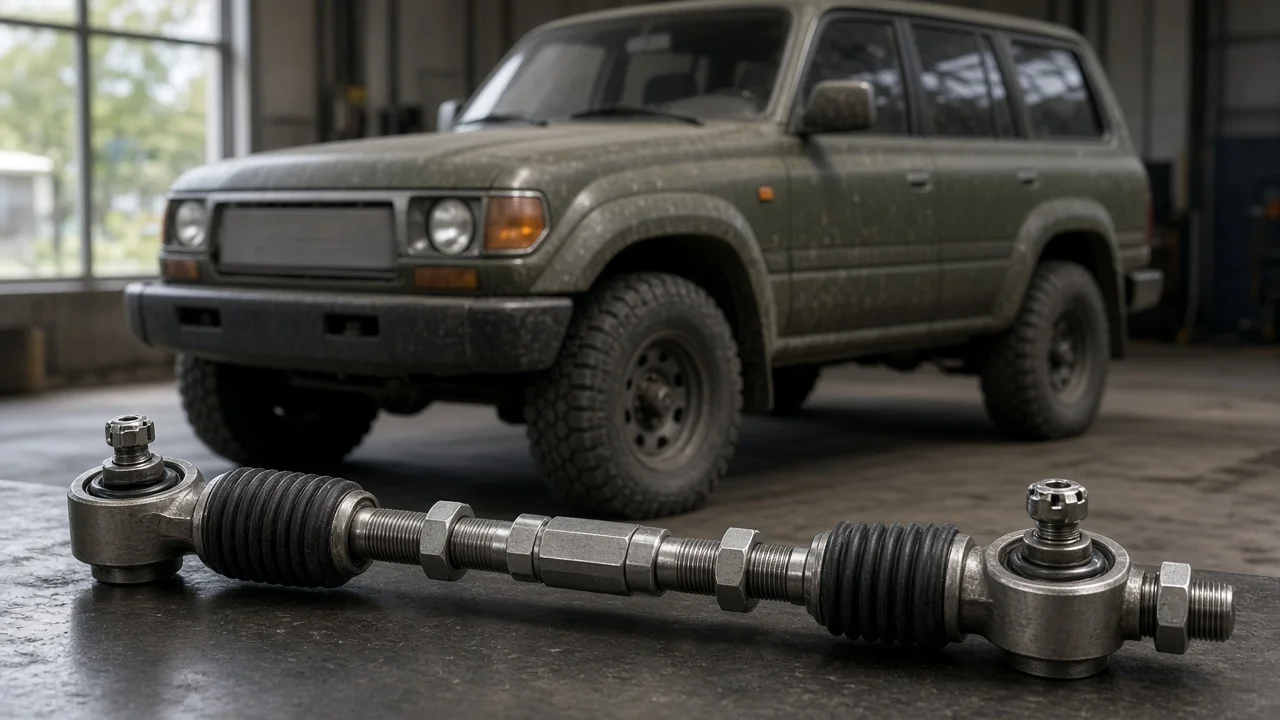
Worn tie rod ends on an FJ80 can cause highway wandering, a clunk over ruts or uneven tire wear. Replacing them is one of the more approachable steering jobs on the 80 series. Choosing the right parts takes more than matching a model name, though. This guide covers how to define what your truck needs, confirm compatibility, judge features honestly and build a shortlist before you buy.
Define the job the tie rod ends must do
The FJ80 uses a solid front axle. A tie rod runs between the two steering knuckles, and a drag link carries input from the steering box. Tie rod ends are the ball joints at each end of the tie rod. They let both knuckles pivot together while the axle moves on its coil springs. Start with how the truck is actually used. A stock-height daily driver, a towing rig and a lifted trail truck on larger tires put different loads on these joints. A part that suits one of them may be overkill or underbuilt for another.
Confirm the ends actually need replacing. With the truck on the ground, have a helper rock the steering wheel just enough to move the linkage while you watch and feel each joint. Signs that point to the ends include visible joint play, a knock you can feel by hand, a torn boot or grease escaping from a split seal. If the joints are tight, the looseness is somewhere else, and new tie rod ends will not fix it. Also decide whether you are replacing only the ends, the complete tie rod assembly or the drag link joints as well, because that choice sets the budget.
Check compatibility with your 80 series
The 80 series Land Cruiser was produced from 1990 to 1997 under several model codes, including the gasoline FJ80 and FZJ80 and diesel versions sold in other markets. The front steering layout is broadly shared, but suppliers sometimes split listings by model code, production date or market. Match the part to your VIN, build date or model code, not just the badge. If a listing only says Land Cruiser, check it against the original part number or a dependable catalog lookup.
Several interfaces have to match. The stud taper must seat in the knuckle arm, and the stud thread must take the supplied nut. The threaded shank must screw into the tie rod tube with the correct thread hand. One end typically uses a left-hand thread so the tube can be turned to set toe, so confirm which side you are buying and that a pair matches. Check that the clamps suit your tube and that a castle nut and cotter pin come in the box. On a lifted truck, make sure the ends and the steering damper clear the wheels and axle housing at full lock and full articulation. A change in ride height alters the angles at the mounting points.
Features that affect the choice
OE-equivalent ends follow the factory geometry and are usually the safest choice for a stock-height truck. Heavy-duty aftermarket ends and complete tie rod assemblies, often with a thicker tube, are aimed at lifted trucks on big tires, where a factory tie rod can bend on rocks. They cost more, add weight and may change clearances. Some heavy-duty kits are sold only as a complete tube and ends, not as individual ends.
Greaseable ends have a fitting that lets you purge old lubricant and water, which helps in wet or muddy use. That benefit only appears if you actually grease them. Sealed ends need no routine service and depend on boot quality. Judge parts by details you can check: boot material and how it is retained, whether the stud nut is supplied, the stated thread and taper, and the warranty terms. Labels such as severe duty or premium prove nothing by themselves. A published specification, a clear fitment list and consistent experience from owners of similar trucks tell you more.
Limitations and ownership costs
The purchase price is only part of the job. Plan for a wheel alignment afterward, because threading in new ends changes toe even if you count turns carefully. You also need a puller or separator that suits the taper. Pickle-fork tools often tear the boot on any end you intend to keep. Budget for new cotter pins, replacement clamp hardware if the old parts are corroded, penetrating oil and possibly heat for seized threads. Tighten the castle nuts and clamp bolts to the fastener specification in the factory service manual for your truck. If the cotter pin holes do not line up, tighten further to align them rather than backing the nut off.
Treat vehicle support seriously. Chock the rear wheels, lift with a suitable jack and rest the truck on rated stands at the frame or axle points the manual specifies, never on the jack alone. After installation, recheck the nuts and clamps after a short initial drive, and look over the boots at routine services.
Know what these parts cannot do. New tie rod ends will not cure a worn steering box, loose drag link joints, tired wheel bearings, worn knuckle trunnion bearings, failing bushings or a weak steering damper. If shimmy or wander continues after replacement, inspect those components and have the whole front end checked rather than replacing the ends again.
Build a practical shortlist
Narrow your options with a short checklist before comparing prices. Confirm that the part fits your model code and build date. Check that the thread hand, shank thread and taper match your knuckle arms and tie rod tube. Then choose between individual ends and a complete tie rod assembly based on your tube: if it is bent or rusted at the threads, a full assembly is the better buy.
Next, match the design to how you drive. Choose OE-equivalent ends for stock height and road use, a heavier assembly for a lifted truck that sees rocks, and greaseable joints only if you will service them. Check what is included, how the boot is built and what the warranty covers. Set aside money for an alignment and any new hardware. A part that passes these checks is a reasonable candidate, and one backed only by marketing claims belongs at the bottom of the list.