Find Mini Cooper brake fluid reservoir location
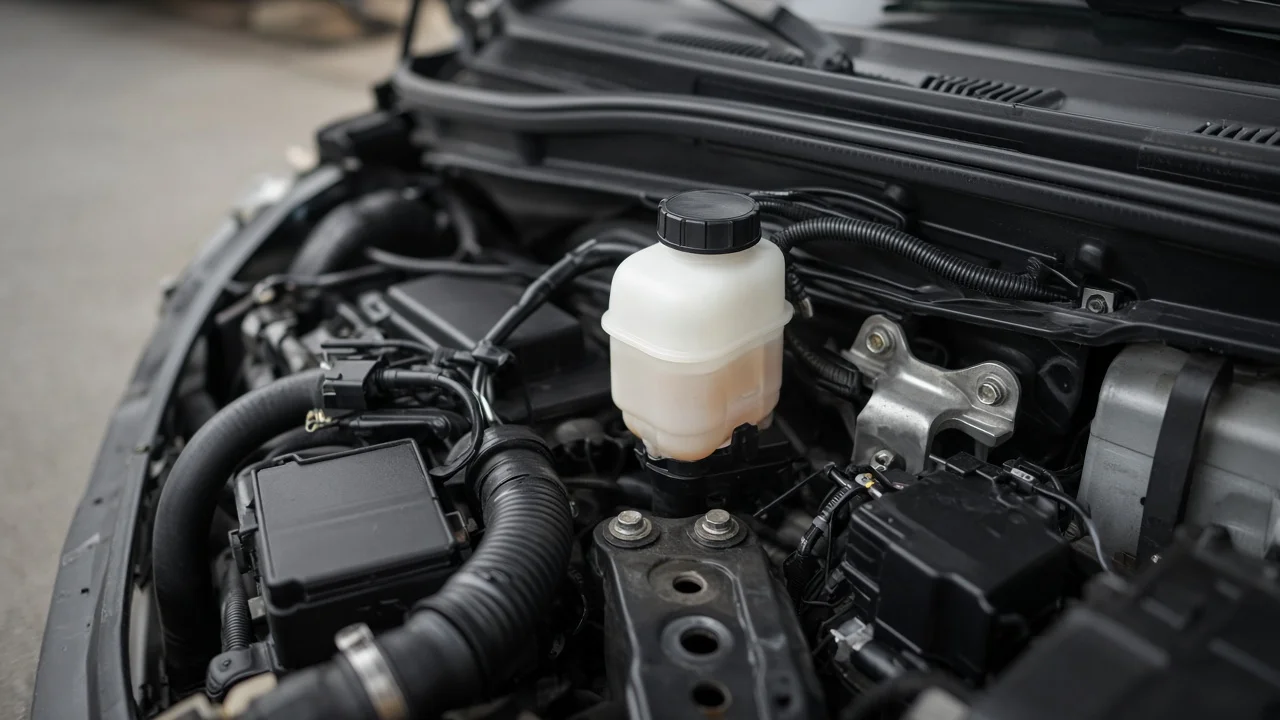
Locating the brake fluid reservoir on a 2018 or 2019 Mini Cooper starts at the driver-side firewall, near the brake booster. Owners often need this spot when checking hydraulic fluid level during routine underhood inspection or after a brake warning light appears. Because engine bay packaging differs by engine option, the exact position relative to the airbox or cowl trim can shift slightly. This guide explains the common placement, how to confirm you have the correct translucent container, and what nearby items are easy to confuse with it.
Essential answer
On 2018 and 2019 Mini Cooper models, the brake fluid reservoir is normally mounted high on the driver side of the engine compartment, close to the bulkhead and directly above the brake master cylinder. The master cylinder is attached to the vacuum brake booster, a black drum-shaped assembly behind the firewall. Following the hard brake lines from the booster upward will generally lead to the reservoir. Its elevated position helps maintain gravity feed into the braking system and makes fluid level inspection possible without removing engine covers.
The reservoir itself is a translucent white or pale amber plastic container with minimum and maximum markings molded into the side. Although the wording of searches often specifies one model year, the 2018 and 2019 Cooper share the same fundamental layout in most configurations. The practical search is for the brake master cylinder area rather than a uniquely year-specific bracket. Vehicle-specific confirmation is still sensible because right-hand-drive production and a few accessory layouts may route surrounding cowl parts differently.
Identification and location
To identify the reservoir, look for a plastic neck with a screw-on cap, usually marked with a brake symbol or the word brake. The cap may be black or blue and sits above a cylindrical body that narrows toward the master cylinder. The unit is separate from the clutch fluid reservoir on manual-transmission cars, though the two can sit near each other and use similar fluid. Wipe the body carefully; the fluid inside has a pale amber tone when fresh and darkens as it absorbs moisture over time.
Do not confuse the brake fluid reservoir with the engine coolant expansion tank or windshield washer filler neck. The coolant tank is often larger, rounder, and connected to the radiator with thicker hoses, while the washer tank cap typically carries a windshield symbol. The brake reservoir is smaller, located against the driver-side rear of the bay, and tied directly to the metal lines leaving the master cylinder. Checking in good light and following the booster forward helps confirm the right component before adding or inspecting fluid.