Fiat 500 Brake Fluid Level Sensor: Identification and Location
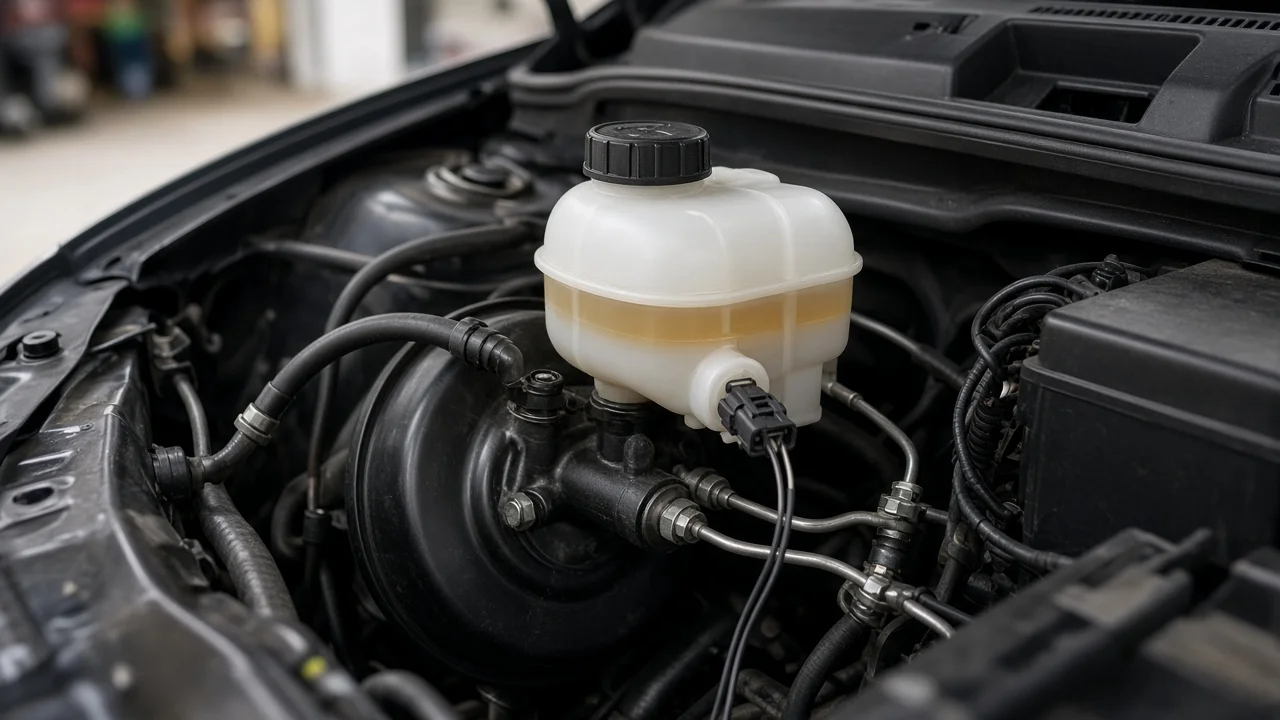
When the red brake warning lamp comes on in a Fiat 500, the brake fluid level sensor is one of the first parts worth finding. It is a small float switch at the master cylinder reservoir that tells the instrument cluster when fluid has fallen too low. This guide explains where the sensor is, how to recognize it, what differs between versions and what an owner can safely check before deciding on service.
Where the Fiat 500 brake fluid level sensor is located
On a Fiat 500, the brake fluid level sensor is part of the brake fluid reservoir. The reservoir sits on top of the brake master cylinder at the rear of the engine compartment on the driver's side, close to the windshield cowl. It is a translucent plastic tank with minimum and maximum marks molded into its side and a screw-on filler cap. Surrounding components and cowl trim can partly hide it from a quick glance, so a flashlight helps. The quickest way to identify the sensor is to look for a small electrical connector with a short wiring lead attached to the reservoir assembly. That plug and the part it connects to are the level sensor.
Where exactly the switch lives depends on the reservoir design. On many Fiat reservoirs the float and switch are built into the filler cap, so the connector sits on top of the cap and the cap and sensor are serviced as one part. Other reservoir designs put the switch in a socket on the side or base of the tank. Because the arrangement can differ by model year, market and parts supplier, trace the wire on your own car rather than assuming one layout from a photo of another vehicle.
How the level sensor works
The sensor is a simple float switch. A float rides on the surface of the brake fluid and carries a small magnet past a sealed switch. While the level is healthy, the switch stays in its normal state. When the fluid falls toward the minimum mark, the float drops far enough to change the switch state, and the instrument cluster turns on the red brake warning lamp, sometimes with a text message. The sensor measures only fluid height. It does not measure hydraulic pressure, fluid condition or moisture content, and it cannot tell the driver why the level fell.
There are two common reasons for a falling level. The first is normal wear: as the friction material on the brake pads gets thinner, the caliper pistons sit farther out, and the extra fluid needed to fill that space comes from the reservoir. This drop is slow and gradual, which is why the level sensor can act as an indirect hint that the pads are approaching their wear limits. The second reason is a leak somewhere in the hydraulic system. A noticeable drop over days or weeks, or a low level while the pads are still thick, points toward a leak rather than wear.
What changes the answer
The basic answer stays the same across the gasoline Fiat 500 models sold in the United States, including Abarth versions: the sensor belongs to the reservoir above the master cylinder. Details that can change include the reservoir shape, whether the switch is in the cap or the tank body, the connector style and the part number, so vehicle fitment should be confirmed by VIN before buying a replacement. On cars with a manual transmission, the brake reservoir commonly also feeds the hydraulic clutch through a separate hose, so a clutch leak can lower the brake fluid level too. Electric 500e versions have a different under-hood layout, and the Fiat 500L and 500X are separate vehicles that need their own service information.
The warning lamp also affects how a symptom should be read. On many cars the same red brake lamp comes on when the parking brake is applied, and it can also signal an electronic brake force distribution or other brake-system fault reported by the ABS module. A lit lamp is therefore not proof of a bad sensor or low fluid. Conversely, a disconnected plug or a replacement cap without a working sensor can leave the lamp dark even when the level is low.
What the owner can check
Start with a visual check. Park on level ground with the engine off, let the engine bay cool and wipe dust from around the reservoir. Read the fluid height through the translucent wall against the minimum and maximum marks; there is usually no need to open the cap for this. Inspect the sensor connector: it should be fully seated with its locking tab engaged, and the wire should be free of cracks, chafing or corrosion. Brake fluid absorbs moisture from the air and can damage paint, so keep the cap closed as much as possible and wipe up any drips immediately.
If the level is at or below the minimum mark, find the cause before simply topping up. Check pad thickness against the wear limits in the service information, and look at the brake rotors for deep scoring or a heavy lip at the outer edge. Inspect for wet spots at each caliper and brake hose, along the brake lines, around the master cylinder and, on manual cars, along the clutch hose. If the pads are worn and there is no leak, new pads will push the pistons back and raise the level again, so filling to the maximum mark beforehand can cause overflow later. When topping up is appropriate, use only the fluid type printed on the cap or listed in the owner's manual and never mix in a different specification.
If the fluid is clearly between the marks, the parking brake is fully released and the red lamp still stays on, the sensor or its circuit may be at fault, although other brake-system faults remain possible. A technician can confirm the switch by checking how it responds as the float moves and by reading brake and cluster data with a scan tool, using the wiring diagram for your car because switch logic differs between designs. If the sensor is integrated into the cap, the repair usually means replacing the cap assembly; a separate switch is replaced on its own.
Limitations and next step
Treat the brake warning lamp as a safety signal, not a sensor nuisance. Stop driving and arrange professional service, including towing if needed, if the pedal feels soft, sinks toward the floor or travels farther than usual, if the lamp comes on together with a visible leak, if the level keeps dropping after a top-up, or if the car pulls to one side or stops poorly. Any work that opens the hydraulic system requires correct bleeding afterward, which is best left to a qualified shop unless you have the right equipment and experience.
This guide describes the general layout of the Fiat 500 brake fluid level sensor, not a verified procedure for every model year, market or trim. Before ordering parts or condemning the sensor, confirm the reservoir design, connector, fluid specification and wear limits in VIN-specific service information or with a dealer parts department. If the cause of a low reading or a persistent warning is still unclear after the visual checks, a professional brake inspection is the practical next step.