Faulty Car Water Pump: Signs
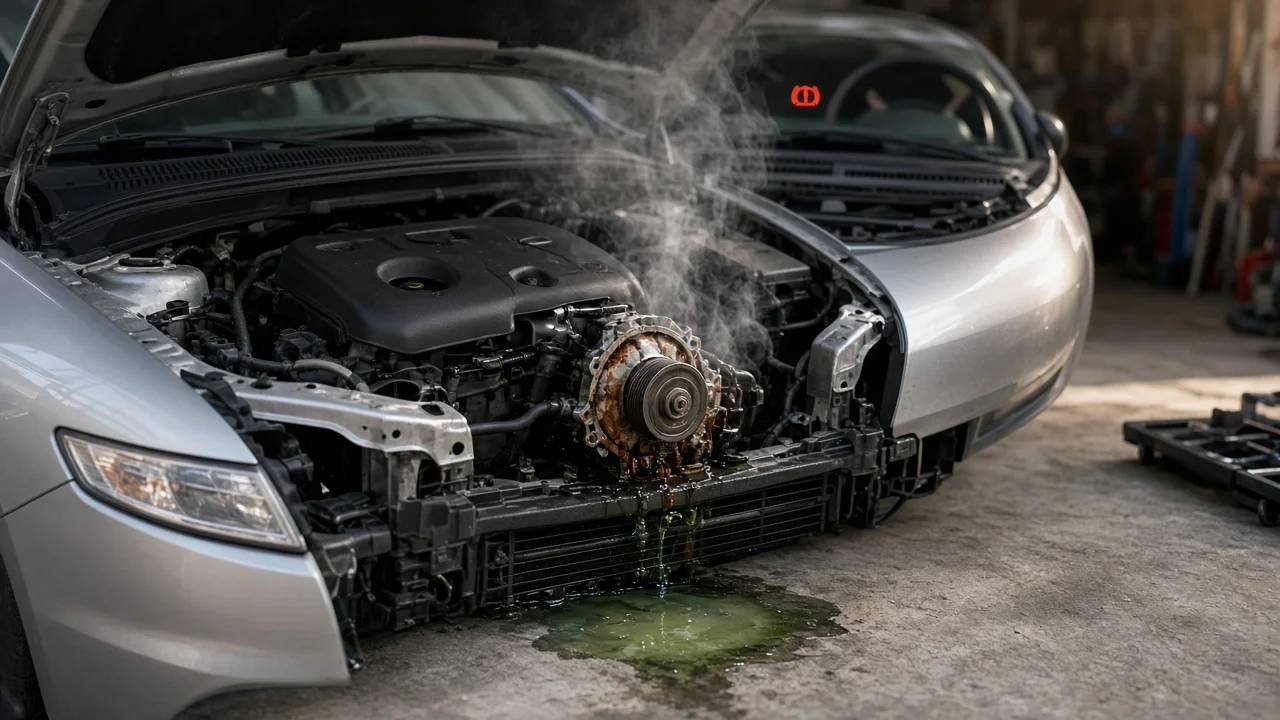
A faulty water pump in a car can quietly turn a routine drive into a sudden overheating emergency. This component circulates coolant through the engine, radiator, and heater core, so early recognition of its failure is essential. Drivers often notice a coolant drip, unusual noise, or temperature gauge movement before a breakdown occurs. Understanding these warning signs helps separate normal cooling system behavior from a pump that is losing its ability to move liquid and maintain stable engine temperature.
Direct answer
The most direct signs of a faulty water pump are persistent coolant loss beneath the front of the engine, a grinding or rumbling sound near the drive belt area, and an engine that runs hotter than usual. You may also see coolant stains or crusty residue around the pump housing where the shaft seal or weep hole releases fluid. Any combination of these symptoms suggests the pump is no longer sealing properly or its bearing is wearing out.
Not every cooling issue points to the pump, because the thermostat, radiator, pressure cap, or an air pocket in the cooling circuit can produce similar temperature swings. Coolant concentration and the correct coolant specification also affect how the system behaves. Therefore, a vehicle-specific inspection should confirm whether the pump shaft is loose, the seal is leaking, or the impeller is damaged before a repair is planned.