Fault code 5E43 steering angle sensor
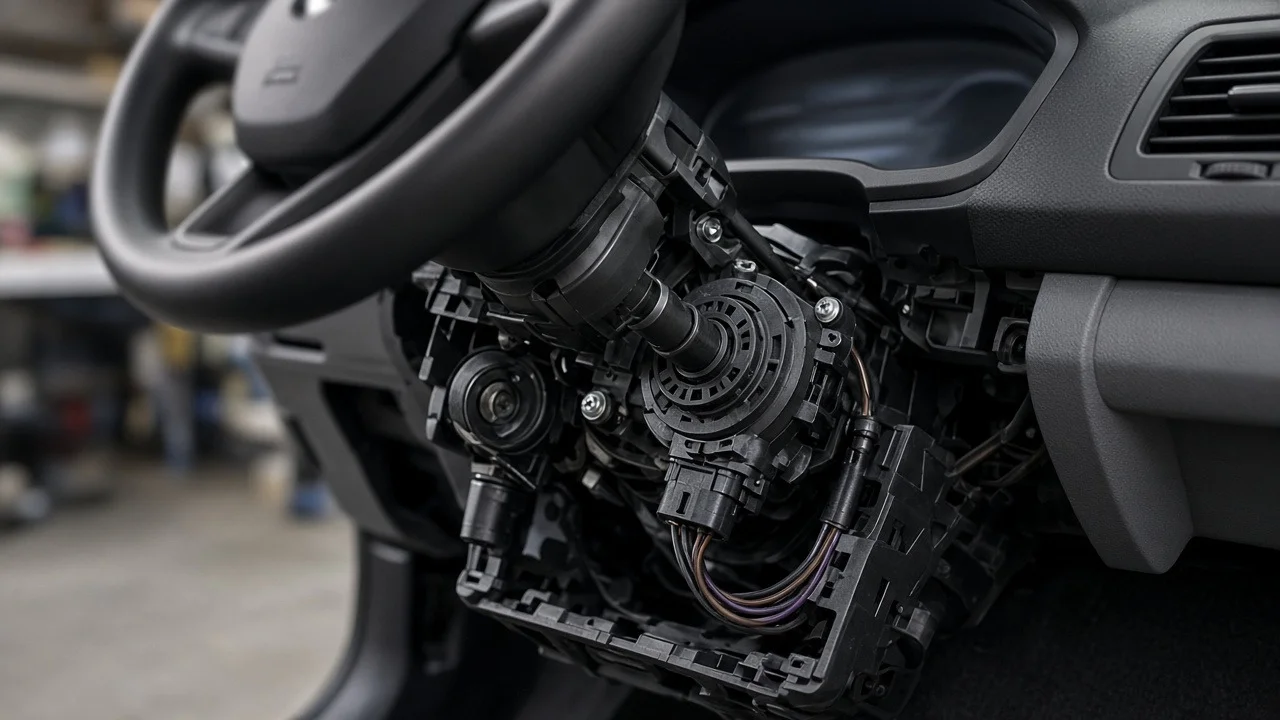
A 5E43 steering angle sensor fault can change how stability control, electric power steering, and related chassis systems interpret the driver’s input. The code indicates that a control module has received an implausible, missing, or out-of-range steering angle value, but it does not identify the exact failed component. The reading may follow a wheel alignment, suspension repair, battery disconnect, or sensor replacement. Understanding the signal path and calibration conditions helps narrow the cause before parts are replaced.
Direct answer
The direct answer is that 5E43 points to a steering angle sensor signal problem, not a guaranteed sensor failure. On many vehicles, the sensor may be integrated into the steering column, clock spring, or steering rack, depending on the platform. The code can appear when the module receives no plausible center position, when learned values are missing, or when the signal conflicts with wheel speed and yaw data. Manufacturer-dependent definitions mean the same numeric code can carry different text on different models.
Before condemning the sensor, consider what changed immediately before the light appeared. A disconnected battery, a replaced steering component, or a wheel alignment can erase stored steering center data. An incorrect ride height, loose mounting points, or joint play can also create a mechanical offset that the module reads as an invalid angle. For this reason, the first practical step is to confirm the applicable code definition and the required steering angle initialization or calibration procedure for the specific vehicle.
Interpreting symptoms and test results
The reported value should be compared with a known straight-ahead position and with live data from the yaw sensor and wheel speed sensors. If the steering angle reads zero while the wheels are visibly centered, the electrical path may be intact and the problem may be a lost calibration. If the value jumps, freezes, or falls outside a plausible range during slow turning, a wiring, connector, power supply, or sensor internal fault becomes more likely. A static code alone, without this observation, leaves several possibilities open.
Mechanical checks can separate a sensor fault from a suspension geometry issue. Inspect mounting points, ride height, and joint play after suspension work, because a shifted subframe or an altered toe setting can make the sensor center value disagree with the vehicle’s actual path. Confirm fastener specification and wheel alignment before assuming the electronics are defective. If the live signal is stable and the alignment is correct, performing the manufacturer-specific steering angle sensor calibration may clear the fault without component replacement.