FASS and AirDog Lift Pump Filters: Service, Replacement and Stock Filter Deletes
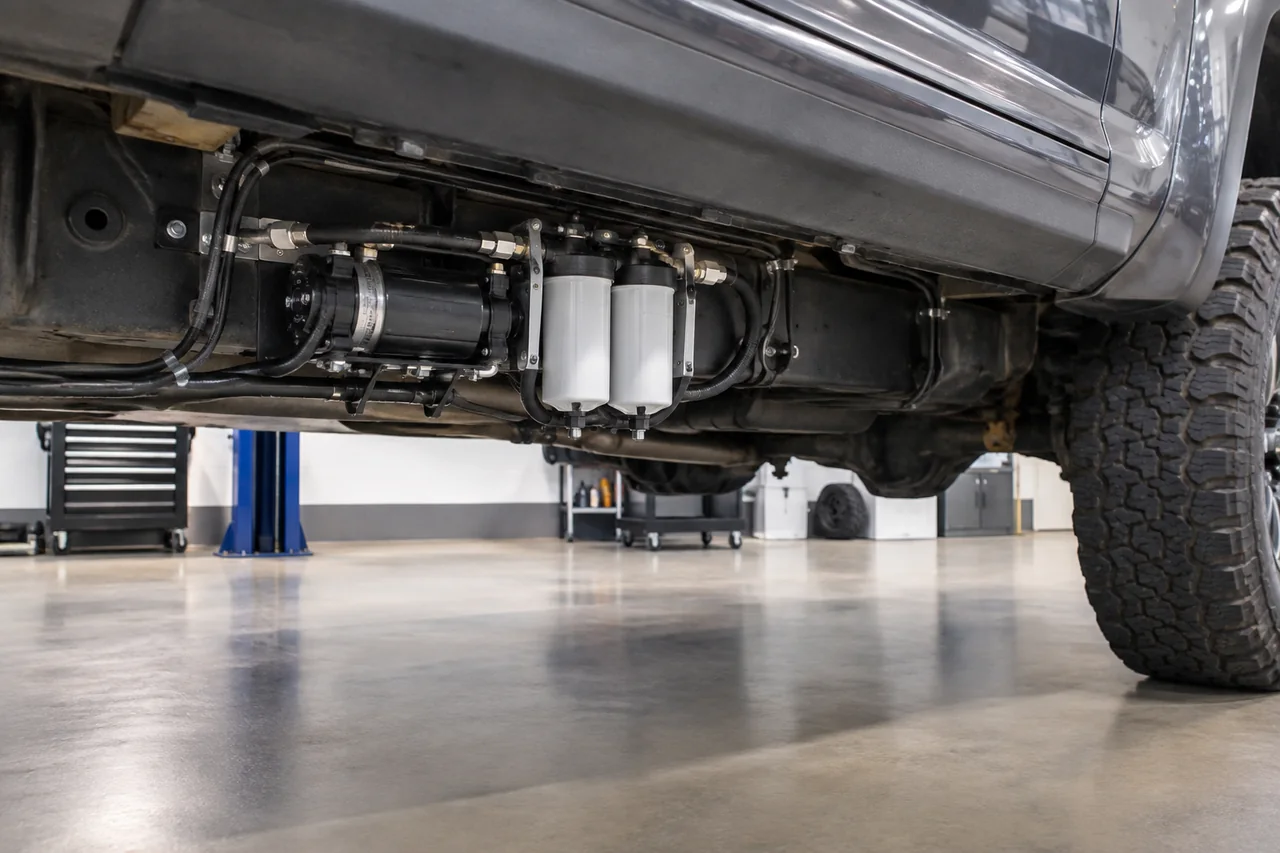
A FASS fuel filter or AirDog fuel filter does more than trap dirt. It is part of a lift pump system that sends clean, water-free diesel to the injection system. To keep that protection, you need to know exactly what is installed and which replacement filter elements it specifies. You also need to understand how changing the factory filter housing affects the rest of the fuel supply.
Identify Your FASS System and Each Filter’s Job
A FASS fuel filter system typically pairs an electric lift pump with filtration and water separation stages, but the layout varies by model, so check it against the documentation that came with your kit. The lift pump draws fuel from the tank and pushes it forward. The fuel filter captures particles according to its micron rating. The water separator pulls free water out of the diesel before it can reach the high-pressure pump and injectors. Knowing which canister does which job keeps service from becoming guesswork.
Before ordering anything, write down the system model, the serial number if one is stamped or labeled on the unit, and the markings printed on each installed filter. The FASS name alone does not identify the right replacement filter, because different systems and generations can call for different elements and maintenance steps. A quick visual check without opening any fuel line is also worthwhile. Note damp housings, dented or cracked canisters, weeping fittings, and faded or unreadable labels, since each of these affects what you need next.
Confirm the Filter Requirements for an AirDog Installation
An AirDog fuel filter question starts the same way: identify the installed AirDog model and confirm which filter and separator arrangement it was designed to use. Some installations carry more than one element, and each may have a different role in filtering the fuel or separating water. The system's parts list and maintenance documentation are the authority on correct service parts. They reflect the flow capacity and filtration the pump was designed around, not just whatever element happens to fit the filter head.
Treat the markings on the filter already on the truck as a starting point, not a final answer. A previous owner or shop may have installed a substitute, and the fact that it sealed and ran does not prove it gives the intended protection. Keep a simple service log with the approved part numbers, the date and mileage of installation, and every filter change since, including any water drained from the separator. That record makes future ordering faster and helps a technician spot patterns if fuel problems show up later.
Plan FASS Filter Replacement Around Documented Requirements
FASS fuel filter replacement timing should come from the published guidance for your specific system. Adjust it for documented operating conditions such as dusty roads, heavy towing, or fuel of uncertain quality. No single mileage figure fits every setup. Some findings justify a check before the scheduled change, including suspected contaminated fuel, water that keeps collecting in the separator, or a measured rise in fuel restriction. Hard starting, hesitation, or reduced power are reasons to diagnose the fuel supply, not proof that the filter is the cause.
Good lift pump maintenance starts with having verified replacement filter elements and the correct seals or O-rings on hand before the truck is down. Follow the service procedure for your system. Get qualified help if you are unsure about priming the system afterward or confirming there are no leaks, because trapped air can cause rough running or stalling. Visible leaks, water contamination that keeps coming back, or symptoms that remain after new filters are installed call for a professional inspection and fuel pressure testing to find the real cause.
Verify a FASS Filter Cross-Reference Before Buying
A reliable FASS fuel filter cross reference begins with the exact system model and the specified replacement part number. A broad brand search returns dozens of loosely matched listings. Many filters share a thread pitch and similar outside dimensions, but those traits say nothing about what the element actually removes from the fuel. Two canisters that thread on the same way can differ in filter media, micron rating, rated flow, and water separation, and the injection system depends on consistency in exactly those areas.
Before buying an alternative, confirm that the seal and gasket match the filter head. Check that the filtration rating is stated on a comparable efficiency basis, and that the element supports the flow your lift pump delivers without adding too much restriction. If the original filter also separates water, the substitute must do the same. When catalogs disagree, contact the system manufacturer or a qualified supplier who can confirm the interchange in writing. Don't rely on forum posts or guessed interchange numbers.
Check the Purpose and Fit of FASS Fuel Filter Covers
FASS fuel filter covers can mean different things depending on the listing, so check what the product is actually for before buying. Some are cosmetic sleeves that improve the look of the canisters. Others are protective accessories meant to shield against road debris, and some search results turn out to be unrelated products. Confirm the cover is made for your exact filter size and the way your system is mounted. Frame rail location, bracket style, and nearby components all affect whether it fits without rubbing or working loose.
A cover should never make routine lift pump maintenance harder. It needs to leave filter labels readable, drain valves reachable, and the housing seams visible for leak checks. Where a water-in-fuel sensor is used, its connector must stay accessible. Check clearance around the canister, make sure the cover stays secure over rough roads, and watch whether it could trap mud, road salt, or moisture against the filter. Unless the maker documents a specific protective benefit, assume the cover is mainly cosmetic and check underneath it regularly.
Understand LB7 and LBZ Factory Filter Housing Deletes
An LB7 fuel filter delete or LBZ fuel filter delete means removing the factory filter housing on those Duramax engines, usually after an aftermarket lift pump system has been installed. Before deciding whether it makes sense, confirm the truck's actual engine designation and exactly which FASS or AirDog system is on it. Adding a lift pump does not automatically make removing the factory housing a good idea. The original assembly may do more than filter fuel, such as separating water, manual priming, water-in-fuel sensing, or fuel heating, so confirm each function for that specific truck.
If those functions are not properly replaced, an unsuitable installation can cause fuel leaks and let air into the supply side. It can also disable a warning or priming feature and leave the injection system less protected than it was from the factory. Cold-weather operation may suffer if a heating function is lost. Before modifying anything, have a qualified diesel technician check the whole fuel supply path from the tank to the high-pressure pump. They should also review any warranty, emissions, or legal issues that apply where the truck is registered and driven.