EZ LYNK Transmission Relearn: Support and Procedure
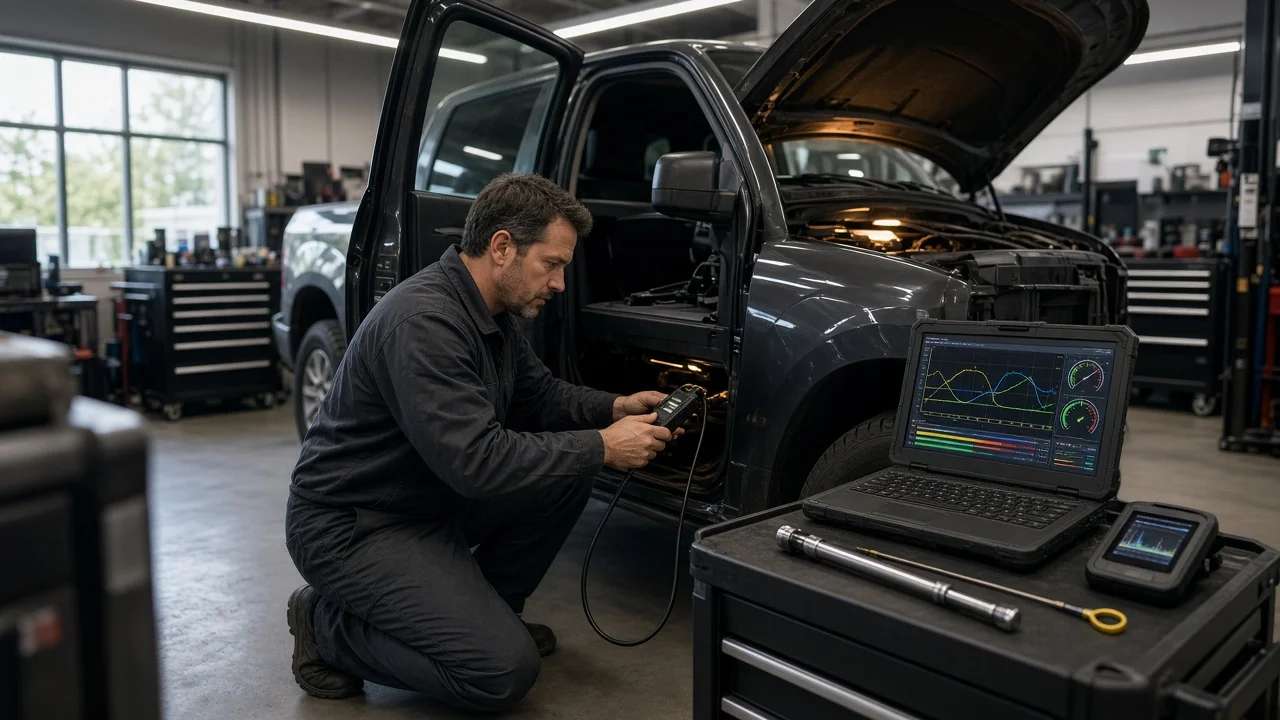
Owners of diesel pickups often use an EZ LYNK Auto Agent for tuning and diagnostics, and a common follow-up question is whether the same tool can perform a transmission relearn. In most cases that means resetting the transmission control module's adaptive values and letting it learn shift behavior again. Whether your truck supports this depends on the transmission type, model year, controller, and the version of the Auto Agent hardware and app. Those details also determine how the procedure runs.
Does EZ LYNK Support a Transmission Relearn?
EZ LYNK's Auto Agent is built mainly around late-model diesel trucks, and its service and diagnostic functions differ by platform. On some supported vehicles the app offers a transmission adaptive reset or relearn function. On others it does not, or the function only appears after a firmware or app update. To confirm support, connect the device to your truck, let it identify the vehicle, and check the service or diagnostic functions listed for that configuration. A feature you have seen on another truck may not apply to yours.
Two ideas often get mixed together here. A reset clears the learned adaptive values stored in the transmission controller. A relearn is the process that follows, in which the controller rebuilds those values. Some platforms do this through a guided procedure under set conditions. Others rebuild the values gradually during normal driving. If your tuner supplied transmission tuning with your files, follow their instructions for that tune.
How Transmission Adaptive Learning Works
Modern automatic transmissions shift by applying and releasing clutches with hydraulic pressure controlled by solenoids. Clutch packs wear, fluid ages, and parts vary slightly from unit to unit, so the controller does not rely on fixed values alone. It watches how long each shift takes and how input and output speeds change. It then adjusts pressure and fill timing to keep shifts consistent. Those corrections are the adaptive values.
When adaptives are reset, the controller returns to its base calibration. Shifts may feel firmer, softer, or less refined until it gathers enough data. That usually requires fluid at normal operating temperature and repeated shifts through each gear at light and moderate throttle. A relearn is often recommended after anything that changes how the transmission behaves, such as a fluid and filter service, valve body or solenoid work, a controller replacement or reflash, or a tuning change that alters torque or shift strategy.
What Changes the Procedure on Your Truck
Transmission type matters most. Common diesel truck units include the Ford 6R140 and 10R140, the Allison 1000 series used behind Duramax engines, and the 68RFE and Aisin units used by Ram. Each has its own learning strategy. Some support a scan-tool fast learn that runs under defined conditions, while others relearn mostly through driving. Which of these the Auto Agent offers for your truck is part of what you confirm on the device.
Several other factors also matter. Model year and controller software can change which functions are available. A stock truck, a truck with a custom engine tune, and a truck with transmission tuning may each behave differently after a reset. Fluid condition and fluid specification count too, because the wrong fluid or a low level can make the transmission adapt around a problem instead of exposing it. Replaced parts, such as an aftermarket valve body or torque converter, can also change what the controller sees.
What the Owner Can Do
Before running anything, write down the year, engine, transmission, mileage, current tune, and recent service history. Read and save any diagnostic codes with the Auto Agent so you have a baseline. If codes are present, fix their cause first. Resetting adaptives does not clear an electrical, sensor, or hydraulic fault, and a relearn done with an active problem may give poor results. Check the fluid level using the method specified for your transmission, since several of these units require the check at a specific temperature.
During the reset or relearn, follow the on-screen instructions exactly and keep battery voltage stable. Do not disconnect the device or switch off the ignition mid-process unless the app tells you to. Afterward, start with gentle driving once the fluid is fully warm, and let the transmission upshift and downshift through every gear at varied light and moderate throttle. Over the next several drives, note any change in shift behavior. Harsh engagement, flare between gears, delayed shifts, or shudder are worth logging along with the conditions when they occur.
If shifts improve and stay consistent, the relearn has probably done its job. If a symptom persists or returns, treat it as a clue for diagnosis, not proof that a particular part has failed. The same complaint can come from fluid, wiring, a sensor, software, or internal wear.
Limits of a Relearn and When to Get Help
A relearn can only fine-tune a transmission that is mechanically and electrically sound. It cannot fix worn clutches, a failing torque converter, damaged wiring, or contaminated fluid, and it is not a substitute for repair. Supported functions, entry conditions, and steps vary by truck and by Auto Agent version. For the exact procedure on your configuration, rely on the device's own instructions, the vehicle's service information, or your tuner.
Get professional help if diagnostic codes return, the transmission goes into limp mode, shifts get worse after a relearn, or you notice leaks, overheating, or burnt-smelling fluid. A transmission shop with factory-level diagnostic access can run pressure tests, review live data, and explain repair options for your truck. Bring your saved codes, tune details, and service history to speed up the diagnosis.