Exotic Luxury Cars: How to Tell if One Fits Your Use and What to Check Before Buying
The short answer
An exotic luxury car is a sound choice when you will use it mostly for occasional driving, touring or track days, can absorb ownership costs well beyond the purchase price, and can reach a qualified specialist for service. It is a harder fit as a sole daily car, especially if you face winter roads, steep driveways, poor road surfaces, limited secure parking or no nearby specialist. Those conditions matter more than the badge or performance figures. Settle them first, then narrow the choice by model year, trim and powertrain, because practicality features, service requirements and known issues often differ within the same model name.
No model-specific prices, specifications, reliability data or dealer details were available for this guide. It sets out what to check and why, without naming figures. Confirm every number against the manufacturer's documentation for the exact car, quotes from your insurer and service provider, and the inspection report for the specific vehicle.
What counts as exotic rather than simply luxurious
"Luxury" usually describes cars built mainly for comfort, refinement and features. "Exotic" usually describes low-volume, high-performance cars from specialist makers, often with mid-mounted engines, low bodywork and limited production. Many cars sit in both groups. The distinction matters for ownership. The more exotic the car, the more likely it is to have a small dealer and service network, parts that must be ordered from the manufacturer, and design choices that trade everyday usability for performance.
Match the car to how you will actually use it
Use case | What matters most | Common mismatch to watch for; Daily driving | Ground clearance, visibility, cabin access, cargo space, ride comfort, service access | Low nose and long front overhang on steep entries, firm suspension on rough roads, limited luggage space; Weekend and occasional use | Battery care during storage, secure parking, tire age, insurance terms for limited mileage | Batteries draining and tires ageing out before they wear out; Grand touring | Seat comfort, luggage capacity, fuel range, cabin noise | Track-focused trims with harder seats, louder cabins and less storage; Track days | Brake and cooling capacity, tire choice, consumable costs, insurance or warranty limits on track use | Policies or warranties that exclude track use; faster wear of brakes and tires; Long-term ownership or collecting | Originality, documentation, production rarity, storage conditions | Modifications or gaps in records that reduce appeal to later buyers
Practical fit checks for regular driving
Ground clearance and approach angle: measure your driveway, garage entry and regular parking spots. Some models offer a front-axle lift system that raises the nose briefly; confirm whether the exact car has it, because it is often an option rather than standard. Visibility and size: mid-engine layouts often limit rear and over-the-shoulder views. Check whether the car has cameras and parking sensors, and how wide it is compared with your garage. Entry and exit: low seats and wide sills can be awkward. Sit in the car and get in and out several times before committing. Luggage: storage may be split between a small front compartment and space behind the seats. Bring the bags you actually use. Weather and traction: rear-wheel drive on high-performance summer tires is a poor match for cold or icy conditions. All-wheel-drive versions and winter tire availability in your size change that picture, so check both. Fuel: high-performance engines usually need premium fuel. Confirm the requirement in the owner's documentation.
Budget for ownership, not just purchase
The purchase price is usually only the starting point. Get real quotes before you commit rather than relying on general impressions, since running costs vary widely by brand, model, age and location.
Insurance: get quotes for the specific VIN or model, year and trim. Ask about mileage limits, storage requirements, agreed-value cover and whether track use is excluded. Scheduled maintenance: get the service schedule and a written estimate from the dealer or specialist who would actually do the work. Some services on mid-engine cars need more labor because components are harder to reach. Tires and brakes: performance tires and large brakes cost more to replace and can wear quickly. Tires also age with time, so a low-mileage car may still need new ones. Service access: find out where the nearest authorized dealer or independent specialist is, and whether they will collect the car or you will need to transport it. Parts availability: ask how long common parts take to arrive. Low-volume cars can be off the road for a while waiting on parts. Depreciation: some exotics hold value well and others lose it quickly. This varies by model, specification and market conditions, so look at recent sale results for the exact configuration instead of the brand in general. Taxes and fees: check state sales tax and registration costs. New cars with low fuel economy may carry the federal Gas Guzzler Tax, which is usually built into the sticker price.
What to check when buying used
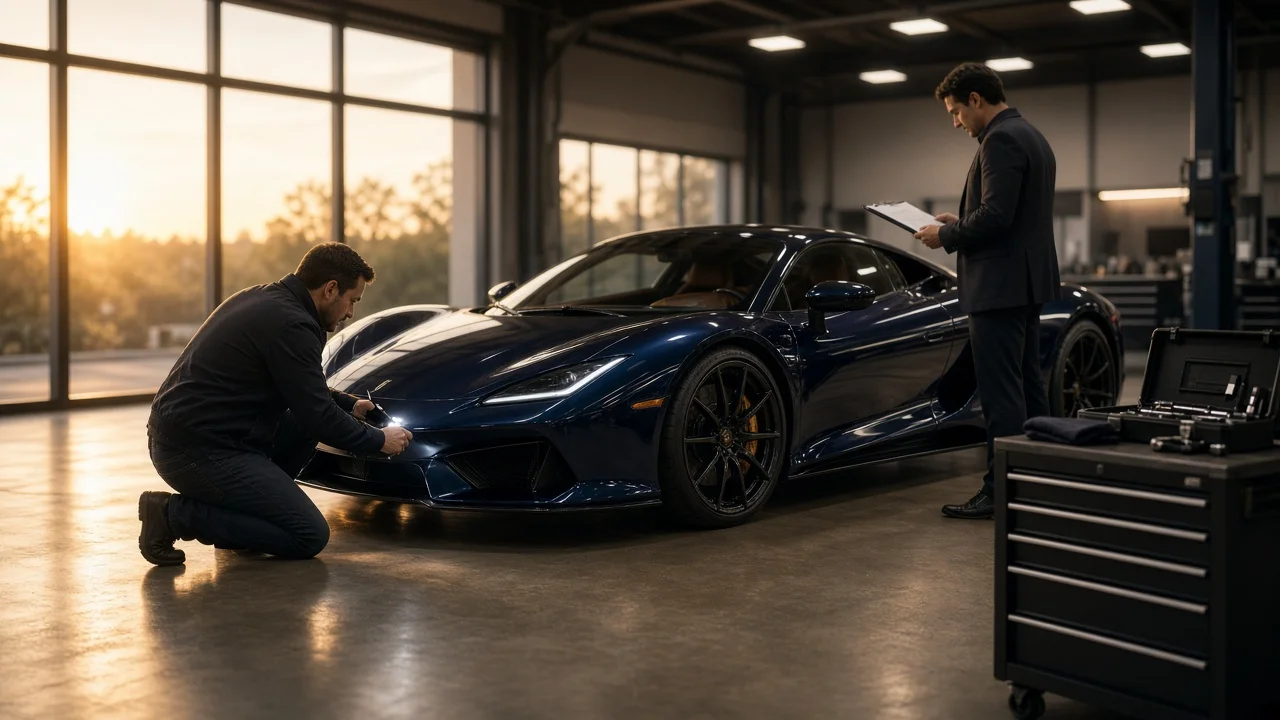
Pre-purchase inspection: have the car inspected by a specialist who knows the brand, not just a general mechanic. Ask for any diagnostic readouts the manufacturer's software can provide, such as fault history or logged engine and transmission data. Service records: look for continuous records that match the manufacturer's schedule by time as well as mileage. Long gaps in a low-mileage car can matter as much as high mileage. Vehicle history and title: run a vehicle history report and confirm the title has no salvage, rebuilt or flood brand. Check that the VIN matches on the car and on the paperwork. Open recalls: check the VIN against the NHTSA recall database and ask the dealer to confirm that recall work has been done. Body and paint: a paint-depth gauge can show refinished panels. Ask about any accident repair and who did it. Transmission and clutch: wear and failure modes depend on the transmission type and model. Ask the inspecting specialist what to look for on that powertrain. Modifications: aftermarket exhausts, tunes and suspension changes can affect warranty coverage, emissions compliance in your state, insurance and resale value. Ask for documentation and whether original parts come with the car. Warranty: confirm how much factory warranty is left, whether it transfers to you, and whether a certified pre-owned program or extended service contract is available for that car.
Imported and older cars
Cars built for other markets were not necessarily made to US safety and emissions standards. Vehicles at least 25 years old can generally be imported without meeting current federal safety standards, but emissions rules and state registration requirements still apply and differ by state. For any car that was not originally sold in the US, check the import documentation and confirm with your state's motor vehicle agency that it can be registered before you pay.
What to check when buying new
Allocation and order terms: some new exotics are sold through dealer allocations or build slots rather than from stock. Get in writing how the order is confirmed and when. Deposits: confirm whether the deposit is refundable and under what conditions. Pricing above MSRP: dealers may add market adjustments on high-demand models. Ask for an itemized out-the-door price before agreeing. Resale restrictions: some manufacturers or dealers ask buyers to agree not to resell for a set period. Read any agreement before signing. Specification: options affect daily usability and later resale. Prioritize features that solve your real use-case problems, such as a front lift or cameras, over cosmetic extras.
A sensible next step
Write down how many miles you expect to drive, in what weather, and where the car will be parked and serviced. Use that list to shortlist two or three models, then get insurance quotes, a service estimate and, for a used car, a specialist inspection on the specific vehicle. If the quotes or practical checks rule out daily use, a high-performance luxury car with a broader dealer network may suit you better, or the exotic may work as a second car rather than your only one.