Exhaust Manifold Gasket: Fitment and Replacement
What you need to know
An exhaust manifold gasket seals the joint between the cylinder head and the exhaust manifold so hot exhaust stays inside the system. Fitment is engine-specific: the gasket must match port count, port shape, bolt pattern, and whether the engine uses one full-length gasket or separate port gaskets. Replacement is the usual repair when that seal burns, cracks, or flattens and leaks at the head flange. Torque figures, bolt reuse rules, and whether studs or bolts are used come from the vehicle’s service information for that engine and model year; those details are not universal.
What the gasket is for
The manifold collects exhaust from each cylinder and sends it to the downpipe or catalytic converter. The gasket fills small gaps and surface irregularities at the head flange so combustion gas cannot escape into the engine bay. Some designs also use gaskets at a two-piece manifold joint or at the manifold-to-downpipe flange; those are separate parts from the head gasket at the manifold and must not be mixed up when ordering.
Common constructions include multilayer steel, graphite or composite sheets, and occasional copper or embossed-metal designs. The correct type is the one specified for that cylinder head and manifold pairing. A thicker aftermarket sheet does not automatically seal better if it changes clamp load or does not match port openings.
How to confirm fitment
Order by engine, not by vehicle name alone. The same model can use more than one engine family, and a given engine can change manifold casting, port shape, or fastener pattern across years or markets. Use the VIN or a confirmed engine code, then match the gasket to the manifold you will install: original log-style iron manifolds and tubular headers often need different gaskets even on the same block.
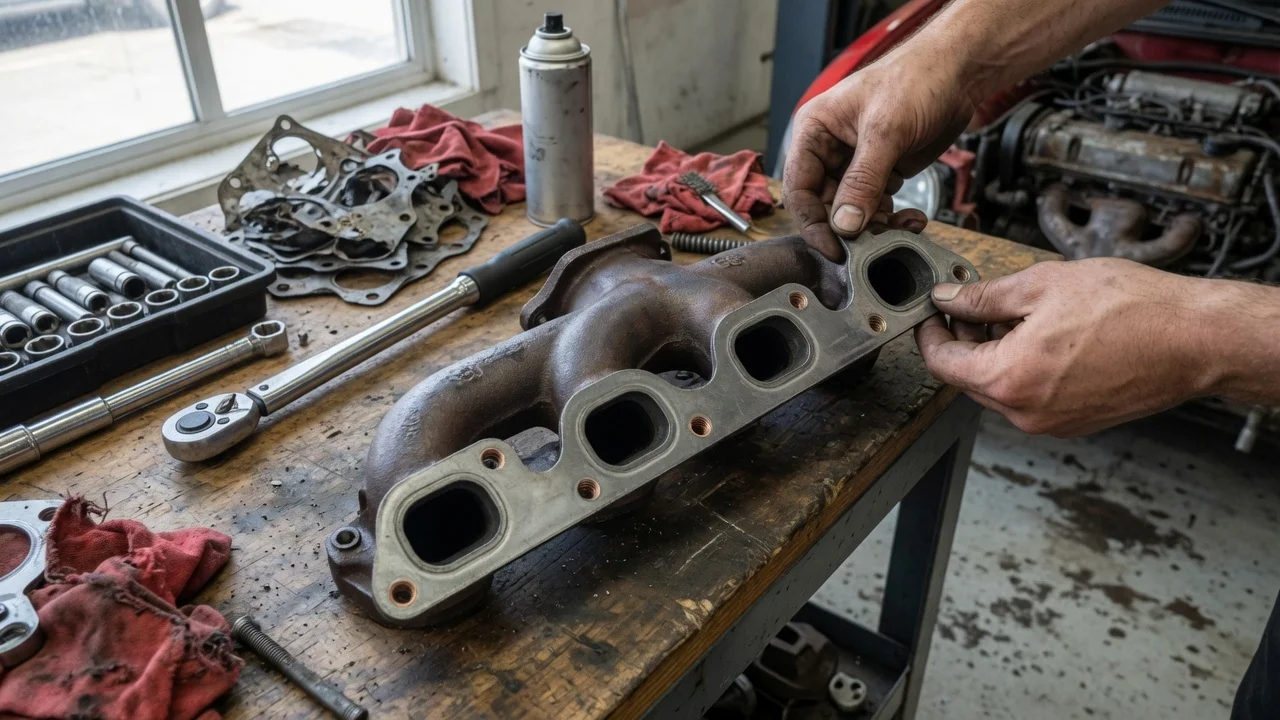
Count the exhaust ports and compare their outline to the gasket openings; ports must not be obstructed or left unsealed. Match bolt or stud holes to the head and manifold, including any extra holes for heat shields or brackets that pass through the gasket. Confirm whether the engine uses a one-piece gasket, left and right bank gaskets on a V engine, or individual port gaskets. If the manifold is being replaced, fit the gasket to the new manifold, not only to the old part number, in case the replacement casting differs. On transverse and longitudinal installations, bank location (front/rear or left/right) can require two different gaskets; do not assume they are interchangeable.
Where a parts catalog lists several supersessions or “with/without” notes for air injection, a heat stove, or a different catalyst takeoff, those notes change the gasket. If the catalog and the parts in hand disagree, stop and identify the manifold casting rather than trimming a near-fit gasket.
When replacement is warranted
A leaking manifold gasket typically shows as a ticking or puffing sound at the head flange that is louder on cold start and may quiet as metal expands. Soot streaks at the mating face, an exhaust smell in the engine bay, and heat discoloration on nearby wiring or a heat shield are supporting signs. A leak upstream of an oxygen sensor can disturb the fuel trim and set mixture-related codes; that is a possible result of a leak, not proof that the gasket is the only fault.
Warped manifolds, broken or stretched studs, cracked castings, and damaged head flanges can leak even with a new gasket. Replacement of the gasket alone is the right next action only when the mating surfaces and fasteners can still provide even clamp load. If the manifold is cracked or the flange is visibly out of flat, the manifold or hardware must be addressed at the same time.
Replacement practice
Access varies widely. On some inline engines the manifold is reachable from above; on many transverse V engines one bank sits against the firewall or under the cowl, so intake, engine mounts, or other components may have to come off. The service procedure for that engine is the source for fastener order, whether fasteners are torque-to-yield, and whether studs are reused.
Disconnect the battery when work will disturb wiring, oxygen sensors, or a heat shield that carries a ground. Support the exhaust so the manifold is not hanging on remaining bolts. Remove manifold fasteners in a pattern that unloads the flange evenly, typically from the ends toward the center unless the service information specifies otherwise. Frozen fasteners on an exhaust flange are common; extract them without rounding the head or snapping studs in the cylinder head. Lift the manifold and discard the old gasket. Do not reuse an exhaust manifold gasket. Clean both flanges to bare, flat metal. Carbon and old gasket material left on the face will hold the new gasket off the surface. Inspect the manifold flange and the head for cracks, erosion, and thread damage. Check flange flatness with a straightedge if a leak or a previous overheat is suspected. Repair or replace parts that cannot clamp evenly. Position the new gasket dry unless the part or the service information calls for a specific sealant. Most modern multilayer and composite exhaust gaskets are designed to be installed without additional dressing. Start all fasteners by hand. Tighten in the specified sequence and in stages to the published torque. Uneven tightening is a frequent cause of immediate or early repeat leaks. Refit heat shields, sensors, and the downpipe with new gaskets at those joints if they were opened. After a heat cycle, recheck fastener torque only if the service information allows it; some torque-to-yield bolts must not be retightened.
Thread repair in an aluminum head, broken exhaust studs, and a manifold that will not come free of the downpipe are the usual points where a straightforward gasket job becomes a larger repair. Plan for that possibility on high-mileage engines rather than assuming the gasket is the only part that will be replaced.
What this guide does not settle
No single torque value, part number, or labor time applies across engines. Header conversions, dual manifolds, integrated turbocharger housings, and engines that use a manifold gasket plus a separate turbo inlet seal each change the parts list. Confirm those details against the engine you have before buying parts or scheduling the work.