Exclamation Mark Warning Lights: Triangle, Brake Circle and Tire Symbols Explained
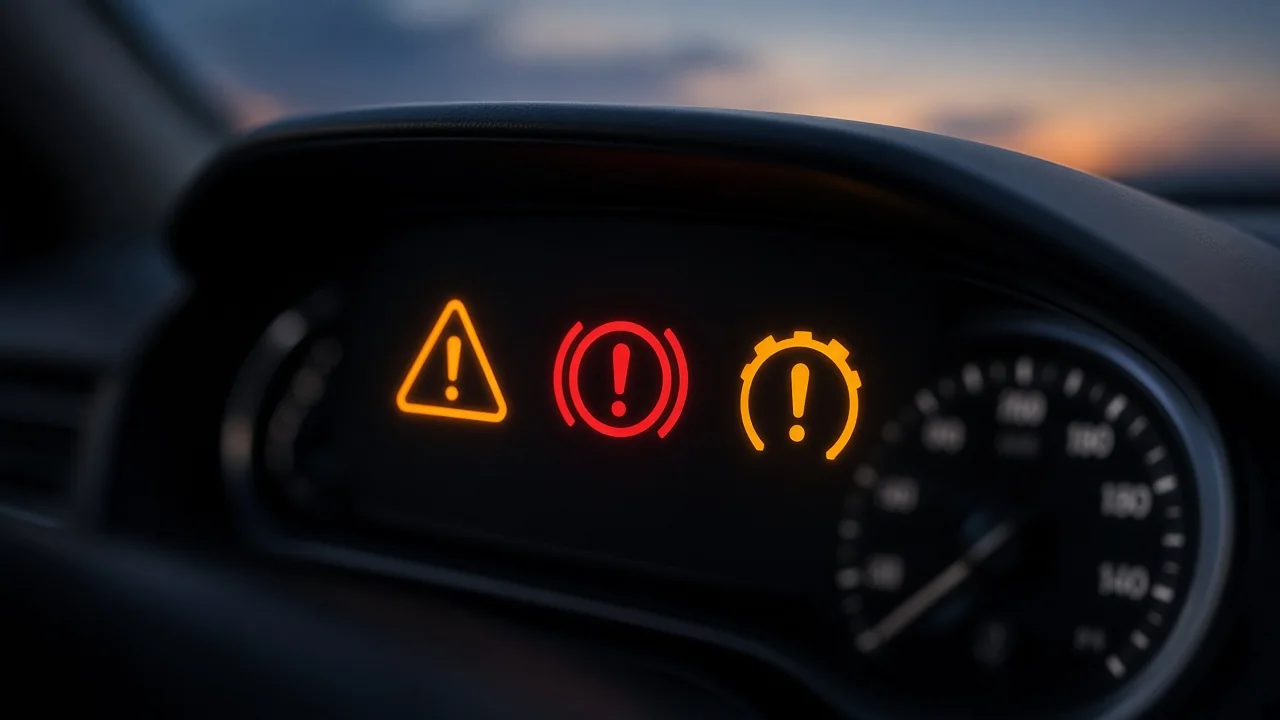
Your instrument cluster can display several exclamation mark warning lights, and each one asks for a different response. A triangle with an exclamation point often signals a master warning, while a circle with an exclamation mark typically relates to the brakes or parking brake. A horseshoe-shaped tire outline with an exclamation mark points to the tire pressure monitoring system. Knowing which symbol is lit and what color it shows helps you decide whether to keep driving, pull over safely, or seek service.
How to Tell the Exclamation Mark Dashboard Symbols Apart
Most cars use three distinct exclamation mark symbols. The triangle with an exclamation point inside acts as a master or general alert on many models. The circle with an exclamation mark—sometimes drawn with parentheses-style brackets on each side—is typically tied to the brake system or parking brake. The horseshoe-shaped tire outline with an exclamation mark in the center represents low tire pressure. Recognizing the shape is the first step, but the color provides a sense of urgency.
Red warning lights generally mean stop the vehicle as soon as it is safe and address the problem before continuing. Amber or yellow lights usually signal a condition that needs attention soon but does not require an immediate stop. However, manufacturers use different symbols and colors, and some vehicles may use a red triangle for one condition and an amber triangle for another. Many cars also show a short text message in the driver information display next to the light, so read that message first.
Triangle With an Exclamation Point: The Master Warning Light
On many vehicles, the triangle with an exclamation point is called a master warning light. It rarely means one specific fault on its own; instead, it works with a message on the instrument cluster or infotainment screen. That message might say something like “windshield washer fluid low” or “parking sensor unavailable.” Because the triangle is a general alert, a driver should look for a companion warning light or a text message that names the actual problem.
Some models use a red triangle for more serious alerts and an amber triangle for less urgent messages, while others use only one color. There is no universal definition, so the owner's manual is the final reference for a particular vehicle. The triangle alone does not identify the cause; it only tells you that some system has triggered a warning. To narrow it down, read the stored message on the display. If there is no message, a technician may need to scan the car's computer for stored fault information.
Exclamation Mark in a Circle: Brake System and Parking Brake Warnings
A circle with an exclamation mark is commonly tied to the brake system. On many vehicles, this light also comes on when the parking brake is engaged, so the first thing to check is whether the parking brake is fully released. If it is, and the light stays on, the vehicle may have low brake fluid, a hydraulic problem, or an electronic parking brake fault. The symbol can vary slightly—some appear as a circle with parentheses-style brackets, but the basic meaning is the same.
Any change in brake feel makes this warning urgent. If the pedal feels soft, sinks toward the floor, the car takes longer to stop, you hear grinding noises, or the vehicle pulls to one side while braking, do not drive the car. Stop safely and have it inspected. Some vehicles show a separate amber symbol for ABS or electronic parking brake faults, which may not mean the base brakes have failed. The owner's manual can help tell those lights apart.
Tire Symbol With an Exclamation Mark: Low Tire Pressure Warnings
The horseshoe-shaped tire outline with an exclamation mark is the tire pressure monitoring warning. It means one or more tires are significantly underinflated, or the system has lost communication with a sensor. Start by checking all tires with a gauge when they are cold, before driving more than a mile or two. Compare the readings to the pressure listed on the door jamb placard or in the owner's manual, not the maximum pressure printed on the tire sidewall.
Cold weather can lower tire pressure enough to turn the light on without any puncture. A drop in outside temperature of 10°F can reduce tire pressure by about 1 psi, so seasonal changes often cause temporary warnings. On many vehicles, a light that flashes for about a minute and then stays on points to a monitoring system fault rather than low pressure. Confirm this pattern in the owner's manual. If the car handles strangely or a tire looks visibly flat, pull over safely and do not drive far on a badly underinflated tire.
Deciding Whether to Keep Driving or Pull Over
To judge urgency, look at three things: the symbol, its color, and how the car behaves. A steady amber light with no change in driving feel usually means you can continue to a safe place and check the owner's manual or add air to a tire. A flashing light often indicates a system fault or a more immediate problem, especially if it is red. Any warning light combined with a change in how the car drives, brakes, or steers should be treated as urgent.
A red light with symptoms like a soft brake pedal, strange noises, or poor handling means stopping safely right away is the best choice. Before calling for help, note which symbol appeared, its color, any message text, and when it came on. That information helps a technician start diagnosing the problem. A light that turns off does not always mean the issue is gone; a stored code may remain, and repeated warnings still need to be checked.
What a Warning Light Can't Tell You and When to Get Professional Testing
A dashboard symbol shows which area of the car needs attention, not the exact cause. For example, a brake warning light could mean low fluid, a worn pad sensor, or a failing hydraulic component. The same light can have different meanings on different models, so a code or message must be interpreted for the specific vehicle. A technician uses stored fault information and hands-on inspection to find the root cause rather than guessing from the light alone.
Certain situations clearly need professional inspection: any brake system warning that stays on, a triangle warning that keeps coming back, or a tire pressure monitoring fault that will not clear. Brake and tire pressure sensor repairs often require specific tools and training, and mistakes can make the vehicle unsafe. Do not ignore warnings that return after being reset, because the underlying problem may still be present.