EVAP Purge Flow Sensor Codes P0465–P0469 Explained
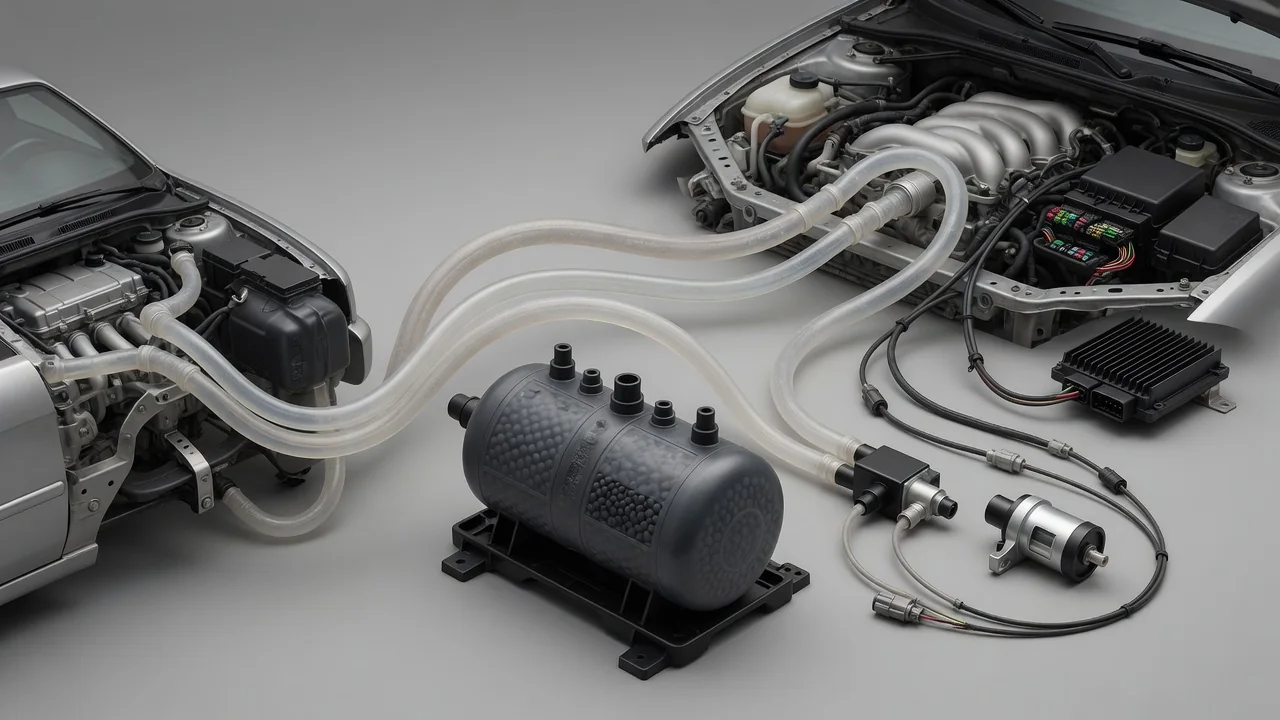
A scan tool showing P0465, a P0466 code, P0467, P0468, or P0469 means the controller flagged the evaporative emission control system's purge flow monitoring path. These entries describe circuit, range, low, high, or intermittent sensor conditions, not a proven failed part. Hardware and wording vary, so match the stored definition to the vehicle's EVAP layout before interpreting the fault or replacing components.
Confirm the Code Definition and the Vehicle’s EVAP Hardware
A P0465 code, P0466, or any neighbor in this family must be read against the service information for that year, make, model, and engine. Generic scan-tool text is a starting label, not a substitute for the manufacturer's definition and test sequence. On vehicles that use one, a purge flow sensor watches vapor moving from the charcoal canister toward the engine when the purge valve opens. Its signal travels a sensor signal circuit to the engine control module, which compares the reading with commanded purge and other EVAP data.
Not every evaporative emission control system includes a separate purge flow sensor. Many platforms infer purge activity from other sensors and valve feedback, so a listed P0465–P0469 descriptor may map to different hardware or even a different circuit name. Confirm presence with vehicle-specific diagrams rather than assuming a shared location or a combined sensor-and-valve assembly. Identify each piece by function: the sensor reports flow-related electrical information, the purge valve meters vapor, and the hoses and canister store and route fuel vapor.
P0465: Understanding a Purge Flow Sensor Circuit Fault
P0465 is commonly described as a purge flow sensor circuit fault, but that wording still needs the vehicle-specific definition confirmed first. A circuit code means the controller saw an electrical condition outside its monitored limits on the sensor path. It does not prove the sensor itself has failed or that vapor flow is actually wrong. Wiring damage, a loose or corroded connector, a missing reference voltage, an open sensor ground, or an internal sensor fault can all produce the same stored P0465 result, depending on how that circuit is designed and monitored.
The most consistent owner-visible sign is an illuminated malfunction indicator light after the monitor runs. Many vehicles continue to start, idle, and drive without an obvious drivability complaint because the evaporative emission control system is not the primary air-fuel metering path under all conditions. Idle roughness or a hard start might appear if purge control is disturbed, but those complaints have many other causes and must be diagnosed rather than blamed on P0465 by default. Treat the code as evidence that the sensor signal circuit needs tracing, not as an automatic sensor replacement order.
P0466: What Range or Performance Means
After the vehicle definition is confirmed, P0466 is typically a purge flow sensor range or performance fault. Unlike a simple open or short, this P0466 code often means a signal is electrically present yet fails the controller's expected response or plausibility checks. The reading may stay stuck, move too slowly, or disagree with commanded purge, engine load, or other EVAP data. That mismatch is a monitored condition, not a measurement of how many grams of vapor actually moved through the charcoal canister.
Causes belong only where the manufacturer's procedure points. A sluggish sensor, a damaged signal circuit, a restricted vapor path, or a purge valve that does not follow commands can all be candidates on some designs and irrelevant on others. Freeze-frame data captured when P0466 set shows engine speed, load, temperature, and whether purge was commanded, which helps reconstruct the missing response. Related codes for the purge valve or canister path add context. A technician uses those snapshots with scan-tool commanded purge tests rather than guessing from the code number alone.
P0467 and P0468: Interpreting Low and High Sensor Signals
P0467 is commonly a low-input condition on the purge flow sensor circuit, and P0468 is commonly a high-input condition, each still requiring vehicle-specific confirmation. Low and high describe the monitored electrical input the controller received, not a direct quantity of vapor leaving the charcoal canister. A low reading can come from an open signal, a short to ground, a lost reference voltage, or a sensor stuck at the bottom of its range. A high reading can come from a short to voltage, a lost sensor ground, or a sensor pinned high. No single pattern is universal.
Because circuit polarity, pull-up strategy, and expected voltages differ, a meter reading is useful only with the correct wiring diagram, signal specifications, and the test conditions the manufacturer lists. Probing at the wrong connector, with the purge valve uncommanded, or without a known-good sensor ground reference can invert the conclusion. Poor connections can also drop or lift the signal enough to set P0467 or P0468 without a failed sensing element. The code identifies which side of the electrical window was crossed; diagnosis still has to locate where that voltage was created.
P0469: Investigating an Intermittent Sensor Circuit Signal
Once the vehicle definition is confirmed, P0469 typically points to an intermittent purge flow sensor circuit signal. The controller saw a valid-looking path that later dropped out, spiked, or glitched long enough to fail the monitor. An intermittent electrical connection at the sensor, a pinched or chafed harness that moves with engine torque, a moisture-sensitive connector, or an internal sensor break that opens when hot can all produce that pattern. The fault may appear only after a cold start, in rain, over bumps, or during a particular purge command.
Note when the warning light came on: engine temperature, weather, recent underhood service, and the kind of driving underway. Do not try to recreate a hazardous situation just to force the code. An apparently normal voltage during a bay inspection does not clear P0469, because the dropout may last milliseconds and only under load, heat, or vibration. Professional signal recording with a scan tool or oscilloscope, plus a careful visual check of the sensor signal circuit and related connectors, is often required to catch a fault that a static meter check will miss.
Safe Checks and When Professional EVAP Testing Is Needed
Before clearing anything, save every stored and pending code and all freeze-frame data, including related evaporative emission control system entries that may sit beside P0465 through P0469. Owner checks should stay visual and conservative: with the engine off and cool, look at accessible wiring, connectors, and hoses for obvious damage, looseness, or disconnection. Do not disconnect vapor lines, do not probe the sensor signal circuit, and do not command the purge valve without the proper equipment. These codes by themselves do not declare whether the vehicle is safe to drive.
A strong fuel odor, visible leakage, stalling, or severe running problems are separate issues: stop safely and arrange assistance rather than continuing to drive. Professional work typically follows the vehicle's circuit checks, watches live sensor data while purge is commanded, and uses approved EVAP leak or flow testing when the procedure calls for it. After a repair, the monitor must run under the manufacturer's specified conditions and stay clear; turning the malfunction indicator off with a scan tool is not confirmation. If P0466 or its companions return, the original cause was not fully resolved.