EV Mode Unavailable, Hybrid Battery Low: What the Toyota Message Means
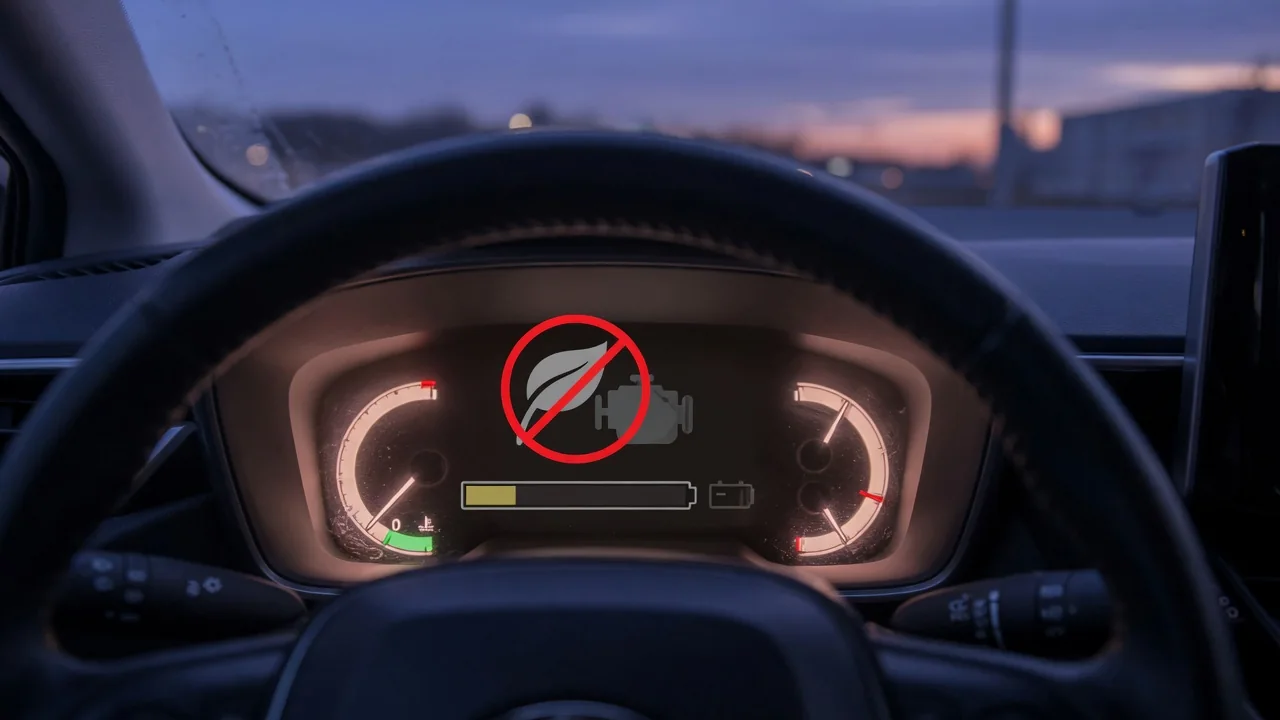
Toyota and RAV4 hybrid owners sometimes press the EV mode button and see “EV Mode Unavailable, Hybrid Battery Low.” This message can be confusing, but it is usually a normal status notice, not a warning that something is broken. It means the hybrid system has declined electric-only driving because the high-voltage traction battery charge is too low. This article explains why the message appears, what it tells you about your Toyota hybrid, and when it might point to a real problem.
What "EV Mode Unavailable, Hybrid Battery Low" Actually Tells You
When the message “EV Mode Unavailable, Hybrid Battery Low” appears, the car is telling you that you asked for electric-only driving, but the hybrid battery does not have enough charge to allow it. The high-voltage battery, often called the traction battery, powers the electric motors. Its charge level is managed automatically by the hybrid control system. If the charge is below a certain threshold, the system will not engage EV mode, even if the car is otherwise capable of running on electricity alone.
This message is only about EV mode availability, not about overall vehicle health. It is not a warning light, and on its own it does not indicate a fault. The high-voltage battery is separate from the 12-volt auxiliary battery that starts the car’s electronics and accessories, so seeing this message does not mean the car will fail to start. The hybrid system always keeps some charge in reserve to protect battery life and ensure the gasoline engine can start if needed, so the battery is not actually empty; it is just below the level set for EV mode.
Why Toyota Hybrids Limit EV Mode When Battery Charge Is Low
Toyota hybrids limit EV mode under several conditions beyond just battery charge. Higher speeds, firm acceleration, a cold engine, heavy cabin heating or air conditioning demand, and extreme outside temperatures can all prompt the system to refuse or cancel EV mode. EV mode is designed for short, gentle, low-speed driving, such as creeping through a parking lot or moving slowly in a traffic jam. The hybrid system constantly evaluates these factors and prioritizes overall efficiency and battery preservation over satisfying an EV mode request.
Exact EV mode limits vary by model and model year. For example, many standard hybrids will cancel EV mode above roughly 20 to 25 mph, but plug-in models can sustain electric driving at much higher speeds. Always check the owner’s manual for your specific vehicle. When the gasoline engine starts running after a denied EV mode request, that is expected behavior. The engine recharges the battery through the generator while also providing drive power, and this regular cycling between gasoline and electric operation is how a standard hybrid works—not a malfunction.
Seeing the Low Battery EV Mode Message in a Prius
Prius drivers often encounter this message after using up battery charge in stop-and-go traffic, climbing hills, or after a long stretch of EV mode driving. If you press the EV mode button in those situations, the system may show the unavailable message because the battery state of charge has dropped below the EV mode threshold. This is a common occurrence and does not mean the battery is failing. The energy monitor or battery gauge on the dashboard should show a relatively low charge level at that moment.
After the message appears, normal Prius behavior is for the gasoline engine to start automatically and recharge the traction battery. Within a few minutes of steady driving, the battery gauge should begin to climb back up, and eventually EV mode may become available again. Plug-in Prius models, often labeled Prius Prime, have a larger battery and different EV driving rules. They can operate in electric-only mode at higher speeds and for longer distances, so their messages and thresholds differ. Refer to the specific owner’s manual for those models.
RAV4 Hybrid: Why the Message Appears More Often in Some Driving
RAV4 Hybrid owners may see the message more often than Prius drivers because the RAV4 is a heavier SUV that uses more energy in certain driving conditions. Towing, climbing long grades, sustained highway speeds, and heavy use of air conditioning or heating can deplete the hybrid battery faster, leaving less charge available for EV mode. After such driving, pressing the EV button may result in the message even if the battery gauge does not look critically low. This is a normal operating characteristic, not a sign of battery trouble.
The RAV4 Prime, the plug-in version, has a much larger battery and can drive many miles on electricity alone. Its EV mode behaves differently; the standard hybrid’s rules do not apply the same way. For any RAV4, you can observe normal battery recovery by watching the energy monitor or battery gauge during steady driving. When you lift off the accelerator or brake gently, regenerative braking feeds power back into the battery, and the gauge should rise. If the battery consistently recovers after such driving, the system is likely functioning as designed.
When the Message Is Normal and When It Points to a Problem
A normal pattern is that the message appears occasionally, especially after heavy power use or long EV stretches. The battery gauge then recovers during normal driving, and no warning lights appear. Drivability remains smooth, fuel economy stays within the usual range for your driving style, and the message clears or EV mode becomes available again later. In this case, there is usually nothing to worry about. The hybrid system is just managing battery charge conservatively.
Warning signs that suggest a real problem include the message appearing almost every time you press EV mode, a battery gauge that stays low even after extended driving, or a gauge that swings quickly between low and high for no apparent reason. Also note if the gasoline engine runs much more than usual, fuel economy drops noticeably, or you feel a loss of power. If the message is accompanied by a warning light such as the Check Hybrid System warning or the check engine light, the vehicle should be inspected. Any stored diagnostic trouble codes must be read with a professional scan tool and interpreted for your specific Toyota model and year; a code alone does not identify a failed part. Dashboard symptoms can suggest a pattern, but only proper testing can confirm actual hybrid battery health.
Safe Checks at Home and When to Get Professional Hybrid Testing
Safe observations you can make at home include noting how often the message appears, outside temperature, the type of trip (city, highway, towing, hills), how the battery gauge behaves before and after the message, recent fuel economy trends, and whether any warning lights accompany it. Write down these details to help a technician. Also check that the hybrid battery cooling air intake is not blocked. This intake is usually located in the cabin, often under the rear seat or near the cargo area, and it must remain clear of debris, pet hair, or cargo. Follow the owner’s manual to find the exact location and cleaning recommendations.
Never attempt to open, disconnect, or repair the hybrid battery or any component connected to high-voltage orange cables. The hybrid system carries several hundred volts, which can be lethal. You can check cooling filters and clear the intake vent without touching high-voltage parts, but do not remove covers or panels unless instructed by the manual. If the message persists, if warning lights appear, or if you notice performance changes, book an appointment with a Toyota dealer or a qualified hybrid technician. Professional scan tools and hybrid battery testing are required to accurately judge battery state of health, capacity, and module balance.