EV Charging Station Signs, Symbols, and Parking Markings
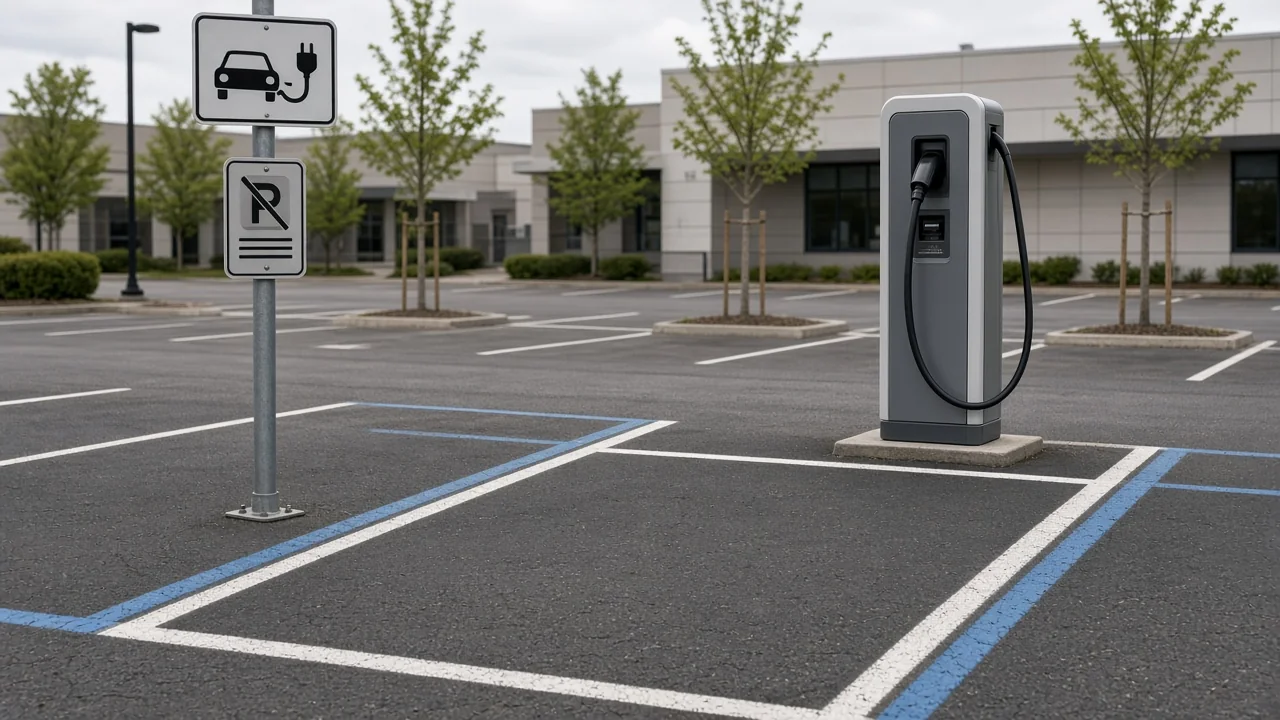
Electric car charging signs help drivers locate equipment, reserved spaces, and posted conditions before they park. A typical electric car charging station sign uses a car-and-plug image, arrows, and wording that identifies a designated charging space. An electric car charging point symbol marks equipment, but it does not prove public access, connector fit, or that the charger is free and ready. Read the sign with pavement markings and charger labels to avoid occupying the wrong bay.
Recognizing Signs That Point to EV Charging
Many electric car charging signs combine a vehicle outline with a plug or cable so the location reads as charging rather than ordinary parking. That EV charging pictogram is common on wayfinding panels, canopy fascia, and post-mounted plates, yet colors, borders, and extra icons still differ by property, network, and local sign standards. A car-and-plug symbol on a wall or pole usually means charging equipment is nearby, not that every adjacent stall is served. Look at the whole panel, because extra wording or a second icon can change who may use the space.
Arrows on an electric car charging station sign usually show the path to the equipment or which bays the restriction covers. A sign at a driveway or lot entrance often points toward a bank of chargers, while a plaque at the stall face identifies the spaces immediately in front of it. Placement matters: a sign on a light pole may apply only to the row it faces. Finding the hardware still does not confirm public access, hours, current availability, or no-cost charging. Those details appear in separate wording, operator notices, or the charger display.
What Charging Point Symbols Tell You
The usual job of a car-and-plug symbol is to mark a place intended for vehicle charging, not to describe the hardware in detail. An electric car charging point symbol may appear on the dispenser, a nearby post, a pavement stencil, or a wayfinding panel that leads you to the stall. Lightning bolts, electrical waves, and similar graphics take their meaning from nearby text and from where they sit. On a charger face they often signal power or session status; on a parking panel they more often simply identify the charging use of the space.
A pictogram cannot confirm connector type, charging power, or whether your vehicle can use that equipment. Inlet location, cable length, and adapter policy are also outside what the icon shows. After you recognize the symbol, read the labels on the charger itself for connector names, any stated output class, and access steps such as app, RFID, or credit payment. Compare those labels with the charging information in the vehicle, including supported inlet and session limits. If the hardware and the car do not match, move to another designated charging space rather than forcing a connection.
Reading the Parking Rules on a Charging Station Sign
An electric car charging station sign often adds qualifying wording that turns a general location marker into a parking rule. Phrases such as EV only, charging-only parking, maximum stay, and permitted hours tell you who may occupy the stall and for how long. A posted time limit may run from arrival, from session start, or during listed hours, so read the full line rather than assuming a standard stay. Supplementary plaques, arrows, and bay numbers show which stalls the restriction covers, especially when chargers sit at the end of a mixed row.
A space reserved for active charging may require an actual charging session, not merely an electric vehicle in the stall. A connected cable by itself may not satisfy charging-only parking if energy is not flowing or if the session has already ended. Posted parking conditions belong to the property or municipality and can include separately stated parking or idle fees after a session finishes. Charging-session terms from the operator, such as authorization, hold, or overstay rules, are a different layer. Confirm both before leaving, because one set of terms does not satisfy the other.
Understanding Painted Bays and Access Markings
Charging bay markings on the pavement help you pick the correct stall once you are already in the aisle. Stenciled EV charging pictograms, colored rectangles, and painted bay outlines commonly identify a designated charging space, especially where several stalls share one island. Those graphics work with the upright electric car charging signs rather than replacing them. Color has no single meaning across all properties: green, blue, red, or white paint can signal charging, accessibility, time limits, or simple stall definition depending on the site. Always read the nearby sign face before treating a color as permission.
Hatched or striped access aisles beside an accessible charging space must stay clear for boarding, wheelchair movement, and equipment approach. They are not extra parking, waiting areas, or places to coil unused cable. A charger next to those stripes does not by itself mean every driver may use that stall. Posted accessibility wording, permit rules, and any van-accessible notes on the sign control eligibility. If the pavement stencil and the upright plaque disagree about who may park, treat the posted regulatory text as the rule and choose another open designated charging space.
Checking Charger Status Before You Park
Permanent electric car charging signs mark where equipment is installed; they do not report charging station status in real time. A stall can be occupied, offline, reserved, or waiting on a payment error even when the car-and-plug symbol is clearly posted. Before you commit to the space, look at the charger screen, any paper or digital outage notice on the cabinet, and the operator information shown on the unit or nearby plaque. Those sources are the practical check for availability, access method, and whether a session can start at that dispenser.
Indicator-light colors and display icons are equipment-specific, so a green, blue, or red lamp does not have one universal meaning. Use the on-screen explanation, labeled legend, or printed instructions on that charger rather than assuming a color from another network. If the cabinet is cracked, the cable sheath is torn, a connector latch is broken, or any conductor looks exposed, do not use the equipment and do not handle damaged parts. Leave the stall if you cannot start a lawful session, and contact the posted operator for assistance instead of improvising a connection.
Handling Unclear or Conflicting Signs
When signs are incomplete, pause before occupying the stall and confirm four points: which bay the restriction covers, whether you may park there, whether an active charging session is required, and what posted time limit applies. An electric car charging point symbol on a distant pole may not match the nearest painted stall, and a faded stencil may outlast a newer plaque. Parking permission and charging availability are separate questions. You may be allowed to wait in a bay with no working dispenser, or find a live charger in a stall you cannot occupy.
If pavement markings, upright electric car charging signs, and session instructions on the dispenser appear inconsistent, contact the property manager or the charging operator listed on the cabinet before you start a session. Staff can say which rule currently applies when a sign has been replaced, a bay has been restriped, or a charger has been taken out of service. Plan departure around both the posted time limit and actual session completion so the space stays available under its stated rules. Ending the charge when the stay expires keeps the space usable for the next vehicle.