EV Charging Cable Storage: Holders, Reels, Bags and Retractors
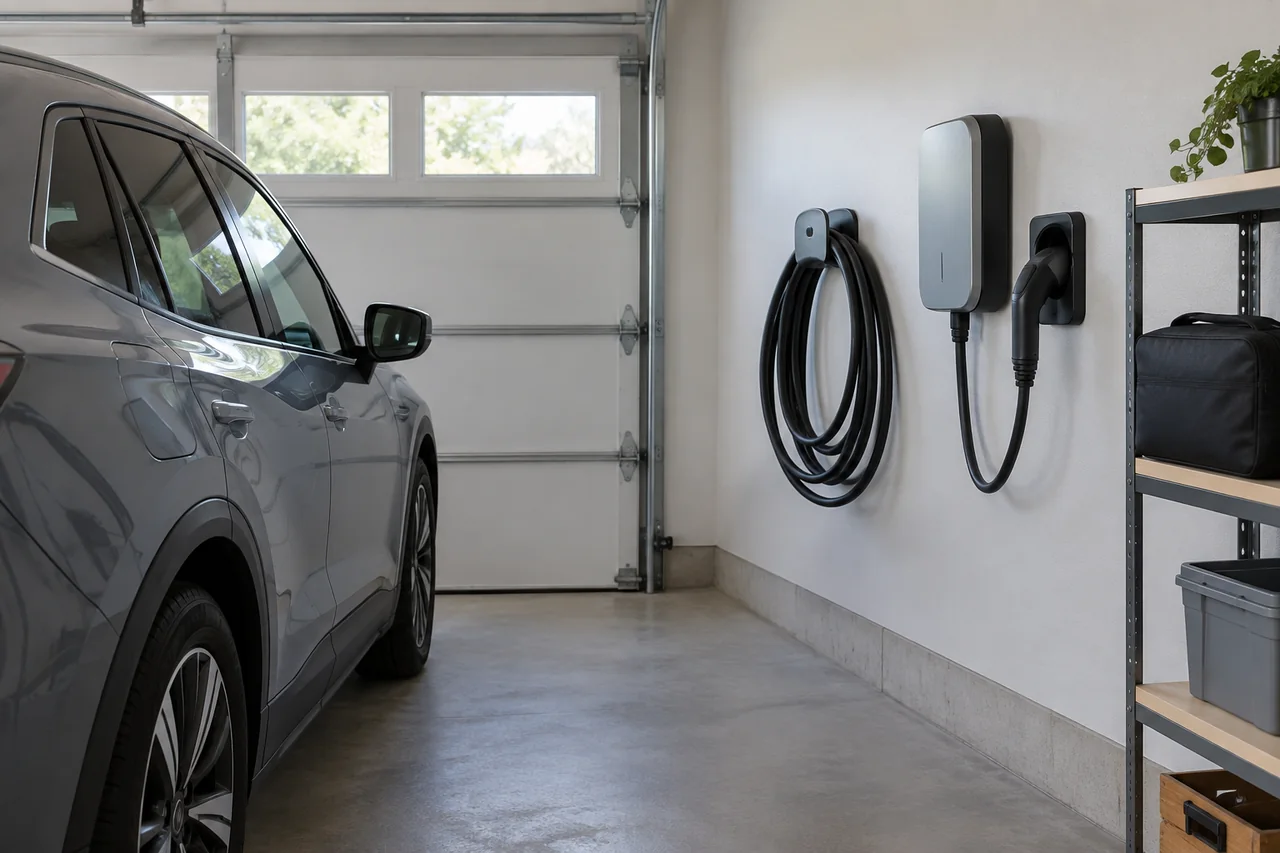
How to store an EV charging cable well starts with parking layout, then a holder, hook, hanger, or organizer that keeps the lead tidy without stressing the connector. Home EV charging cable storage also covers retractors, reels, bags, cases, boxes, holsters, dust caps, and coiled cables. Aim for cable routing that preserves bend radius and strain relief while matching usable cable reach to the charger and vehicle.
Plan Cable Storage Around Parking and Walking Space
Practical EV charging cable management begins with port location, parking position, and charger placement. Those facts set a realistic cable route and a storage spot that still leaves usable cable reach. Place a holder for an EV charging cable along that path so the disconnected lead lifts into storage without crossing walkways, rolling under tires, catching door tracks, or dragging across sharp edges. Never leave the connector hanging in tension, which loads the latch and cable entry.
When the session ends, gather the disconnected cable into broad, relaxed loops and follow the manufacturer's bend and storage instructions rather than wrapping it tightly around a post. Keep strain relief at both ends so the jacket is not pinched at the charger or plug. Before the next use, look for cut or flattened insulation, a distorted connector, or discoloration that can indicate overheating. Stop using affected equipment and have it assessed by a qualified technician.
Choose a Wall Holder, Hook, or Bracket That Supports the Cable
An EV charging cable holder, hanger, hook, or wall bracket must carry the cable's weight and the loop size you actually use. Check holder dimensions against that loop, prefer smooth contact surfaces that will not cut the jacket, and rely only on documented load capacity. A hook for an EV charging cable that is too small forces a tight bend radius; an underspecified support can sag or pull fasteners from the mounting surface. Match outdoor suitability to weather exposure.
Confirm the mounting surface, supplied mounting requirements, and indoor or outdoor use before choosing a location. Leave uncertain fastening, masonry, or weather-exposed work to a qualified installer. Place the support so the cable lifts off without dragging the connector or creating a tight bend at the charger. Treat a 3D-printed EV charging cable holder as unverified: material durability, heat, sunlight, mounting strength, and load capacity are not proven by a downloaded design, so do not assume it is suitable.
Protect the Connector With a Holster or Dust Cap
An EV charging cable holster is connector protection that parks the plug off the ground so grit, standing water, and impact do not reach the latch face. A correctly fitting holster supports the connector body without loading the latch or pinching the cable entry, where strain relief is easily defeated. Confirm intended connector fit and permitted storage orientation from the accessory and charging-equipment documentation; a mismatch can cock the plug and bend the cable sharply.
An EV charging cable dust cap covers the contact area against contamination within its stated design limits and does not make the connector waterproof. Fit the cap only as the maker describes, then still inspect for debris or moisture before every session. Follow approved cleaning and drying instructions; do not probe contacts or apply unapproved cleaners, solvents, or lubricants. Outdoor weather exposure still matters, because a wet plug stored with the cap on can trap contamination against the seals.
Manage Cable Reach With Retractors and Support Arms
An EV charging cable retractor, wall arm, or ceiling-mount EV charging cable management system carries cable weight and guides the lead across the parking bay so it does not lie in the driving path. A retractable EV charging cable setup may manage an existing cable externally or incorporate charging equipment; only documented suitability for the intended use counts. Check travel range against usable cable reach, attachment requirements, and clearance around doors, mirrors, and the roof so the mechanism never yanks the connector or charging port.
Support forces matter as much as travel. A retractable EV charging cable reel or EV charging cable wall arm that returns too sharply can snatch the plug or load the port while the vehicle is still connected. Require a mounting assessment for the wall or ceiling, and look for controlled return movement rather than a free spring. Overhead installation, structural anchors, and any electrical integration belong with a qualified professional; do not improvise ceiling hardware or alter the charging circuit.
Use Cable Reels Within Their Charging and Storage Limits
An EV charging cable reel is often a storage drum for a disconnected lead, not a device approved to remain wound while charging. Identify whether the reel is storage-only or whether the charger, cable, and reel makers explicitly permit charging use. Tightly wound cable can retain heat, so follow those instructions on how far to unwind before a session. Match reel capacity, minimum bend radius, and connector clearance to the actual cable; appearance and length are not enough.
Rewind control matters for a storage reel and for a retractable EV charging cable reel documented for charging. A sudden rewind can slap the connector into the housing or twist the jacket past its bend radius. Do not use improvised electrical reels, alter the cable, or create unsupported moving electrical connections. Integrated powered reel systems need qualified installation and assessment. If documentation is silent on charging while wound, treat the reel as storage used only after the session ends.
Pack a Charging Cable in a Bag, Case, or Storage Box
An EV charging cable storage bag, case, or storage box should be sized for relaxed loops and protected connectors, not forced shut over a tight coil. Crushing the plug or pinching the cable entry defeats connector protection as surely as dropping it on concrete. A bag for an EV charging cable that lives in the trunk still needs room for the natural bend radius. Follow cleaning and drying instructions before packing, and do not leave a damp cable sealed for extended storage, because trapped moisture attacks insulation and contacts.
Secure the packed cable in the vehicle's designated cargo area so an EV charging cable organizer, tidy, bag, or box cannot slide into occupants, pedals, or controls. A box or case that rattles around can damage the connector even when the lid stays closed. Verify weather protection and storage ventilation; a closed unventilated space can trap heat and moisture. Enclosing charging equipment during operation requires explicit manufacturer permission; if instructions are silent, keep the in-use cable and charger outside the container.
Store a Coiled Charging Cable Without Stretching It
A coiled EV charging cable looks shorter than a straight lead, but usable cable reach is the specified working range, not the conductor length inside the helix. Stretching the coils to reach a distant stall can hold the cable under constant tension and place sustained sideways force on the connector and charging port. Park so the normal charging position stays inside that working range. If the coils are taut or the plug is levered sideways, change parking or charger placement instead of forcing the cable.
After disconnecting, let the coiled cable return to its natural shape and store it without tight straps, kinks, or heavy objects pressing on the coils. How to store an EV charging cable of this type still follows the maker's storage instructions, including any required hanger, holster, or wall arm. Before choosing a coiled cable, verify connector type, electrical ratings, and charging-equipment requirements rather than matching by appearance. A coil with the wrong rating or inlet type is incompatible charging equipment and should not be used.