EV Battery Technology: Solid-State, Silicon Anodes and Fast Charging
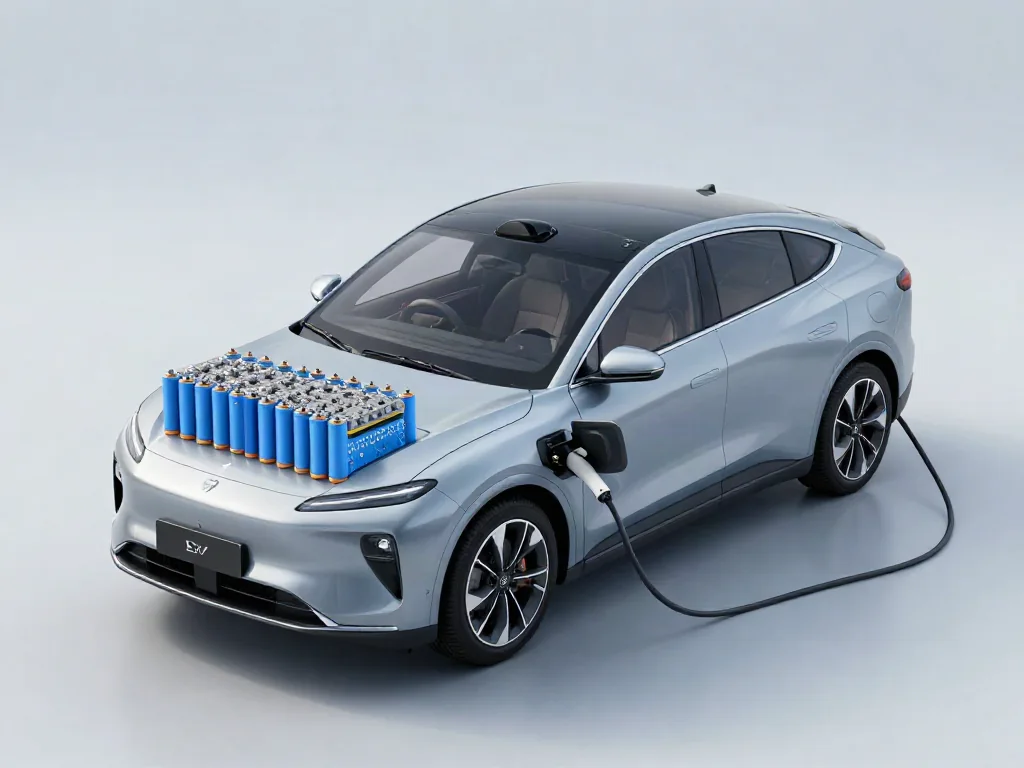
EV car battery news often mixes laboratory cells, development targets and production claims. Understanding EV car battery technology means reading what a cell demonstrated, how a pack is assembled, and which limits still apply. Solid-state, silicon anodes and fast-charging designs can change energy density and charging behavior, but a breakthrough headline is evidence to interpret, not a vehicle for sale.
What EV battery technology means at the cell and pack level
An EV cell stores lithium ions that move between an anode and a cathode through an electrolyte. The anode hosts lithium during charge, the cathode hosts it during discharge, and the electrolyte provides the ionic path while remaining insulating. Cells are grouped into modules, then into a pack with connections, structure, sensors and thermal management. Battery technology for EV cars is therefore chemistry and packaging: materials set possible energy and power, while pack architecture determines how that energy reaches the vehicle.
Energy capacity is stored energy, reported in kilowatt-hours for a pack or watt-hours for a cell. Energy density divides that energy by mass or volume, and volumetric energy density matters when a pack must fit under a floor. Power is the rate of energy delivery, governing acceleration and charging acceptance. Usable performance still depends on pack design, thermal management and vehicle efficiency. The best EV battery technology still depends on charging access, durability and operating conditions, not a chemistry ranking.
Solid-state and semi-solid batteries: what the labels establish
A solid-state battery EV car design replaces a liquid or gel electrolyte with a solid electrolyte that still transports lithium ions. That label does not establish anode or cathode chemistry, cell format, or vehicle pack behavior. A solid-state battery for EV cars remains an incomplete description until electrode materials, operating temperature and pack integration are specified. Semi-solid battery language is similarly broad, and MG4 semi solid battery EV debut reports still need the electrolyte composition clarified.
EV battery development around solid electrolytes must still solve electrode interfaces that can lose contact, raise resistance or form uneven lithium deposits. Many designs impose temperature and pressure requirements that a vehicle pack must maintain. Manufacturing yield and consistency become harder as cells grow from laboratory samples to automotive sizes. Energy density, charging speed and safety need test evidence; a solid electrolyte can reduce some risks from flammable liquids but does not eliminate every battery hazard.
Silicon anodes and the meaning of a fourfold capacity claim
Silicon can store far more lithium than conventional graphite, which is why silicon anode work appears so often in EV battery development news. Silicon expands as it alloys with lithium and contracts as lithium leaves, stressing particles, binders and the electrode. Cycle life then depends on material formulation, electrode structure and electrolyte design that accommodate swelling. New EV battery technology that adds silicon is a durability problem as much as a capacity problem, and automotive qualification still has to show the electrode survives repeated expansion.
A 4x energy capacity EV battery headline needs the measured material, the units, the reference basis and the test conditions. Fourfold capacity often refers to silicon powder or a thin electrode versus graphite on a mass-specific basis, not to a finished pack. Electrode-level capacity cannot establish fourfold pack energy or driving range, because packs also contain current collectors, separators, housing and coolant paths. Treat the claim as a materials result until pack energy density is reported under identified conditions.
Fast-charging cells need a complete charging window
Charging acceptance depends on cell chemistry, electrode design and thermal control, not only on published peak power. Lithium must insert into the anode without plating, and heat must leave the cell. A new fast charging EV battery claim is incomplete without starting and ending state of charge, elapsed time, temperature and the charger used. Headlines about the fastest charging EV battery often omit those bounds, so similar peak power can still mean very different session times.
Peak charging power is the highest rate the system briefly accepts, usually near a low state of charge. The charging curve then tapers as lithium concentration, temperature and voltage limits tighten, so a peak figure cannot establish session duration. Vehicle integration and thermal management further shape the curve a driver sees. Repeated tests, battery aging and pack cooling matter more than a single demonstration, because high-rate charging can shorten cycle life if plating and heat are not controlled.
Reading Samsung, Toyota and MG4 battery announcements
Samsung EV battery 600 miles headlines, including claims that Samsung delivers a 600-mile solid-state EV battery, need an identified vehicle, test cycle, pack capacity and development stage. Mileage without those details can describe a laboratory cell, prototype pack or target rather than a delivered product. A sample or partnership does not establish customer availability. Toyota EV battery breakthrough reports should separate research results, development targets and confirmed production milestones; only the last describes hardware that has cleared a factory and vehicle program.
For MG4 semi solid battery EV debut reports, establish the announcement date, market, exact variant and whether debut means a reveal, production launch or customer delivery. Those events can be years apart, and a show car does not confirm the chemistry that will ship. EV battery technology companies include material suppliers, cell developers and automakers, so a partnership or sample shipment does not imply a production vehicle is available. Solid-state EV battery companies may supply electrolyte or assemble cells rather than a showroom car.
The milestones between a laboratory cell and a customer vehicle
Laboratory validation shows that a small cell can cycle under controlled conditions. Prototype cells then test a more realistic size, while pilot production tries to make that cell repeatedly on factory-like equipment. Automotive qualification asks whether those cells survive vehicle-relevant vibration, temperature, abuse and electrical limits. Volume production is a separate milestone requiring stable manufacturing yield and consistent packs. EV battery development news often compresses these stages, so a laboratory result can be described as if a customer vehicle already existed.
Cell size matters because a coin cell can hide interface and heat problems that appear in a large pouch or prismatic format. Manufacturing yield and consistent quality decide whether a promising chemistry can be built at automotive volumes. Durability evidence should include cycle conditions, capacity retention, calendar aging and temperature coverage, not a single room-temperature cycle count. Development schedules still depend on factory readiness, vehicle integration and validation, so announced dates remain uncertain.
How to judge battery breakthrough news in 2026 and beyond
When reading an EV battery breakthrough, ask what was demonstrated, at what scale, under which conditions and with remaining limitations. An EV battery technology breakthrough may be a material, a cell, a module or a pack, and those scales are not interchangeable. Distinguish measured results, company targets and independently validated findings rather than treating every headline as established fact. EV battery breakthroughs that resurface as a new EV battery breakthrough often recycle the same laboratory result; publication dates, original announcement dates and intended launch markets show whether the work is newly circulated.
New EV battery technology dated to 2026 should be judged by dated milestones, not by unsupported availability forecasts. A year on an announcement identifies when a result was disclosed or when a company hoped to start pilot production, not when showroom cars exist, and that evidence test remains useful beyond 2026. Purchase decisions should rest on confirmed vehicle specifications, charging requirements and warranty terms rather than promised future capabilities. EV car battery technology that matters at the dealership is the pack already qualified in that model, not the next laboratory cell.