EV Battery Repair, Refurbished Packs and Used Battery Options Explained
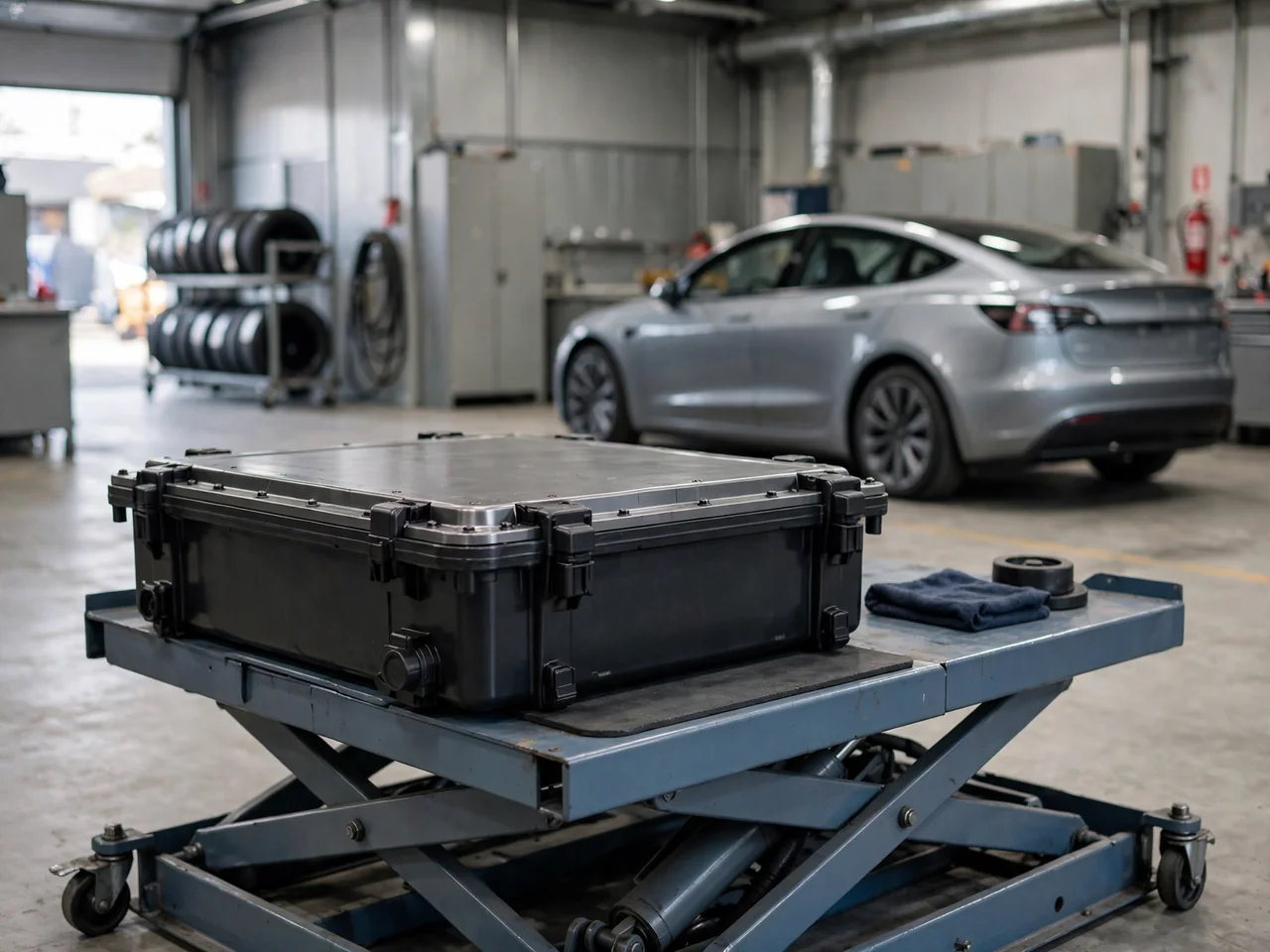
When a high-voltage traction battery loses usable capacity, throws warnings, or limits power, owners often look for EV battery repair rather than a full pack swap. Module-level work, a refurbished EV battery, an aftermarket unit, or a used pack can all appear as options, but they are not interchangeable. Pack diagnostics, salvage history, and the battery management system all shape what an EV battery specialist can reasonably attempt, and what a written battery warranty can actually cover.
What EV Battery Diagnostics Can Establish
The high-voltage traction battery is the energy store that propels the vehicle, not the 12-volt accessory battery. A battery-related warning, reduced range, a charging interruption, or a power limitation is a reason for pack diagnostics, not proof that the pack has failed. Fault records and dashboard state of health figures are evidence to interpret. Manufacturer-dependent messages and codes still need vehicle-specific confirmation, because supporting systems such as cooling, charging hardware, and the battery management system can produce similar symptoms.
Range observations also move with temperature, highway versus city use, cargo, climate control, and charging behavior, so a short-trip winter week can look like a dying pack when usable capacity has not changed as much as the driver thinks. An EV battery service visit should compare stored faults with measured usable capacity and cell-group behavior, then check cooling, contactors, and related electronics. Dashboard estimates can lag, average, or hide imbalance. Those professional checks still do not by themselves authorize opening the pack.
When Module-Level Battery Repair May Be Feasible
Whether EV battery repairs can stay at module level depends on pack design, access to suitable battery modules, the diagnostic findings, and the procedures an EV battery specialist actually supports for that platform. A localized module or pack-component fault may permit work that restores function, while widespread degradation, crash deformation, or water intrusion can close that path. Pack opening, electrical isolation, and internal testing belong to a qualified high-voltage technician. Owners should not treat a shop's willingness as a guarantee that every pack of that model can be opened the same way.
A durable repair also has to match remaining module condition, electrical characteristics, and battery management system requirements. Mixing modules with very different resistance, temperature response, or remaining capacity can leave the pack unbalanced even after a defective unit is replaced. Repairing a localized fault does not return every remaining cell to new condition, and it does not erase prior aging. To repair an EV battery in a lasting way, the shop still has to document how the replacement modules were selected and how the completed pack behaved under test, not only that a warning lamp went out.
What Refurbished, Rebuilt and Reconditioned Packs Mean
Refurbished, rebuilt, and reconditioned are seller-dependent labels. A refurbished EV battery listing does not establish a uniform level of work, remaining state of health, or measured usable capacity. An EV battery rebuild may mean replacement of a failed module, contactors, or sensors, plus completed-pack testing, or it may mean little more than cleaning and a charge cycle. EV battery reconditioning claims need evidence. Irreversible cell aging is not undone by a marketing term. Ask what was actually replaced, what was retained, and under what conditions the pack was tested.
Useful documentation for any of those labels includes the work performed, which components were retained, measured usable capacity, the test conditions used to produce that figure, and written battery warranty coverage with its exclusions. Without those records, a buyer cannot tell a carefully rebuilt pack from a unit that still carries unresolved imbalance. Capacity measured at one temperature and load may not match later driving. Warranty language should state whether coverage follows the pack, who performs claim work, and what happens if commissioning on the intended vehicle fails.
Aftermarket and Used EV Battery Pack Availability
Independent suppliers and salvage channels do offer packs for some vehicles, but availability tracks the exact vehicle and pack configuration, not a generic model name. An aftermarket EV battery listing may describe a newly manufactured pack, a remanufactured unit, or an original used pack, and the seller should identify which of those is being supplied. People who buy used EV battery packs often inherit the donor's unknown duty cycle. Salvage history matters because collision damage, water exposure, and poor storage can leave a pack that still bolts in yet is electrically unsuitable.
Physical fit alone cannot establish suitability. A specialist still has to confirm electrical interfaces, cooling connections, software, and vehicle-configuration requirements before the pack is treated as a match. Incomplete health records leave state of health and imbalance unknown until the unit is tested. Before committing, establish installation acceptance, what test evidence will be provided, return eligibility, who pays shipping, and any core-return requirement. Those terms matter as much as the asking price, because a pack that cannot be commissioned is not a completed repair.
What to Ask an EV Battery Repair Specialist
An EV battery repair shop should be able to show relevant qualifications, high-voltage facilities, and documented experience with the vehicle's battery platform. EV battery specialists are not interchangeable; platform-specific tools, isolation procedures, and software access vary. Request a written diagnostic scope that distinguishes confirmed findings from unresolved possibilities, including whether a fault code is being treated as evidence rather than as proof a module has failed. Ask who performs the work on site, whether a high-voltage technician remains responsible through commissioning, and where replacement components originate.
Clarify warranty exclusions, whether labor is covered, how claims are handled, and who is responsible if a supplied pack cannot be commissioned on that vehicle. Ask what final validation the shop documents after EV battery service, such as isolation checks, thermal behavior, and measured usable capacity. Unsupported promises of restored range or guaranteed battery life warrant further questions, because remaining cells still age and operating conditions still matter. A specialist who will put those limits in writing is easier to evaluate than one who only promises that the warning will stay off.
What Battery Replacement Service Should Include
An EV battery replacement service should follow a clear sequence: diagnosis, pack specification confirmation, written authorization, professional installation, and vehicle-specific commissioning. The estimate typically separates diagnostic labor, pack supply, installation, transport, taxes, and core charges, even when current prices are not quoted in advance. Those line items matter because a cheap pack can still carry high transport and core-return cost, and because authorization should happen after the buyer knows which unit is being fitted. Installation without commissioning is incomplete; the vehicle still has to accept the pack electrically and in software.
Handover records should include pack identification, completed tests, applicable warranty terms, and any limitations found during commissioning. Post-service range still depends on battery condition and operating conditions, so neither repair nor replacement supports a universal range promise. If the vehicle shows suspected battery damage, unusual heat, smoke, or strong odors, stop using and charging it, keep clear, and obtain appropriate professional or emergency assistance. Those safety steps come before any further shopping for a repair shop. A completed replacement is a commissioned, documented pack, not only a unit that has been bolted in.